Tag Archives: roccopaolillo

Outlining some requirements for synthetic populations to initialise agent-based models

By Nick Roxburgh1, Rocco Paolillo2, Tatiana Filatova3, Clémentine Cottineau3, Mario Paolucci2 and Gary Polhill1

1  The James Hutton Institute, Aberdeen AB15 8QH, United Kingdom {nick.roxburgh,gary.polhill}@hutton.ac.uk

2  Institute for Research on Population and Social Policies, Rome, Italy {rocco.paolillo,mario.paolucci}@cnr.it

3 Delft University of Technology, Delft, The Netherlands {c.cottineau,t.filatova}@tudelft.nl

Abstract. We propose a wish list of features that would greatly enhance population synthesis methods from the perspective of agent-based modelling. The challenge of synthesising appropriate populations is heightened in agent-based modelling by the emphasis on complexity, which requires accounting for a wide array of features. These often include, but are not limited to: attributes of agents, their location in space, the ways they make decisions and their behavioural dynamics. In the real-world, these aspects of everyday human life can be deeply interconnected, with these associations being highly consequential in shaping outcomes. Initialising synthetic populations in ways that fail to respect these covariances can therefore compromise model efficacy, potentially leading to biased and inaccurate simulation outcomes.

1 Introduction

With agent-based models (ABMs), the rationale for creating ever more empirically informed, attribute-rich synthetic populations is clear: the closer agents and their collectives mimic their  real-world counterparts, the more accurate the models can be and the wider the range of questions they can be used to address (Zhou et al., 2022). However, while many ABMs would benefit from synthetic populations that more fully capture the complexity and richness of real-world populations – including their demographic and psychological attributes, social networks, spatial realms, decision making, and behavioural dynamics – most efforts are stymied by methodological and data limitations. One reason for this is that population synthesis methods have predominantly been developed with microsimulation applications in mind (see review by Chapuis et al. (2022)), rather than ABM. We therefore argue that there is a need for improved population synthesis methods, attuned to support the specific requirements of the ABM community, as well as commonly encountered data constraints. We propose a wish list of features for population synthesis methods that could significantly enhance the capability and performance of ABMs across a wide range of application domains, and we highlight several promising approaches that could help realise these ambitions. Particular attention is paid to methods that prioritise accounting for covariance of characteristics and attributes.

2 The interrelationships among aspects of daily life

2.1 Demographic and psychological attributes

To effectively replicate real-world dynamics, ABMs must realistically depict demographic and psychological attributes at both individual and collective levels. A critical aspect of this realism is accounting for the covariance of such attributes. For instance, interactions between race and income levels significantly influence spatial segregation patterns in the USA, as demonstrated in studies like Bruch (2014).

Several approaches to population synthesis have been developed over the years, often with a specific focus on assignment of demographic attributes. That said, where psychological attributes are collected in surveys alongside demographic data, they can be incorporated into synthetic populations just like other demographic attributes (e.g., Wu et al. (2022)). Among the most established methods is Iterative Proportional Fitting (IPF). While capable of accounting for covariances, it does have significant limitations. One of these is that it “matches distributions only at one demographic level (i.e., either household or individual)” (Zhou et al., 2022 p.2). Other approaches have sought to overcome this – such as Iterative Proportional Updating, Combinatorial Optimisation, and deep learning methods – but they invariably have their own limitations and downsides, though the extent to which these will matter depends on the application. In their overview of the existing population synthesis landscape, Zhou et al., (2022) suggest that deep learning methods appear particularly promising for high-dimensional cases. Such approaches tend to be data hungry, though – a potentially significant barrier to exploitation given many studies already face challenges with survey availability and sample size.

2.2 Social networks

Integrating realistic social networks into ABMs during population synthesis is crucial for effectively mimicking real-world social interactions, such as those underlying epidemic spread, opinion dynamics, and economic transactions (Amblard et al., 2015). In practice, this means generating networks that link agents by edges that represent particular associations between them. These networks may need to be weighted, directional, or multiplex, and potentially need to account for co-dependencies and correlations between layers. Real-world social networks emerge from distinct processes and tendencies. For example, homophily preferences strongly influence the likelihood of friendship formation, with connections more likely to have developed in cases where agents share attributes like age, gender, socio-economic context, and location (McPherson et al., 2001). Another example is personality which can strongly influence the size and nature of an individual’s social network (Zell et al., 2014). For models where social interactions play an important role, it is therefore critical that consideration be given to the underlying factors and mechanisms that are likely to have influenced the development of social networks historically, if synthetic networks are to have any chance of reasonably depicting real world network structures.

Generating synthetic social networks is challenging due to often limited or unavailable data. Consequently, researchers tend to use simple models like regular lattices, random graphs, small-world networks, scale-free networks, and models based on spatial proximity. These models capture basic elements of real-world social networks but can fall short in complex scenarios. For instance, Jiang et al. (2022) describes a model where agents, already assigned to households and workplaces, form small-world networks based on employment or educational ties. While this approach accounts for spatial and occupational similarities, it overlooks other factors, limiting its applicability for networks like friendships that rely on personal history and intangible attributes.

To address these limitations, more sophisticated methods have been proposed, including Exponential Random Graph Models (ERGM) (Robins et al., 2007) and Yet Another Network Generator (YANG) (Amblard et al., 2015). However, they also come with their own challenges; for example, ERGMs sometimes misrepresent the likelihood of certain network structures, deviating from real-world observations.

2.3 Spatial locations

The places where people live, work, take their leisure and go to school are critically interlinked and interrelated with social networks and demographics. Spatial location also affects options open to people, including transport, access to services, job opportunities and social encounters. ABMs’ capabilities in representing space explicitly and naturally is a key attraction for geographers interested in social simulation and population synthesis (Cottineau et al., 2018). Ignoring the spatial concentration of agents with common traits, or failing to account for the effects that space has on other aspects of everyday human existence, risks overlooking a critical factor that influences a wide range of social dynamics and outcomes.

Spatial microsimulation generates synthetic populations tailored to defined geographic zones, such as census tracts (Lovelace and Dumont, 2017). However, many ABM applications require agents to be assigned to specific dwellings and workplaces, not just aggregated zones. While approaches to dealing with this have been proposed, agreement on best practice is yet to cohere. Certain agent-location assignments can be implemented using straightforward heuristic methods without greatly compromising fidelity, if heuristics align well with real-world practices. For example, children might be allocated to schools simply based on proximity, such as in Jiang et al., (2022). Others use rule-based or stochastic methods to account for observed nuances and random variability, though these often take the form of crude approximations. One of the more well-rounded examples is detailed by Zhou et al. (2022). They start by generating a synthetic population, which they then assign to specific dwellings and jobs using a combination of rule-based matching heuristic and probabilistic models. Dwellings are assigned to households by considering factors like household size, income, and dwelling type jointly. Meanwhile, jobs are assigned to workers using a destination choice model that predicts the probability of selecting locations based on factors such as sector-specific employment opportunities, commuting costs, and interactions between commuting costs and individual worker attributes. In this way, spatial location choices are more closely aligned with the diverse attributes of agents. The challenge with such an approach is to obtain sufficient microdata to inform the rules and probabilities.

2.4 Decision-making and behavioural dynamics

In practice, peoples’ decision-making and behaviours are influenced by an array of factors, including their individual characteristics such as wealth, health, education, gender, and age, their social network, and their geographical circumstances. These factors shape – among other things – the information agents’ are exposed to, the choices open to them, the expectations placed on them, and their personal beliefs and desires (Lobo et al., 2023). Consequently, accurately initialising such factors is important for ensuring that agents are predisposed to make decisions and take actions in ways that reflect how their real world counterparts might behave. Furthermore, the assignment of psychographic attributes to agents necessitates the prior establishment of these foundational characteristics as they are often closely entwined.

Numerous agent decision-making architectures have been proposed (see Wijermans et al. (2023)). Many suggest that a range of agent state attributes could, or even should, be taken into consideration when evaluating information and selecting behaviours. For example, the MoHub Framework (Schlüter et al., 2017) proposes four classes of attributes as potentially influential in the decision-making process: needs/goals, knowledge, assets, and social. In practice, however, the factors taken into consideration in decision-making procedures tend to be much narrower. This is understandable given the higher data demands that richer decision-making procedures entail. However, it is also regrettable given we know that decision-making often draws on many more factors than are currently accounted for, and the ABM community has worked hard to develop the tools needed to depict these richer processes.

3 Practicalities

Our wish list of features for synthetic population algorithms far exceeds their current capabilities. Perhaps the main issue today is data scarcity, especially concerning less tangible aspects of populations, such as psychological attributes and social networks, where systematic data collection is often more limited. Another significant challenge is that existing algorithms struggle to manage the numerous conditional probabilities involved in creating realistic populations, excelling on niche measures of performance but not from a holistic perspective. Moreover, there are accessibility issues with population synthesis tools. The next generation of methods need to be made more accessible to non-specialists through developing easy to use stand-alone tools or plugins for widely used platforms like NetLogo, else they risk not having their potential exploited.

Collectively, these issues may necessitate a fundamental rethink of how synthetic populations are generated. The potential benefits of successfully addressing these challenges are immense. By enhancing the capabilities of synthetic population tools to meet the wish list set out here, we can significantly improve model realism and expand the potential applications of social simulation, as well as strengthen credibility with stakeholders. More than this, though, such advancements would enhance our ability to draw meaningful insights, respecting the complexities of real-world dynamics. Most critically, better representation of the diversity of actors and circumstances reduces the risk of overlooking factors that might adversely impact segments of the population – something there is arguably a moral imperative to strive for.

Acknowledgements

MP & RP were supported by FOSSR (Fostering Open Science in Social Science Research), funded by the European Union – NextGenerationEU under NPRR Grant agreement n. MUR IR0000008. CC was supported by the ERC starting Grant SEGUE (101039455).

References

Amblard, F., Bouadjio-Boulic, A., Gutiérrez, C.S. and Gaudou, B. 2015, December. Which models are used in social simulation to generate social networks? A review of 17 years of publications in JASSS. In 2015 Winter Simulation Conference (WSC) (pp. 4021-4032). IEEE. https://doi.org/10.1109/WSC.2015.7408556

Bruch, E.E., 2014. How population structure shapes neighborhood segregation. American Journal of Sociology119(5), pp.1221-1278. https://doi.org/10.1086/675411

Chapuis, K., Taillandier, P. and Drogoul, A., 2022. Generation of synthetic populations in social simulations: a review of methods and practices. Journal of Artificial Societies and Social Simulation25(2). https://doi.org/10.18564/jasss.4762

Cottineau, C., Perret, J., Reuillon, R., Rey-Coyrehourcq, S. and Vallée, J., 2018, March. An agent-based model to investigate the effects of social segregation around the clock on social disparities in dietary behaviour. In CIST2018-Représenter les territoires/Representing territories (pp. 584-589). https://hal.science/hal-01854398v1

Jiang, N., Crooks, A.T., Kavak, H., Burger, A. and Kennedy, W.G., 2022. A method to create a synthetic population with social networks for geographically-explicit agent-based models. Computational Urban Science2(1), p.7. https://doi.org/10.1007/s43762-022-00034-1

Lobo, I., Dimas, J., Mascarenhas, S., Rato, D. and Prada, R., 2023. When “I” becomes “We”: Modelling dynamic identity on autonomous agents. Journal of Artificial Societies and Social Simulation26(3). https://doi.org/10.18564/jasss.5146

Lovelace, R. and Dumont, M., 2017. Spatial microsimulation with R. Chapman and Hall/CRC. https://spatial-microsim-book.robinlovelace.net

McPherson, M., Smith-Lovin, L. and Cook, J.M., 2001. Birds of a feather: Homophily in social networks. Annual review of sociology27(1), pp.415-444. https://doi.org/10.1146/annurev.soc.27.1.415

Robins, G., Pattison, P., Kalish, Y. and Lusher, D., 2007. An introduction to exponential random graph (p*) models for social networks. Social networks29(2), pp.173-191. https://doi.org/10.1016/j.socnet.2006.08.002

Schlüter, M., Baeza, A., Dressler, G., Frank, K., Groeneveld, J., Jager, W., Janssen, M.A., McAllister, R.R., Müller, B., Orach, K. and Schwarz, N., 2017. A framework for mapping and comparing behavioural theories in models of social-ecological systems. Ecological economics131, pp.21-35. https://doi.org/10.1016/j.ecolecon.2016.08.008

Wijermans, N., Scholz, G., Chappin, É., Heppenstall, A., Filatova, T., Polhill, J.G., Semeniuk, C. and Stöppler, F., 2023. Agent decision-making: The Elephant in the Room-Enabling the justification of decision model fit in social-ecological models. Environmental Modelling & Software170, p.105850. https://doi.org/10.1016/j.envsoft.2023.105850

Wu, G., Heppenstall, A., Meier, P., Purshouse, R. and Lomax, N., 2022. A synthetic population dataset for estimating small area health and socio-economic outcomes in Great Britain. Scientific Data9(1), p.19. https://doi.org/10.1038/s41597-022-01124-9

Zell, D., McGrath, C. and Vance, C.M., 2014. Examining the interaction of extroversion and network structure in the formation of effective informal support networks. Journal of Behavioral and Applied Management15(2), pp.59-81. https://jbam.scholasticahq.com/article/17938.pdf

Zhou, M., Li, J., Basu, R. and Ferreira, J., 2022. Creating spatially-detailed heterogeneous synthetic populations for agent-based microsimulation. Computers, Environment and Urban Systems91, p.101717. https://doi.org/10.1016/j.compenvurbsys.2021.101717


Roxburgh, N., Paolillo, R., Filatova, T., Cottineau, C., Paolucci, M. and Polhill, G. (2025) Outlining some requirements for synthetic populations to initialise agent-based models. Review of Artificial Societies and Social Simulation, 27 Jan 2025. https://rofasss.org/2025/01/29/popsynth


© The authors under the Creative Commons’ Attribution-NoDerivs (CC BY-ND) Licence (v4.0)
Models in Social Psychology and Agent-Based Social simulation – an interdisciplinary conversation on similarities and differences

By Nanda Wijermans, Geeske Scholz, Rocco Paolillo, Tobias Schröder, Emile Chappin, Tony Craig, and Anne Templeton

Introduction

Understanding how individual or group behaviour are influenced by the presence of others is something both social psychology and agent-based social simulation are concerned with. However, there is only limited overlap between these two research communities, which becomes clear when terms such as “variable”, “prediction”, or “model” come into play, and we build on their different meanings. This situation challenges us when working together, since it complicates the uptake of relevant work from each community and thus hampers the potential impact that we could have when joining forces.

We[1] – a group of social psychologists and social simulation modellers – sought to clarify the meaning of models and modelling from an interdisciplinary perspective involving these two communities. This occurred while starting our collaboration to formalise ‘social identity approaches’ (SIA). It was part of our journey to learn how to communicate and understand each other’s work, insights, and arguments during our discussions.

We present a summary of our reflections on what we learned from and with each other in this paper, which we intend to be part of a conversation, complementary to existing readings on ABM and social psychology (e.g., Lorenz, Neumann, & Schröder, 2021; Smaldino, 2020; Smith & Conrey, 2007). Complementary, because one comes to understand things differently when engaging directly in conversation with people from other communities, and we hope to extend this from our network to the wider social simulation community.

What are variable- and agent-based models?

We started the discussion by describing to each other what we mean when we talk about “a model” and distinguishing between models in the two communities as variable-based models in social psychology and agent-based modelling in social simulation.

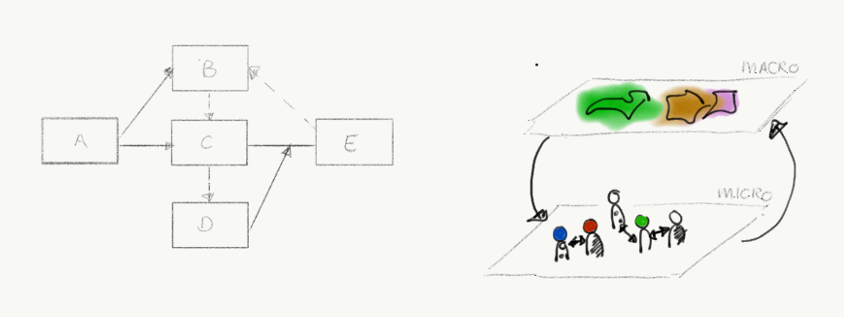
Models in social psychology generally come in two interrelated variants. Theoretical models, usually stated verbally and typically visualised with box-and-arrow diagrams as in Figure 1 (left), reflect assumptions of causal (but also correlational) relations between a limited number of variables. Statistical models are often based in theory and fitted to empirical data to test how well the explanatory variables predict the dependent variables, following the causal assumptions of the corresponding theoretical model. We therefore refer to social-psychological models as variable-based models (VBM). Core concepts are prediction and effect size. A prediction formulates whether one variable or combination of more variables causes an effect on an outcome variable. The effect size is the result of testing a prediction by indicating the strength of that effect, usually in statistical terms, the magnitude of variance explained by a statistical model.

It is good to realise that many social psychologists strive for a methodological gold standard using controlled behavioural experiments. Ideally, one predicts data patterns based on a theoretical model, which is then tested with data. However, observations of the real world are often messier. Inductive post hoc explanations emerge when empirical findings are unexpected or inconclusive. The discovery that much experimental work is not replicable has led to substantial efforts to increase the rigour of the methods, e.g., through the preregistration of experiments (Eberlen, Scholz & Gagliolo, 2017).

Models in Social Simulation come in different forms – agent-based models, mathematical models, microsimulations, system dynamic models etc – however here we focus on agent-based modelling as it is the dominant modelling approach within our SIAM network. Agent-based models reflect heterogeneous and autonomous entities (agents) that interact with each other and their environments over time (Conte & Paolucci, 2014; Gilbert & Troitzsch, 2005). Relationships between variables in ABMs need to be stated formally (equations or logical statements) in order to implement theoretical/empirical assumptions in a way that is understandable by a computer. An agent-based model can reflect assumptions about causal relations between as many variables as the modeller (team) intends to represent. Agent-based models are often used to help understand[2] why and how observed (macro) patterns arise by investigating the (micro/meso) processes underlying them (see Fig 1, right).

The extent to which social simulation models relate to data ranges from ‘no data used whatsoever’ to ‘fitting every variable value’ to empirical data. Put differently, the way one uses data does not define the approach. Note that assumptions based on theory and/or empirical observations do not suffice but require additional assumptions to make the model run.

Fig. 1: Visualisation of what a variable-based model in social psychology is (left) and what an agent-based model in social simulation is (right).

Comparing models

The discussion then moved from describing the meaning of “a model” to comparing similarities and differences between the concepts and approaches, but also what seems similar but is not…

Similar. The core commonalities of models in social psychology (VBM) and agent-based social simulation (ABM) are 1) the use of models to specify, test and/or explore (causal) relations between variables and 2) the ability to perform systematic experiments, surveys, or observations for testing the model against the real world. This means that words like ‘experimental design’, ‘dependent, independent and control variables’ have the same meaning. At the same time some aspects that are similar are labelled differently. For instance, the effect size in VBMs reflects the magnitude of the effect one can observe. In ABMs the analogy would be the sensitivity analysis, where one tests for the importance or role of certain variables on the emerging patterns in the simulation outcomes.

False Friends. There are several concepts that are given similar labels, but have different meanings. These are particularly important to be aware of in interdisciplinary settings as they can present “false friends”. The false friends we unpacked in our conversations are the following:

  • Model: whether the model is variable-based in social psychology (VBM) or agent-based in social simulation (ABM). The VBM focuses on the relation between two or a few variables typically in one snapshot of time, whereas the ABM focuses on the causal relations (mechanisms/processes) between (entities (agents) containing a number of) variables and simulates the resulting interactions over time.
  • Prediction: in VBMs a prediction is a variable-level claim, stating the expected magnitude of a  relation between two or few variables. In ABMs prediction would instead be a claim about the future real-world system-level developments on the basis of observed phenomena in the simulation outcomes. In case such prediction is not the model purpose (which is likely), each future simulated system state is sometimes labelled nevertheless as a prediction, though it doesn’t mean to be necessarily accurate as a prediction to the real-world future. Instead, it can for example be a full explanation of the mechanisms required to replicate the particular phenomenon or a possible trajectory of which reality is just one. 
  • Variable: here both types of models have variables (a label of some ‘thing’ that can have a certain ‘value’). In ABMs there can be many variables, some that have the same function as the variables in VBM (i.e., denoting a core concept and its value). Additionally, ABMs also have (many) variables to make things work.
  • Effect size: in VBM the magnitude of how much the independent variable can explain a dependent variable. In ABM the analogy would be sensitivity analysis, to determine the extent to which simulation outcomes are sensitive to changes in input settings. Note that, while effect size is critical in VBMs, in ABMs small effect sizes in micro interactions can lead toward large effects on the macro level.
  • Testing: VBMs usually test models using some form of hypothesis testing, whereas ABMs can be tested in very different ways (see David et al (2019)), depending on the purpose they have (e.g., explanation, theoretical exposition, prediction, see Edmonds et al. (2019)), and on different levels. For instance, testing can relate to the verification of the implementation of the model (software development specific), to make sure the model behaves as designed. However, testing can also relate to validation – checking whether the model lives up to its purpose – for instance testing the results produced by the ABM against real data if the aim is prediction of the real world-state.
  • Internal validity: in VBM this is to assure the causal relation between variables and their effect size. In ABMs it refers to the plausibility in assumptions and causal relations used in the model (design), e.g., by basing these on expert knowledge, empirical insights, or theory rather than on the modeller’s intuition only.

Differences. There are several differences when it comes to VBM and ABM. Firstly, there is a difference in what a model should replicate, i.e., the target of the model: in social psychology the focus tends to be on the relations between variables underlying behaviour, whereas in ABM it is usually on the macro-level patterns/structures that emerge. Also, the concept of causality differs in psychology, VBM models are predominantly built under the assumption of linear causality[3], with statistical models aiming to quantify the change in the dependent variable due to (associated) change in the independent variable. A causality or correlation often derived with “snapshot data”, i.e., one moment in time and one level of analysis. In ABMs, on the other hand, causality appears as a chain of causal relations that occur over time. Moreover, it can be non-linear (including multicausality, nonlinearity, feedback loops and/or amplifications of models’ outcomes). Lastly, the underlying philosophy can differ tremendously concerning the number of variables that are taken into consideration. By design, in social psychology one seeks to isolate the effects of variables, maintaining a high level of control to be confident about the effect of independent variables or the associations between variables. For example, by introducing control variables in regression models or assuring random allocation of participants in isolated experimental conditions. Whereas in ABMs, there are different approaches/preferences: KISS versus KIDS (Edmonds & Moss, 2004). KISS (Keep It Simple Stupid) advocates for keeping it simple as possible: only complexify if the simple model is not adequate. KIDS (Keep It Descriptive Stupid), on the other end of the spectrum, embraces complexity by relating to the target phenomenon as much as one can and only simplify when evidence justifies it. Either way, the idea of control in ABM is to avoid an explosion of complexity that impedes the understanding of the model, that can lead to e.g., causes misleading interpretations of emergent outcomes due to meaningless artefacts.

We summarise some core take-aways from our comparison discussions in Table 1.

Table 1. Comparing models in social psychology and agent-based social simulation

Social psychology (VBM)Social Simulation (ABM)
AimTheory development and prediction (variable level)Not predefined. Can vary widely purpose. (system level)
Model targetReplicate and test relations between variablesReproduce and/or explain a social phenomenon – the macro level pattern
Composed ofVariables and relations between themAgents, environment & interactions
Strive forHigh control, (low number of variables and relations ReplicationPurpose-dependent. Model complexity: represent what is needed, not more, not less.
TestingHypotheses testing using statistics, including possible measuring the effect size a relation to assess confidence in the variable’s importance’Purpose-dependent. Can refer to verification, validation, sensitivity analysis or all of them. See text and refs under false friends.
Causality(or correlation) between variables Linear representationBetween variables and/or model entities.
Non-linear representation
Theory developmentCritical reflection on theory through confirmation. Through hypothesis testing (a prediction) theory gets validated or (if not confirmed) input for reconsideration of the theory.IFF aim of model, ways of doing is not predefined. It can be reproducing the theory prediction with or without internal validity. ABMs can further help to identify gaps in existing theory.
DynamismLittle – often within snapshot causalityCore – within snapshot and over time causality
External validity(the ability to say something about the actual target/ empirical  phenomenon)VBM aims at generalisation and has predictive value for the phenomenon in focus. VBMs in lab experiments are often criticised for their weak external validity, considered high for field experiments.ABMs insights are about the model, not directly about the real world. Without making predictive claims, they often do aim to say something about the real world.

Beyond blind spots, towards complementary powers

We shared the result of our discussions, the (seemingly) communalities and differences between models in social psychology and agent-based social simulation. We allowed for a peek into the content of our interdisciplinary journey as we invested time, allowed for trust to grow, and engaged in open communication. All of this was needed in the attempt to uncover conflicting ways of seeing and studying the social identity approach (SIA). This investment was crucial to be able to make progress in formalising SIA in ways that enable for deeper insights – formalisations that are in line with SIA theories, but also to push the frontiers in SIA theory. Joining forces allows for deeper insights, as VBM and ABM complement and challenge each other, thereby advancing the frontiers in ways that cannot be achieved individually (Eberlen, Scholz & Gagliolo, 2017; Wijermans et al. 2022,). SIA social psychologists bring to the table the deep understanding of the many facets of SIA theories and can engage in the negotiation dance of the formalisation process adding crucial understanding of the theories, placed in their theoretical context. Social psychology in general can point to empirically supported causal relations between variables, and thereby increase the realism of the assumptions of agents (Jager, 2017; Templeton & Neville 2020). Agent-based social simulation, on the other hand, pushes for over-time causality representation, bringing to light (logical) gaps of a theory and providing explicitness and thereby adding to the development of testable (extended) forms of (parts of) a theory, including the execution of those experiments that are hard or impossible in controlled experiments. We thus started our journey, hoping to shed some light on blind spots and releasing our complementary powers in the formalisation of SIA.

To conclude, we felt that having a conversation together led to a qualitatively different understanding than would have been the case had we all ‘just’ reading informative papers. These conversations reflect a collaborative research process (Schlüter et al. 2019). In this RofASSS paper, we strive for widening this conversation to the social simulation community, connecting with others about our thoughts as well as hearing your experiences, thoughts and learnings while being on an interdisciplinary journey with minds shaped by variable-based or agent-based models, or both.

Acknowledgements

The many conversations we had in this stimulating scientific network since 2020 were funded by the the  Deutsche Forschungsgemeinschaft (DFG- 432516175)

References

Conte, R., & Paolucci, M. (2014). On agent-based modeling and computational social science. Frontiers in psychology, 5, 668. DOI:10.3389/fpsyg.2014.00668

David, N., Fachada, N., & Rosa, A. C. (2017). Verifying and validating simulations. In Simulating social complexity (pp. 173-204). Springer, Cham. DOI:10.1007/978-3-319-66948-9_9

Eberlen, J., Scholz, G., & Gagliolo, M. (2017). Simulate this! An introduction to agent-based models and their power to improve your research practice. International Review of Social Psychology, 30(1). DOI:10.5334/irsp.115/

Edmonds, B., & Moss, S. (2004). From KISS to KIDS–an ‘anti-simplistic’modelling approach. In International workshop on multi-agent systems and agent-based simulation (pp. 130-144). Springer, Berlin, Heidelberg. DOI:10.1007/978-3-540-32243-6_11

Edmonds, B., Le Page, C., Bithell, M., Chattoe-Brown, E., Grimm, V., Meyer, R., Montañola-Sales, C., Ormerod, P., Root, H. and Squazzoni, F. (2019) ‘Different Modelling Purposes’ Journal of Artificial Societies and Social Simulation 22 (3) 6 <http://jasss.soc.surrey.ac.uk/22/3/6.html>. doi: 10.18564/jasss.3993

Gilbert, N., & Troitzsch, K. (2005). Simulation for the social scientist. McGraw-Hill Education (UK).

Jager, W. (2017). Enhancing the realism of simulation (EROS): On implementing and developing psychological theory in social simulation. Journal of Artificial Societies and Social Simulation, 20(3). https://jasss.soc.surrey.ac.uk/20/3/14.html

Lorenz, J., Neumann, M., & Schröder, T. (2021). Individual attitude change and societal dynamics: Computational experiments with psychological theories. Psychological Review, 128(4), 623-642.  https://doi.org/10.1037/rev0000291

Smaldino, P. E. (2020). How to Translate a Verbal Theory Into a Formal Model. Social Psychology, 51(4), 207–218. http://doi.org/10.1027/1864-9335/a000425

Schlüter, M., Orach, K., Lindkvist, E., Martin, R., Wijermans, N., Bodin, Ö., & Boonstra, W. J. (2019). Toward a methodology for explaining and theorizing about social-ecological phenomena. Current Opinion in Environmental Sustainability, 39, 44-53. DOI:10.1016/j.cosust.2019.06.011

Smith, E.R. & Conrey, F.R. (2007): Agent-based modeling: a new approach for theory building in social psychology. Pers Soc Psychol Rev, 11:87-104. DOI:10.1177/1088868306294789

Templeton, A., & Neville, F. (2020). Modeling collective behaviour: insights and applications from crowd psychology. In Crowd Dynamics, Volume 2 (pp. 55-81). Birkhäuser, Cham. DOI:10.1007/978-3-030-50450-2_4

Wijermans, N., Schill, C., Lindahl, T., & Schlüter, M. (2022). Combining approaches: Looking behind the scenes of integrating multiple types of evidence from controlled behavioural experiments through agent-based modelling. International Journal of Social Research Methodology, 1-13. DOI:10.1080/13645579.2022.2050120

Notes 

[1] Most VBMs are linear (or multilevel linear models), but not all.  In the case of non-normally distributed data changes the tests that are used.

[2] We are researchers keen to use, extend, and test the social identity approach (SIA) using agent-based modelling. We started from interdisciplinary DFG network project (SIAM: Social Identity in Agent-based Models, https://www.siam-network.online/) and now form a continuous special-interest group at the European Social Simulation Association (ESSA) http://www.essa.eu.org/.

[3] ABMs can cater to diverse purposes, e.g., description, explanation, prediction, theoretical exploration, illustration, etc. (Edmonds et al., 2019).


Wijermans, N., Scholz, G., Paolillo, R., Schröder, T., Chappin, E., Craig, T. and Templeton, A. (2022) Models in Social Psychology and Agent-Based Social simulation - an interdisciplinary conversation on similarities and differences. Review of Artificial Societies and Social Simulation, 4 Oct 2022. https://rofasss.org/2022/10/04/models-in-spabss/


© The authors under the Creative Commons’ Attribution-NoDerivs (CC BY-ND) Licence (v4.0)