Tag Archives: programming_thread

A Reminder – computability limits on “vibe coding” ABMs (using LLMS to do the programming for us)

By Bruce Edmonds

Introduction

Machine-learning systems, including Large Language Models (LLMs), are algorithms trained on large datasets rather than something categorically different. Consequently, they inherit the standard theoretical and practical limitations that apply to all algorithmic methods. Here we look at the computational limits in terms of “Vibe coding” – where the LLM writes some of the code for an Agent-Based Model (ABM) in response to a descriptive prompt. Firstly, we review a couple of fundamental theorems in terms of producing or checking code relative to its descriptive specification. In general, this is shown to be impossible (Edmonds & Bryson 2004). However, this does not rule out the possibility that this could work with simpler classes of code that fall short of full Turing completeness (being able to mimic any conceivable computation). Thus, I recap a result that shows how simple a class of ABMs can be and still be Turing complete (and thus subject to the previous results) (Edmonds 2004). If you do not like discussion of proofs, I suggest you skip to the concluding discussion. More formal versions of the proofs can be found in the Appendix.

Descriptions of Agent-Based Models

When we describe code, the code should be consistent with that description. That is, the code should be one of the possible codes which are right for the code. In this paper we are crucially concerned with the relationship between code and its description and the difficulty of passing from one to the other.

When we describe an ABM, we can do so in a number of different ways. We can do this with different degrees of formality: from chatty natural language to pseudo code to UML diagrams. The more formal the method of description, the less ambiguity there is concerning its meaning. We can also describe what we want at low or high levels. A low-level description specifies the detail of what bit of code does at each time – an imperative description. A high-level description specifies what the system should do as a whole or what the results should be like. These tend to be declarative descriptions.

Whilst a compiler takes a formal, low-level description of code, an LLM takes a high-level, informal description – in the former case the description is very prescriptive with the same description always producing the same code, but in the case of LLMs there are usually a great many sets of code that are consistent with the input prompt. In other words, the LLM makes a great many decisions for the user, saving time – decisions that a programmer would be forced to confront if using a compiler (Keles 2026).

Here, we are focusing on the latter case, when we use an LLM to do some or all of our ABM programming for us. We use high-level, informal natural language in order to direct the LLM as to what ABM (or aspect of ABM) we would like. Of course, one can be more precise in one’s use of language, but it will tend to remain at a fairly high level (if we are going to do a complete low-level description then we might as well write the code ourselves).

In the formal results below, we restrict ourselves to formal descriptions as this is necessary to do any proofs. However, what is true below for formal descriptions is also true for the wider class of any description as one can always use natural language in a precise manner. For a bit more detail in what we mean here by a formal language, see the Appendix.

The impossibility of a general “specification compiler”

The dream is that one could write a description of what one would like and an algorithm, T, would produce code that fitted that description. However, to enable proofs to be used we need to formalize the situation so that the description, is in some suitably expressive but formal language (e.g. a logic with enumerable expressions). This situation is illustrated in figure 1.
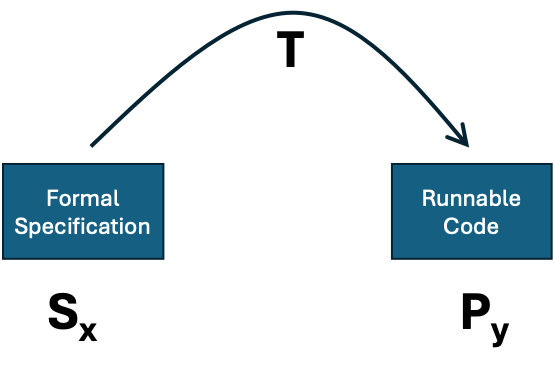
Figure 1. Automatically generating code from a specification.

Obviously, it is easy to write an impossible formal specification – one for which no code exists –so the question is whether there could be such an algorithm, T, that would give us code that fitted a specification when it does exist. The proof is taken from (Edmonds & Bryson 2004) and given in more formal detail in the Appendix.

The proof uses a version of Turing’s “halting problem” (Turing 1937). This is the problem of checking some code (which takes a number as an input parameter) to see if would come to a halt (the program finishes) or go on for ever. The question here is whether there is any effective and systematic way of doing this. In other words, whether there an “automatic program checker” is possible – a program, H, which takes two inputs: the program number, x, and a possible input, y and then works out if the computation Px(y) ever ends.  Whilst in some cases spotting this is easy – e.g. trivial infinite loops – other cases are hard (e.g. testing the even numbers to find one that is not the sum of two prime numbers1).

For our purposes, let us consider a series of easier problems – what I call “limited halting problems”. This is the problem of checking whether programs, x, applied to inputs y ever come to an end, but only for x, y ≤ n, where n is a fixed upper limit. Imagine a big n ´ n table with the columns being the program numbers and the rows being the inputs. Each element is 0 if the combination never stops and 1 if it does. A series of simpler checking programs, Hn, would just look up the answers in the table as long as they had been filled in correctly. We know that these programs exist, since programs that implement simple look up tables always exist and that one of the possible n x´n tables will be the right one for Hn. For each limited halting problem, we can write a formal specification for this, giving us a series of specifications (one for each n).

Now imagine that we had a general-purpose specification compiling program, T, as described above and illustrated in Figure 1. Then, we could do the following:

  1. work out max(x,y)
  2. given any computation Px(y) we could construct the specification for the limited halting problem with index, max(x,y)
  3. then we could use T to construct some code for Hn and
  4. use that code to see if Px(y) ever halted.

Taken together, these steps (a-d) can be written as a new piece of computer code that would solve the general halting problem. However, this we know is impossible (Turing 1937), therefore there is not a general compiling program like T above, it is impossible.

The impossibility of a general “code checker”

The checking problem is apparently less ambitious than the programming problem – here we are given a program and a specification and have ‘only’ to check whether they correspond.  That is whether the code satisfies the specification.
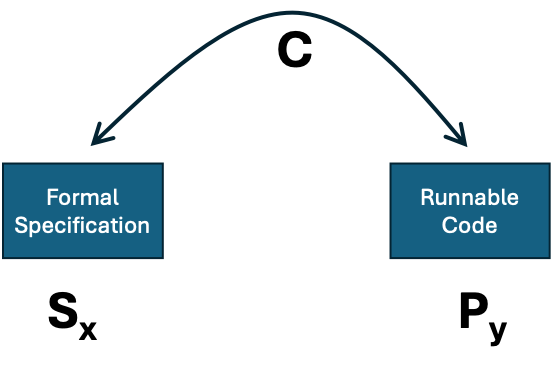
Figure 2. Algorithmically checking if some code satisfies a descriptive specification.

Again, the answer is in the negative.  The proof to this is similar. If there were a checking program C that, given a program and a formal specification would tell us whether the program met the specification, we could again solve the general halting problem.  We would be able to do this as follows:

  1. work out the maximum of x and y (call this m);
  2. construct a sequence of programs implementing all possible finite lookup tables of type: mxm→{0,1};
  3. test these programs one at a time using C to find one that satisfies SHn (we know there is at least one);
  4. use this program to compute whether Px(y) halts. 

Thus, there is no general specification checking program, like C.

Thus, we can see that there are some, perfectly well-formed specifications, where we know code exists that would comply with the specification but where there is no such algorithm, however clever, that will always take us from a specification to the code. Since trained neural nets are a kind of clever algorithm, they cannot do this either.

What about simple Agent-Based Models?

To illustrate how simple such systems can be, I defined a particular class of particularly simple multi-agent system, called “GASP” systems (Giving Agent System with Plans).  These are defined as follows.  There are n agents, labelled: 1, 2, 3, etc., each of which has an integer store which can change and a finite number of simple plans (which do not change).  Each time interval the store of each agent is incremented by one.  Each plan is composed of: a (possibly empty) sequence of ‘give instructions’ and finishes with a single ‘test instruction’.  Each ‘give instruction’, Ga, has the effect of giving 1 unit to agent a (if the store is non-zero).  The ‘test instruction’ is of the form JZa,p,q, which has the effect of jumping (i.e. designating the plan that will be executed next time period) to plan p if the store of agent a is zero and plan q otherwise.  This class is described more in (Edmonds 2004). This is illustrated in Figure 3.
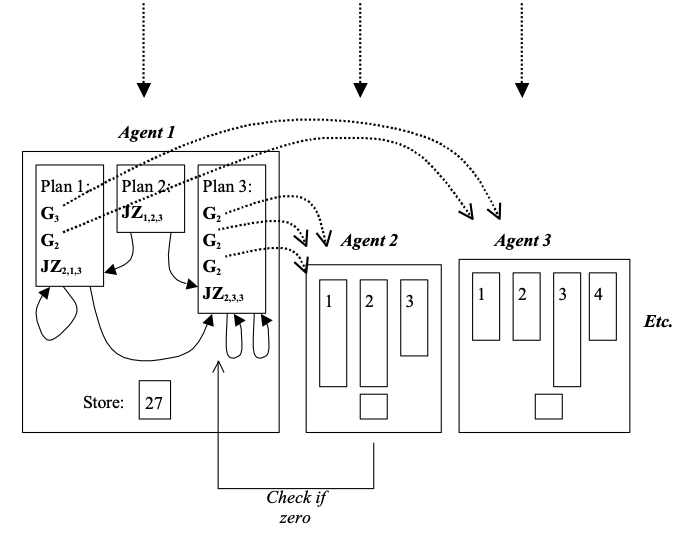
Figure 3. An Illustration of a “GASP” multi-agent system.

Thus ‘all’ that happens in this class of GASP systems is the giving of tokens with value 1 to other agents and the testing of other agents’ store to see if they are zero to determine the next plan.  There is no fancy communication, learning or reasoning done by agents. Agents have fixed and very simple plans and only one variable. However, this class of agent can be shown to be Turing Complete. The proof is taken from (Edmonds & Bryson 2004).

The detail of this proof is somewhat tedious, but basically involves showing that any computation (any Turing Machine) can be mapped to a GASP machine using a suitable effective and systematic mapping. This is done in three stages. That is for any particular Turing Machine:

  1. Create an equivalent “Unlimited Register Machine” (URM), with an indefinitely large (but finite) number of integer variables and four basic kinds of instruction (add one to a variable, set a variable to 0, copy the number in a variable to another, jump to a set instruction if two specified variables are equal. This is known to be possible (Cutland page 57).
  2. Create an equivalent “AURA” machine for this URM machine (Moss & Edmonds 1994)
  3. Create an equivalent “GASP” ABM for this AURA system.

This is unsurprising – many systems that allow for an indefinite storage, basic arithmetic operations and a kind of “IF” statement are Turing Complete (see any textbook on computability, e.g. Cutland 1980).

This example of a class of GASP agents shows just how simple an ABM can be and still be Turing Complete, and subject to the impossibility of a general compiler (like T above) or checker (like C above), however clever these might be.

Discussion

What the above results show is that:

  1. There is no algorithm that will take any formal specification and give you code that satisfies it. This includes trained LLMs.
  2. There is no algorithm that will take any formal specification and some code and then check whether the code satisfies that specification. This includes trained LLMs.
  3. Even apparently simple classes of agent-based model are capable of doing any computation and so there will be examples where the above two negative results hold.

These general results do not mean that there are not special cases where programs like T or C are possible (e.g. compilers). However, as we see from the example ABMs above, it does not take much in the way of its abilities to make this impossible for high level descriptions. Using informal, rather than formal, language does not escape these results, but merely adds more complication (such as vagueness).

In conclusion, this means that there will be kinds of ABMs for which no algorithm can turn descriptions into the correct, working code2. This does not mean that LLMs can’t be very good at producing working code from the prompts given to them. They might (in some cases) be better than the best humans at this but they can never be perfect. There will always be specifications where they either cannot produce the code or produce the wrong code.

The underlying problem is that coding is a very hard, in general. There are no practical, universal methods that always work – even when it is known to be possible. Suitably-trained LLMs, human ingenuity, various methodologies can help but none will be a panacea.

Notes

1. Which would disprove “Goldbach’s conjecture”, whose status is still unknown despite centuries of mathematical effort. If there is such a number it is known to be more than 4×10¹⁷.

2. Of course, if humans are limited to effective procedures – ones that could be formally written down as a program (which seems likely) – then humans are similarly limited.

Acknowledgements

Many thanks for the very helpful comments on earlier drafts of this by Peer-Olaf Siebers, Luis Izquierdo and other members of the LLM4ABM SIG. Also, the participants of AAMAS 2004 for their support and discussion on the formal results when they were originally presented.

Appendix

Formal descriptions

The above proofs rely on the fact that the descriptions are “recursively enumerable”, as in the construction of Gödel (1931). That is, one can index the descriptions (1, 2, 3…) in such a way that once can reconstruct the description from the index. Most formal languages, including those compilers take, computer code, formal logic expressions, are recursively enumerable since they can be constructed from an enumerable set of atoms (e.g. variable names) using a finite number of formal composition rules (e.g. if A and B are allowed expressions, then so are A → B, A & B etc. Any language that can be specified using syntax diagrams (e.g. using Backus–Naur form) will be recursively enumerable in this sense.

Producing code from a specification

The ‘halting problem’ is an undecidable problem (Turing 1937), (that is it is a question for which there does not exist a program that will answer it, say outputting 1 for yes and 0 for no).  This is the problem of whether a given program will eventually come to a halt with a given input.  In other words, whether Px(y), program number x applied to input y, ever finishes with a result or whether it goes on for ever.  Turing proved that there is no such program (Turing 1937).

Define a series of problems, LH1, LH2, etc., which we call ‘limited halting problems’.  LHn is the problem of ‘whether a program with number £n and an input £n will ever halt’.  The crucial fact is that each of these is computable, since each can be implemented as a finite lookup table.  Call the programs that implement these lookup tables: PH1, PH2, etc. respectively.  Now if the specification language can specify each such program, one can form a corresponding enumeration of formal specifications: SH1, SH2,etc. 

The question now is whether there is any way of computationally finding PHn from the specification SHn.  But if there were such a way we could solve Turing’s general halting problem in the following manner: first find the maximum of x and y (call this m); then compute PHm from SHm; and finally use PHm to compute whether Px(y) halts.  Since we know the general halting problem is not computable, we also know that there is no effective way of discovering PHn from SHn even though for each SHn we know an appropriate PHn exists!

Thus, the only question left is whether the specification language is sufficiently expressive to enable SH1, SH2, etc. to be formulated.  Unfortunately, the construction in Gödel’s famous incompleteness proof (Gödel 1931) guarantees that any formal language that can express even basic arithmetic properties will be able to formulate such specifications.

Checking code meets a specification

To demonstrate this, we can reuse the limited halting problems defined in the last subsection.  The counter-example is whether one can computationally check (using C) that a given program P meets the specification SHn.  In this case we will limit ourselves to programs, P, that implement n´n finite lookup tables with entries: {0,1}

Now we can see that if there were a checking program C that, given a program and a formal specification would tell us whether the program met the specification, we could again solve the general halting problem.  We would be able to do this as follows: first find the maximum of x and y (call this m); then construct a sequence of programs implementing all possible finite lookup tables of type: mxm{0,1}; then test these programs one at a time using C to find one that satisfies SHn (we know there is at least one: PHm);and finally use this program to compute whether Px(y) halts.  Thus, there is no such program, C.

Showing GASP ABMs are Turning Complete

The class of Turing machines is computationally equivalent to that of unlimited register machines (URMs) (Cutland page 57).  That is the class of programs with 4 types of instructions which refer to registers, R1, R2, etc. which hold positive integers.  The instruction types are: Sn, increment register Rn by one; Zn, set register Rn to 0; Cn,m, copy the number from Rn to Rm (erasing the previous value); and Jn,m,q, if Rn=Rm jump to instruction number q.  This is equivalent to the class of AURA programs which just have two types of instruction: Sn, increment register Rn by one; and DJZn,q, decrement Rn if this is non-zero then if the result is zero jump to instruction step q (Moss & Edmonds 1994).   Thus we only need to prove that given any AURA program we can simulate its effect with a suitable GASP system.  Given an AURA program of m instructions: i1, i2,…, im which refers to registers R1, …, Rn, we construct a GASP system with n+2 agents, each of which has m plans.   Agent An+1 is basically a dump for discarded tokens and agent An+2 remains zero (it has the single plan: (Gn+1, Ja+1,1,1)). Plan s (sÎ{1,…,m}) in agent number a (aÎ{1,…,n}) is determined as follows: there are four cases depending on the nature of instruction number s:

1.        is is Sa: plan s is (Ja,s+1,s+1);

2.        is is Sb where b¹a: plan s is (Gn+1, Ja,s+1,s+1);

3.        is is DJZa,q: plan s is (Gn+1, Gn+1, Ja,q,s+1);

4.        is is DJZb,q where b¹a: plan s is (Gn+1, Ja,q,s+1).

Thus, each plan s in each agent mimics the effect of instruction s in the AURA program with respect to the particular register that the agent corresponds to.


References

Cutland, N. (1980) Computability: An Introduction to Recursive Function Theory. Oxford University Press.

Edmonds, B. (2004) Using the Experimental Method to Produce Reliable Self-Organised Systems. In Brueckner, S. et al. (eds.) Engineering Self Organising Sytems: Methodologies and Applications, Springer, Lecture Notes in Artificial Intelligence, 3464:84-99. http://cfpm.org/cpmrep131.html

Edmonds, B. & Bryson, J. (2004) The Insufficiency of Formal Design Methods – the necessity of an experimental approach for the understanding and control of complex MAS. In Jennings, N. R. et al. (eds.) Proceedings of the 3rd Internation Joint Conference on Autonomous Agents & Multi Agent Systems (AAMAS’04), July 19-23, 2004, New York. ACM Press, 938-945. http://cfpm.org/cpmrep128.html

Gödel, K. (1931), Über formal unentscheidbare Sätze der Principia Mathematica und verwandter Systeme, I, Monatshefte für Mathematik und Physik, 38(1):173–198. http://doi.org/10.1007/BF01700692

Keles, A. (2026) LLMs could be, but shouldn’t be compilers. Online https://alperenkeles.com/posts/llms-could-be-but-shouldnt-be-compilers/ (viewed 11 Feb 2026)

Moss, S. and Edmonds, B. (1994) Economic Methodology and Computability: Some Implications for Economic Modelling, IFAC Conf. on Computational Economics, Amsterdam, 1994. http://cfpm.org/cpmrep01.html

Turing, A.M. (1937), On Computable Numbers, with an Application to the Entscheidungsproblem. Proceedings of the London Mathematical Society, s2-42: 230-265. https://doi.org/10.1112/plms/s2-42.1.230


Edmonds, B. (2026) A Reminder – computability limits on “vibe coding” ABMs (using LLMS to do the programming for us). Review of Artificial Societies and Social Simulation, 12 Feb 2026. https://rofasss.org/2026/02/12/vibe


© The authors under the Creative Commons’ Attribution-NoDerivs (CC BY-ND) Licence (v4.0)
Why Object-Oriented Programming is not the best method to implement Agent-Based Models

By Martin Hinsch

Research Department of Genetics, Evolution and Environment
University College London

Introduction

A considerable part of the history of software engineering consists of attempts to make the complexity of software systems manageable in the sense of making them easier to implement, understand, modify, and extend. An important aspect of this is the separation of concerns (SoC, Dijkstra 1982). SoC reduces complexity by dividing the implementation of a system into (presumably simpler) problems that can be solved without having to spend too much thought on other aspects of the system. Architecturally, SoC is accomplished through modularity and encapsulation. This means that parts of the system that have strong inter-dependencies are put together into a “module” (in the widest sense) that presents only aspects of itself to the outside that are required to interact with other modules. This is based on the fundamental assumption that the visible behaviour of a component (its interface) is simpler than its potentially complex inner workings which can be ignored when interacting with it.

The history of Object-Oriented Programming (OOP) is complicated and there are various flavours and philosophies of OOP (Black 2013). However, one way to see Object Orientation (OO) is as a coherent, formalised method to ensure modularisation and encapsulation. In OOP data and functions to create and manipulate that data are combined in objects. Depending on programming language, some object functions (methods) and properties can be made inaccessible to users of the object, thereby hiding internal complexity and presenting a simplified behaviour to the outside. Many OO languages furthermore allow for polymorphism, i.e. different types of objects can have the same interface (but different internal implementations) and can therefore be used interchangeably.

After its inception in the 1960s (Dahl and Nygaard 1966) OOP gained popularity throughout the 80s and 90s, to the point that many established programming languages were retrofitted with language constructs that enabled OOP (C++, Delphi, OCaml, CLOS, Visual Basic, …) and new languages were designed based on OOP principles (Smalltalk, Python, Ruby, Java, Eiffel,…). By the mid-90s many computer science departments taught OOP not as one, or even just a useful paradigm, but as the paradigm that would make all other methods obsolete.

This is the climate in which agent-based or individual-based modelling (ABM) emerged as a new modelling methodology. In ABM the behaviour of a system is not modelled directly but instead the model consists of (many, similar or identical) individual components. The interactions between these components leads to the emergence of global behaviour.

While the origins of the paradigm reach further back, it only started to become popular in the 90s (Bianchi and Squazzoni 2015). As the method requires programming expertise, which in academia was rare outside of computer science, the majority of early ABMs were created by or with the help of computer scientists, which in turn applied the at the time most popular programming paradigm. At first glance OOP also seems to be an excellent fit for ABM – agents are objects, their state is represented by object variables, and their behaviour by methods. It is therefore no surprise that OOP has become and remained the predominant way to implement ABMs (even after the enthusiasm for OOP has waned to some degree in mainstream computer science).

In the following I will argue that OOP is not only not necessarily the best method to write ABMs, but that it has, in fact, some substantial drawbacks. More specifically, I think that the claim that OOP is uniquely suited for ABM is based on a conceptual confusion that can lead to a number of bad modelling habits. Furthermore the specific requirements of ABM implementations do not mesh well with an OOP approach.

Sidenote: Strictly speaking, for most languages we have to distinguish between objects (the entities holding values) and classes (the types that describe the makeup and functionality of objects). This distinction is irrelevant for the point I am making, therefore I will only talk about objects.

Conceptual confusion

About every introduction to OOP I have come across starts with a simple toy example that demonstrates core principles of the methods. Usually a few classes corresponding to everyday objects from the same category are declared (e.g. animal, cat, dog or vehicle, car, bicycle). These classes have methods that usually correspond to activities of these objects (bark, meow, drive, honk).

Beyond introducing the basic syntax and semantics of the language constructs involved, these introductions also transport a message: OOP is easy and intuitive because OOP objects are just representations of objects from the real world (or the problem domain). OOP is therefore simply the process of translating objects in the problem domain into software objects.

OOP objects are not representations of real-world objects

While this approach makes the concept of OOP more accessible, it is misleading. At its core the motivation behind OOP is the reduction of complexity by rigorous application of some basic tenets of software engineering (see Introduction). OOP objects therefore are not primarily defined by their representational relationship to real-world objects, but by their functionality as modules in a complicated machine.

For programmers, this initial misunderstanding is harmless as they will undergo continued training. For nascent modellers without computer science background, however, these simple explanations often remain the extent of their exposure to software engineering principles, and the misunderstanding sticks. This is unfortunately further reinforced by many ABM tutorials. Similar to introductions to OOP they present the process of the implementation of an ABM as simply consisting of defining agents as objects, with object properties that represent the real-world entities’ state and methods that implement their behaviour.

At this point a second misunderstanding almost automatically follows. By emphasising a direct correspondence between real-world entities and OOP objects, it is often implied (and sometimes explicitly stated) that modelling is, in fact, the process of translating from one to the other.

OOP is not modelling

As mentioned above, this is a misinterpretation of the intent behind OOP – to reduce software complexity. Beyond that, however, it is also a misunderstanding of the process of modelling. Unfortunately, it connects very well with a common “lay theory of modelling” that I have encountered many times when talking to domain experts with no or little experience with modelling: the idea that a model is a representation of a real system where a “better” or “more correct” representation is a better model.

Models are not (simply) representations

There are various ways to use a model and reasons to do it (Epstein 2008), but put in the most general terms, a (simulation) model is an artificial (software) system that in one way or other teaches us something about a real system that is similar in some aspects (Noble 1997). Importantly, however, the question or purpose for which the model was built determines which aspects of the real system will be part of the model. As a corollary, even given the same real-world system, two models with different questions can look very different, to the point that they use different modelling paradigms (Hinsch and Bijak 2021).

Experienced modellers are aware of all this, of course, and will not be confused by objects and methods. For novices and domain experts without that experience, however, OOP and the way it is taught in connection with ABM can lead to a particular style of modelling where first, all entities in the system are captured as agents, and second, these agents are being equipped with more and more properties and methods, “because it is more realistic”. 

An additional issue with this is that it puts the focus of the modelling process on entities. The direct correspondence between nouns in our (natural language-based) description of the model and classes in our object-oriented implementation makes it very tempting to think about the model solely in terms of entities and their properties.

ABMs are not (just) collections of entities

There are other reasons to build a simulation model, but in most cases the dynamic behaviour of the finished model will be crucial. The reason to use an ABM as opposed to, say, a differential equation model, is not that the system is composed of entities, but that the behaviour of the system depends in such a way on interactions between entities that it cannot be reduced to aggregate population behaviour. The “interesting” part of the model is therefore not the agents per se, but their behaviour and the interactions between them. It is only possible to understand the model’s macroscopic behaviour (which is often the goal of ABM) by thinking about it in terms of microscopic interactions. When creating the model it is therefore crucial to think not (only) about which entities are part of the system, but primarily which entity-level interactions and behaviours are likely to affect the macroscopic behaviour of interest.

To summarise the first part, OOP is a software engineering methodology, not a way to create models. This unfortunately often gets lost in the way it is commonly taught (in particular in connection with ABM), so that OOP can easily lead to a mindset that sees models as representations, emphasises “realism”, and puts the focus on entities rather than the more important interactions.

Practical considerations

But assuming a seasoned modeller who understands all this – surely there would be no harm in choosing an OOP implementation?

At first approximation this is certainly true. The points discussed above apply to the modelling process, so assuming all of the mentioned pitfalls are avoided, the implementation should only be a matter of translating a formal structure into working program code. As long as the code is exactly functionally equivalent to the formal model, it should not matter which programming paradigm is used.

In reality things are a little bit more complicated, however. For a number of reasons model code has different properties and requirements to “normal” code. These combine to make OOP not very suitable for the implementation of ABMs.

OOP does not reduce complexity of an ABM

Any non-trivial piece of software is too complicated to understand all at once. At the same time, we usually want its behaviour to be well-defined, well-understood, and predictable. OOP is a way to accomplish this by partitioning the complexity into manageable pieces. By composing the program of simple(r) modules, which in turn have well-defined, well-understood, and predictable behaviour and which interact in a simple, predictable manner, the complexity of the system remains manageable and understandable.

An ABM has parts that we want to be well-understood and predictable as well, such as parameterisation, data output, visualisation, etc. For these “technical” parts of the simulation program, the usual rules of software engineering apply, and OOP can be a helpful technique. The “semantic” part, i.e. the implementation of the model itself is different, however. By definition, the behaviour of a model is unpredictable and difficult to understand. Furthermore, in an ABM the complexity of the model behaviour is the result of the (non-linear) interactions between its components – the agents – which themselves are often relatively simple. The benefit of OOP – a reduction in complexity by hiding it behind simple object interfaces – therefore does not apply for the semantic part of the implementation of an ABM.

OOP makes ABMs more difficult to read and understand

There is more, however. Making code easy to read and understand is an important part of good practice in programming. This holds even more so for ABM code.

First, most ordinary application code is constructed to produce very specific runtime behaviour. To put it very simply – if the program does not show that behaviour, we have found an error; if it does, our program is by definition correct. For ABM code the behaviour can not be known in advance (otherwise we would not need to simulate). Some of it can be tested by running edge cases with known behaviour, but to a large degree making sure that the simulation program is implemented correctly has to rely on inspection of the source code.

Second, for more complicated models such as ABMs the simulation program is very rarely just the translation of a formal specification. Language is inherently ambiguous and to my knowledge there is no practical mathematical notation for ABMs (or software in general). Given further factors such as turnaround times of scientific work, ambiguity of language and documentation drift, it is often unavoidable that the code remains the ultimate authority on what the model does. In fact, good arguments have been made to embrace this reality and its potential benefits (Meisser 2016), but even so we have to live with the reality that for most ABMs, most of the time, the code is the model.

Finally, an important part of the modelling process is working out the mechanisms that lead to the observed behaviour. This involves trying to relate the observed model behaviour to the effect of agent interactions, often by modifying parameter values or making small changes to the model itself. During this process, being able to understand at a glance what a particular piece of the model does can be very helpful.

For all of these reasons, readability and clarity are paramount for ABM code. Implementing the model in an OO manner directly contradicts this requirement. We would try to implement most functionality as methods of an object. The processes that make up the dynamic behaviour of the model – the interactions between the agents – are then split into methods belonging to various objects. Someone who tries to understand – or modify – a particular aspect of the behaviour then has to jump between these methods, often distributed over different files, having to assemble the interactions that actually take place in their mind. Furthermore, encapsulation, i.e. the hiding of complexity behind simple interfaces, can make ABM code more difficult to understand by giving the misleading impression of simplicity. If we encounter agent.get_income() for example, we might access a simple state variable or we might get the result of a complex calculation. For normal code this would not make a difference since the potential complexity hidden behind that function call should not affect the caller. For ABM code, however, the difference might be crucial.

To sum up the second part – due to the way complexity arises in ABMs an OOP implementation does not lead to simplification, but on the contrary can make the code more difficult to understand and maintain.

Conclusion and discussion

Obviously none of the points mentioned above are absolutes and excellent models have been created using object-oriented languages and implementation principles. However, I would like to argue that the current state of affairs where object-orientation is uncritically presented as the best or even only way to implement agent-based models does on average lead to worse models and worse model implementations. I think that in the future any beginner’s course on agent-based modelling should at least:

  • Clarify the difference between model and implementation.
  • Show examples of the same model implemented according to a number of different paradigms.
  • Emphasise that ABMs are about interactions, not entities.

Concerning best practices for implementation, I think readability is the best guideline. Personally, I have found it useful to implement agents as “shallow” objects with the rule of thumb that only functions that a) have an obvious meaning and b) only affect the agent in question become methods implemented at the same place as the agent definition. Everything else is implemented as free functions, which can then be sorted into files by processes, e.g. ’reproduction’ or ’movement’. This avoids philosophical problems – does infection in a disease model, for example, belong to the agents, some environment object or maybe even a disease object? But above all it makes it easy to quickly find and understand a specific aspect of the model.

If at the same time the model code is kept as independent of the parts of the code that manages technical infrastructure (such as parameter loading or gui) as possible, we can maintain the implementation of the model (and only the model) as a self-contained entity in a form that is optimised for clarity and readability.

References

Bianchi, Federico, and Flaminio Squazzoni. 2015. “Agent-Based Models in Sociology.” Wiley Interdisciplinary Reviews: Computational Statistics 7 (4): 284–306. https://doi.org/10.1002/wics.1356.

Black, Andrew P. 2013. “Object-Oriented Programming: Some History, and Challenges for the Next Fifty Years.” Information and Computation, Fundamentals of Computation Theory, 231 (October): 3–20. https://doi.org/10.1016/j.ic.2013.08.002.

Dahl, Ole-Johan, and Kristen Nygaard. 1966. “SIMULA: An ALGOL-Based Simulation Language.” Commun. ACM 9 (9): 671–78. https://doi.org/10.1145/365813.365819.

Dijkstra, Edsger W. 1982. “On the Role of Scientific Thought.” In Selected Writings on Computing: A Personal Perspective, edited by Edsger W. Dijkstra, 60–66. New York, NY: Springer. https://doi.org/10.1007/978-1-4612-5695-3_12.

Epstein, Joshua M. 2008. “Why Model?” Jasss-the Journal of Artificial Societies and Social Simulation 11 (4): 12. https://doi.org/10.13140/2.1.5032.9927.

Hinsch, Martin, and Jakub Bijak. 2021. “Principles and State of the Art of Agent-Based Migration Modelling.” In Towards Bayesian Model-Based Demography: Agency, Complexity and Uncertainty in Migration Studies. Methodos Series 17, 33-49.

Meisser, Luzius. 2016. “The Code Is the Model.” International Journal of Microsimulation 10 (3): 184–201. https://doi.org/10.34196/ijm.00169.

Noble, Jason. 1997. “The Scientific Status of Artificial Life.” In Poster Presented at the Fourth European Conference on Artificial Life (ECAL97), Brighton, UK.

Hinsch, M.(2025) Why Object-Oriented Programming is not the best method to implement Agent-Based models. Review of Artificial Societies and Social Simulation, 3 Feb 2026. https://rofasss.org/2026/02/03/oop


© The authors under the Creative Commons’ Attribution-NoDerivs (CC BY-ND) Licence (v4.0)

Quantum computing in the social sciences

By Emile Chappin and Gary Polhill

The dream

What could quantum computing mean for the computational social sciences? Although quantum computing is at an early stage, this is the right time to dream about precisely that question for two reasons. First, we need to keep the computational social sciences ‘in the conversation’ about use cases for quantum computing to ensure our potential needs are discussed. Second, thinking about how quantum computing could affect the way we work in the computational social sciences could lead to interesting research questions, new insights into social systems and their uncertainties, and form the basis of advances in our area of work.

At first glance, quantum computing and the computational social sciences seem unrelated. Computational social science uses computer programs written in high-level languages to explore the consequences of assumptions as macro-level system patterns based on coded rules for micro-level behaviour (e.g., Gilbert, 2007). Quantum computing is in an early phase, with the state-of-the-art being in the order of 100s of qubits [1],[2], and a wide range of applications are envisioned (Hassija, 2020), e.g., in the areas of physics (Di Meglio et al., 2024) and drug discovery (Blunt et al., 2022). Hence, the programming of quantum computers is also in an early phase. Major companies (e.g., IBM, Microsoft, Alphabet, Intel, Rigetti Computing) are investing heavily and have put out high expectations – though how much of this is hyperbole to attract investors and how much it is backed up by substance remains to be seen. This means it is still hard to comprehend what opportunities may come from scaling up.

Our dream is that quantum computing enables us to represent human decision-making on a much larger scale, do more justice to how decisions come about, and embrace the influences people have on each other. It would respect that people’s actual choices are undetermined until they have to show behaviour. On a philosophical level, these features are consistent with how quantum computation operates. Applying quantum computing to decision-making with interactions may help us inform or discover behavioural theory and contribute to complex systems science.

The mysticism around quantum computing

There is mysticism around what qubits are. To start thinking about how quantum computing could be relevant for computational social science, there is no direct need to understand the physics of how qubits are physically set up. However, it is necessary to understand the logic and how quantum computers operate. At the logical level, there are similarities between quantum and traditional computers.

The main similarity is that the building blocks are bits and that they are either 0 or 1, but only when you measure them. A second similarity is that quantum computers work with ‘instructions’. Quantum ‘processors’ alter the state of the bits in a ‘memory’ using programs that comprise sequences of ‘instructions’ (e.g., Sutor, 2019).

There are also differences. They are: 1) qubits are programmed to have probabilities of being a zero or a one, 2) qubits have no determined value until they are measured, and 3) multiple qubits can be entangled. The latter means the values (when measured) depend on each other.

Operationally speaking, quantum computers are expected to augment conventional computers in a ‘hybrid’ computing environment. This means we can expect to use traditional computer programs to do everything around a quantum program, not least to set up and analyse the outcomes.

Programming quantum computers

Until now, programming languages for quantum computing are low-level; like assembly languages for regular machines. Quantum programs are therefore written very close to ‘the hardware’. Similarly, in the early days of electronic computers, instructions for processors to perform directly were programmed directly: punched cards contained machine language instructions. Over time, computers got bigger, more was asked of them, and their use became more widespread and embedded in everyday life. At a practical level, different processors, which have different instruction sets, and ever-larger programs became more and more unwieldy to write in machine language. Higher-level languages were developed, and reached a point where modellers could use the languages to describe and simulate dynamic systems. Our code is still ultimately translated into these lower-level instructions when we compile software, or it is interpreted at run-time. The instructions now developed for quantum computing are akin to the early days of conventional computing, but development of higher-level programming languages for quantum computers may happen quickly.

At the start, qubits are put in entangled states (e.g., Sutor, 2019); the number of qubits at your disposal makes up the memory. A quantum computer program is a set of instructions that is followed. Each instruction alters the memory, but only by changing the probabilities of qubits being 0 or 1 and their entanglement. Instruction sets are packaged into so-called quantum circuits. The instructions operate on all qubits at the same time, (you can think of this in terms of all probabilities needing to add up to 100%). This means the speed of a quantum program does not depend on the scale of the computation in number of qubits, but only depends on the number of instructions that one executes in a program. Since qubits can be entangled, quantum computing can do calculations that take too long to run on a normal computer.

Quantum instructions are typically the inverse of themselves: if you execute an instruction twice, you’re back at the state before the first operation. This means you can reverse a quantum program simply by executing the program again, but now in reverse order of the instructions. The only exception to this is the so-called ‘read’ instruction, by which the value is determined for each qubit to either be 1 or 0. This is the natural end of the quantum program.

Recent developments in quantum computing and their roadmaps

Several large companies such as Microsoft, IBM and Alphabet are investing heavily in developing quantum computing. The route currently is to move up in the scale of these computers with respect to the number of qubits they have and the number of gates (instructions) that can be run. IBM’s roadmap they suggest growing to 7500 instructions, as quickly as 2025[3]. At the same time, programming languages for quantum computing are being developed, on the basis of the types of instructions above. At the moment, researchers can gain access to actual quantum computers (or run quantum programs on simulated quantum hardware). For example, IBM’s Qiskit[4] is one of the first open-source software developing kit for quantum computing.

A quantum computer doing agent-based modelling

The exponential growth in quantum computing capacity (Coccia et al., 2024) warrants us to consider how it may be used in the computational social sciences. Here is a first sketch. What if there is a behavioural theory that says something about ‘how’ different people decide in a specific context on a specifical behavioural action. Can we translate observed behaviour into the properties of a quantum program and explore the consequences of what we can observe? Or, in contrast, can we unravel the assumptions underneath our observations? Could we look at alternative outcomes that could also have been possible in the same system, under the same conceptualization? Given what we observe, what other system developments could have had emerged that also are possible (and not highly unlikely)? Can we unfold possible pathways without brute-forcing a large experiment? These questions are, we believe, different when approached from a perspective of quantum computing. For one, the reversibility of quantum programs (until measuring) may provide unique opportunities. This also means, doing such analyses may inspire new kinds of social theory, or it may give a reflection on the use of existing theory.

One of the early questions is how we may use qubits to represent modelled elements in social simulations. Here we sketch basic alternative routes, with alternative ideas. For each strain we include a very rudimentary application to both Schelling’s model of segregation and the Traffic Basic model, both present in NetLogo model library.

Qubits as agents

A basic option could be to represent an agent by a qubit. Thinking of one type of stylized behaviour, an action that can be taken, then a quantum bit could represent whether that action is taken or not. Instructions in the quantum program would capture the relations between actions that can be taken by the different agents, interventions that may affect specific agents. For Schelling’s model, this would have to imply to show whether segregation takes place or not. For Traffic Basic, this would be what the probability is for having traffic jams. Scaling up would mean we would be able to represent many interacting agents without the simulation to slow down. This is, by design, abstract and stylized. But it may help to answer whether a dynamic simulation on a quantum computer can be obtained and visualized.

Decision rules coded in a quantum computer

A second option is for an agent to perform a quantum program as part of their decision rules. The decision-making structure should then match with the logic of a quantum computer. This may be a relevant ontological reference to how brains work and some of the theory that exists on cognition and behaviour. Consider a NetLogo model with agents that have a variety of properties that get translated to a quantum program. A key function for agents would be that the agent performs a quantum calculation on the basis of a set of inputs. The program would then capture how different factors interact and whether the agent performs specific actions, i.e., show particular behaviour. For Schelling’s segregation model, it would be the decision either to move (and in what direction) or not. For Traffic Basic it would lead to a unique conceptualization of heterogeneous agents. But for such simple models it would not necessarily take benefit of the scale-advantage that quantum computers have, because most of the computation occurs on traditional computers and the limited scope of the decision logic of these models. Rather, it invites to developing much more rich and very different representations of how decisions are made by humans. Different brain functions may all be captured: memory, awareness, attitudes, considerations, etc. If one agent’s decision-making structure would fit in a quantum computer, experiments can already be set up, running one agent after the other (just as it happens on traditional computers). And if a small, reasonable number of agents would fit, one could imagine group-level developments. If not of humans, this could represent companies that function together, either in a value chain or as competitors in a market. Because of this, it may be revolutionary:  let’s consider this as quantum agent-based modelling.

Using entanglement

Intuitively one could consider the entanglement if qubits to be either represent the connection between different functions in decision making, the dependencies between agents that would typically interact, or the effects of policy interventions on agent decisions. Entanglement of qubits could also represent the interaction of time steps, capturing path dependencies of choices, limiting/determining future options. This is the reverse of memory: what if the simulation captures some form of anticipation by entangling future options in current choices. Simulations of decisions may then be limited, myopic in their ability to forecast. By thinking through such experiments, doing the work, it may inspire new heuristics that represent bounded rationality of human decision making. For Schelling’s model this could be the local entanglement restricting movement, it could be restricting movement because of future anticipated events, which contributes to keep the status quo. For Traffic Basic, one could forecast traffic jams and discover heuristics to avoid them which, in turn may inspire policy interventions.

Quantum programs representing system-level phenomena

The other end of the spectrum can also be conceived. As well as observing other agents, agents could also interact with a system in order to make their observations and decisions where the system with which they interact with itself is a quantum program. The system could be an environmental, or physical system, for example. It would be able to have the stochastic, complex nature that real world systems show. For some systems, problems could possibly be represented in an innovative way. For Schelling’s model, it could be the natural system with resources that agents benefit from if they are in the surroundings; resources having their own dynamics depending on usage. For Traffic Basic, it may represent complexities in the road system that agents can account for while adjusting their speed.

Towards a roadmap for quantum computing in the social sciences

What would be needed to use quantum computation in the social sciences? What can we achieve by taking the power of high-performance computing combined with quantum computers when the latter scale up? Would it be possible to reinvent how we try to predict the behaviour of humans by embracing the domain of uncertainty that also is essential in how we may conceptualise cognition and decision-making? Is quantum agent-based modelling at one point feasible? And how do the potential advantages compare to bringing it into other methods in the social sciences (e.g. choice models)?

A roadmap would include the following activities:

  • Conceptualise human decision-making and interactions in terms of quantum computing. What are promising avenues of the ideas presented here and possibly others?
  • Develop instruction sets/logical building blocks that are ontologically linked to decision-making in the social sciences. Connect to developments for higher-level programming languages for quantum computing.
  • Develop a first example. One could think of reproducing one of the traditional models. Either an agent-based model, such as Schelling’s model of segregation or Basic Traffic, or a cellular automata model, such as game-of-life. The latter may be conceptualized with a relatively small number of cells and could be a valuable demonstration of the possibilities.
  • Develop quantum computing software for agent-based modelling, e.g., as a quantum extension for NetLogo, MESA, or for other agent-based modelling packages.

Let us become inspired to develop a more detailed roadmap for quantum computing for the social sciences. Who wants to join in making this dream a reality?

Notes

[1] https://newsroom.ibm.com/2022-11-09-IBM-Unveils-400-Qubit-Plus-Quantum-Processor-and-Next-Generation-IBM-Quantum-System-Two

[2] https://www.fastcompany.com/90992708/ibm-quantum-system-two

[3] https://www.ibm.com/roadmaps/quantum/

[4] https://github.com/Qiskit/qiskit-ibm-runtime

References

Blunt, Nick S., Joan Camps, Ophelia Crawford, Róbert Izsák, Sebastian Leontica, Arjun Mirani, Alexandra E. Moylett, et al. “Perspective on the Current State-of-the-Art of Quantum Computing for Drug Discovery Applications.” Journal of Chemical Theory and Computation 18, no. 12 (December 13, 2022): 7001–23. https://doi.org/10.1021/acs.jctc.2c00574.

Coccia, M., S. Roshani and M. Mosleh, “Evolution of Quantum Computing: Theoretical and Innovation Management Implications for Emerging Quantum Industry,” in IEEE Transactions on Engineering Management, vol. 71, pp. 2270-2280, 2024, https://doi: 10.1109/TEM.2022.3175633.

Di Meglio, Alberto, Karl Jansen, Ivano Tavernelli, Constantia Alexandrou, Srinivasan Arunachalam, Christian W. Bauer, Kerstin Borras, et al. “Quantum Computing for High-Energy Physics: State of the Art and Challenges.” PRX Quantum 5, no. 3 (August 5, 2024): 037001. https://doi.org/10.1103/PRXQuantum.5.037001.

Gilbert, N., Agent-based models. SAGE Publications Ltd, 2007. ISBN 978-141-29496-44

Hassija, V., Chamola, V., Saxena, V., Chanana, V., Parashari, P., Mumtaz, S. and Guizani, M. (2020), Present landscape of quantum computing. IET Quantum Commun., 1: 42-48. https://doi.org/10.1049/iet-qtc.2020.0027

Sutor, R. S. (2019). Dancing with Qubits: How quantum computing works and how it can change the world. Packt Publishing Ltd.


Chappin, E. & Polhill, G (2024) Quantum computing in the social sciences. Review of Artificial Societies and Social Simulation, 25 Sep 2024. https://rofasss.org/2024/09/24/quant


© The authors under the Creative Commons’ Attribution-NoDerivs (CC BY-ND) Licence (v4.0)

Exascale computing and ‘next generation’ agent-based modelling

By Gary Polhill, Alison Heppenstall, Michael Batty, Doug Salt, Ricardo Colasanti, Richard Milton and Matt Hare

Introduction

In the past decade we have seen considerable gains in the amount of data and computational power that are available to us as scientific researchers.  Whilst the proliferation of new forms of data can present as many challenges as opportunities (linking data sets, checking veracity etc.), we can now begin to construct models that are capable of answering ever more complex and interrelated questions.  For example, what happens to individual health and the local economy if we pedestrianize a city centre?  What is the impact of increasing travel costs on the price of housing? How can we divert economic investment to places in economic decline from prosperous cities and regions. These advances are slowly positioning agent-based modelling to support decision-makers to make informed evidence-based decisions.  However, there is still a lack of ABMs being used outside of academia and policy makers find it difficult to mobilise and apply such tools to inform real world problems: here we explore the background in computing that helps address the question why such models are so underutilised in practice.

Whilst reaching a level of maturity (defined as being an accepted tool) within the social sciences, agent-based modelling still has several methodological barriers to cross.  These were first highlighted by Crooks et al. (2008) and revisited by Heppenstall et al. (2020) and include robust validation, elicitation of behaviour from data and scaling up.  Whilst other disciplines, such as meteorology, are able to conduct large numbers of simulations (ensemble modelling) using high-performance computing, there is a relative absence of this capability within agent-based modelling. Moreover, many different kinds of agent-based models are being devised, and key issues concern the number and type of agents and these are reflected in the whole computational context in which such models are developed. Clearly there is potential for agent-based modelling to establish itself as a robust policy tool, but this requires access to large-scale computing.

Exascale high-performance computing is defined with respect to speed of calculation with orders of magnitude defined as 10^18 (a billion-billion) floating point operations per second (flops). That is fast enough to calculate the ratios of the ages of each of every possible pair of people in China in roughly a second. By comparison, modern-day personal computers are around 10^9 flops (gigascale) – a billion times slower. The same rather pointless calculation of age ratios of the Chinese would take just over thirty years on a standard laptop at the time of writing (2023). Though agent-based modellers are more interested in instructions incorporating the rules operated by each agent executed per second than in floating-point operations, the speed of the two is approximately the same.

Anecdotally, the majority of simulations of agent-based models are on personal computers operating on the desktop. However, there are examples of the use of high-performance computing environments such as computing clusters (terascale) and cloud services such as Microsoft’s Azure, Amazon’s AWS or Google Cloud (tera- to peta-scale). High-performance computing provides the capacity to do more of what we already do (more runs for calibration, validation and sensitivity analysis) and/or at a larger scale (regional or sub-national scale rather than local scale) with the number of agents scaled accordingly. As a rough guide, however, since terascale computing is a million times slower than exascale computing, an experiment that currently takes a few days or weeks in a high-performance computing environment could be completed in a fraction of a second at exascale.

We are all familiar with poor user interface design in everyday computing, and in particular the frustration of waiting for the hourglasses, spinning wheels and progress bars to finish so that we can get on with our work. In fact, the ‘Doherty Threshold’ (Yablonski 2020) stipulates 400ms interaction time between human action and computer response for best productivity. If going from 10^9 to 10^18 flops is simply a case of multiplying the speed of computation by a billion, the Doherty threshold is potentially feasible with exascale computing when applied to simulation experiments that now require very long wait times for completion.

The scale of performance of exascale computers means that there is scope to go beyond doing-more-of-what-we-already-do to thinking more deeply about what we could achieve with agent-based modelling. Could we move past some of these methodological barriers that are characteristic of agent-based modelling? What could we achieve if we had appropriate software support, and how this would affect the processes and practices by which agent-based models are built? Could we move agent-based models to having the same level of ‘robustness’ as climate models, for example? We can conceive of a productivity loop in which an empirical agent-based model is used for sequential experimentation with continual adaptation and change, continued experiment with perhaps a new model emerging from these workflows to explore tangential issues. But currently we need to have tools that help us build empirical agent-based models much more rapidly, and critically, to find, access and preprocess empirical data that the model will use for initialisation, then finding and affirming parameter values.

The ExAMPLER project

The ExAMPLER (Exascale Agent-based Modelling for PoLicy Evaluation in Real-time) project is an eighteen-month project funded by the Engineering and Physical Sciences Research Council to explore the software, data and institutional requirements to support agent-based modelling at exascale.

With high-performance computing use not being commonplace in the agent-based modelling community, we are interested in finding out what the state-of-the-art is in high-performance computing use by agent-based modellers, undertaking a systematic literature review to assess the community’s ‘exascale-readiness’. This is not just a question of whether the community has the necessary technical skills to use the equipment. It is also a matter that covers whether the hardware is appropriate to the computational demands that agent-based modellers have, whether the software in which agent-based models are built can take advantage of the hardware, and whether the institutional processes by which agent-based modellers access high-performance computing – especially with respect to information requested of applicants – is aware of their needs.

We will then benchmark the state-of-the-art against high-performance computing use in other domains of research: ecology and microsimulation, which are comparable to agent-based social simulation (ABSS); and fields such as transportation, land use and urban econometric  modelling that are  not directly comparable to ABSS, but have similar computational challenges (e.g. having to simulate many interactions, needing to explore a vast uncharted parameter space, containing multiple qualitatively different outcomes from the same initial conditions, and so on). Ecology might not simulate agents with decision-making algorithms as computationally demanding as some of those used by agent-based modellers of social systems, while a crude characterisation of microsimulation work is that it does not simulate interactions among heterogeneous agents, which affects the parallelisation of simulating them. Land use and transport models usually rely on aggregates of agents but increasingly there are being disaggregated to finer and fine spatial units with these units themselves being treated more like agents. The ‘discipline-to-be-decided’ might have a community with generally higher technical computing skills than would be expected among social scientists. Benchmarking would allow us to gain better insights into the specific barriers faced by social scientists in accessing high-performance computing.

Two other strands of work in ExAMPLER feature significant engagement with the agent-based modelling community. The project’s imaginary starting point is a computer powerful enough to experiment with an agent-based model which run in fractions of a second. With a pre-existing agent-based model, we could use such a computer in a one-day workshop to enable a creative discussion with decision-makers about how to handle problems and policies associated with an emerging crisis. But what if we had the tools at our disposal to gather and preprocess data and build models such that these activities could also be achievable in the same day? or even the same hour? Some of our land use and transportation models are already moving in this direction (Horni, Nagel, and Axhausen, 2016). Agent-based modelling would thus become a social activity that facilitates discussion and decision-making that is mindful of complexity and cascading consequences. The practices and procedures associated with building an agent-based model would then have evolved significantly from what they are now, as have the institutions built around accessing and using high-performance computing.

The first strand of work co-constructs with the agent-based modelling community various scenarios by which agent-based modelling is transformed by the dramatic improvements in computational power that exascale computing entails. These visions will be co-constructed primarily through workshops, the first of which is being held at the Social Simulation Conference in Glasgow – a conference that is well-attended by the European (and wider international) agent-based social simulation community. However, we will also issue a questionnaire to elicit views from the wider community of those who cannot attend one of our events. There are two purposes to these exercises: to understand the requirements of the community and their visions for the future, but also to advertise the benefits that exascale computing could have.

In a second series of workshops, we will develop a roadmap for exascale agent-based modelling that identifies the institutional, scientific and infrastructure support needed to achieve the envisioned exascale agent-based modelling use-cases. In essence, what do we need to have in place to make exascale a reality for the everyday agent-based modeller? This activity is underpinned by training ExAMPLER’s research team in the hardware, software and algorithms that can be used to achieve exascale computation more widely. That knowledge, together with the review of the state-of-the-art in high-performance computing use with agent-based models, can be used to identify early opportunities for the community to make significant gains (Macal, and North, 2008)

Discussion

Exascale agent-based modelling is not simply a case of providing agent-based modellers with usernames and passwords on an exascale computer and letting them run their models on it. There are many institutional, scientific and infrastructural barriers that need to be addressed.

On the scientific side, exascale agent-based modelling could be potentially revolutionary in transforming the practices, methods and audiences for agent-based modelling. As a highly diverse community, methodological development is challenged both by the lack of opportunity to make it happen, and by the sheer range of agent-based modelling applications. Too much standardization and ritualized behaviour associated with ‘disciplining’ agent-based modelling risks some of the creative benefits of having the cross-disciplinary discussions that agent-based modelling enables us to have. Nevertheless, it is increasingly clear that off-the-shelf methods for designing, implementing and assessing models are ill-suited to agent-based modelling, or – especially in the case of the last of these – fail to do it justice (Polhill and Salt 2017, Polhill et al. 2019). Scientific advancement in agent-based modelling is predicated on having the tools at our disposal to tell the whole story of its benefits, and enabling non-agent-based modelling colleagues to understand how to work with the ABM community.

Hence, hardware is only a small part of the story of the infrastructure supporting exascale agent-based modelling. Exascale computers are built using GPUs (Graphical Processing Units) – which, bluntly-speaking, are specialized computing engines for performing matrix calculations and ‘drawing millions of triangles as quickly as possible’ – they are, in any case, different from CPU-based computing. In Table 4 of Kravari and Bassiliades’ (2015) survey of agent-based modelling platforms, only two of the 24 platforms reviewed (Cormas – Bommel et al. 2016 and GAMA – Taillandier et al. 2019) are not listed as involving Java and/or the Java Virtual Machine. (As it turns out, GAMA does use Java.) TornadoVM (Papadimitriou et al. 2019) is one tool allowing Java Virtual Machines to run on GPUs. Even if we can then run NetLogo on a GPU, specialist GPU-based agent-based modelling platforms such as Richmond et al.’s (2010, 2022) FLAME GPU may be preferable in order to make best use of the highly parallelized computing environment on GPUs.

Such software simply achieves getting an agent-based model running on an exascale computer. Realizing some of the visions of future exascale-enabled agent-based modelling means rather more in the way of software support. For example, the one-day workshop in which an agent-based modelling is co-constructed with stakeholders asks either a great deal of the developers in terms of building a bespoke application in tens of minutes, or many stakeholders trusting pre-constructed modular components that can be brought together rapidly using a specialist software tool.

As has been noted (e.g. Alessa et al. 2006, para 3.4), agent-based modelling is already challenging for social scientists without programming expertise, and GPU programming is a highly specialized domain in the world of software environments. Exascale computing intersects GPU programming with high-performance computing; issues with the ways in which high-performance computing clusters are typically administered make access to them a significant obstacle for agent-based modellers (Polhill 2022). There are therefore institutional barriers that need to be broken down for the benefits of exascale agent-based modelling to be realized in a community primarily interested in the dynamics of social and/or ecological complexity, and rather less in the technology that enables them to pursue that interest. ExAMPLER aims to provide us with a voice that gets our requirements heard so that we are not excluded from taking best advantage of advanced development in computing hardware.

Acknowledgements

The ExAMPLER project is funded by the EPSRC under grant number EP/Y008839/1.  Further information is available at: https://exascale.hutton.ac.uk

References

Alessa, L. N., Laituri, M. and Barton, M. (2006) An “all hands” call to the social science community: Establishing a community framework for complexity modeling using cyberinfrastructure. Journal of Artificial Societies and Social Simulation 9 (4), 6. https://www.jasss.org/9/4/6.html

Bommel, P., Becu, N., Le Page, C. and Bousquet, F. (2016) Cormas: An agent-based simulation platform for coupling human decisions with computerized dynamics. In Kaneda, T., Kanegae, H., Toyoda, Y. and Rizzi, P. (eds.) Simulation and Gaming in the Network Society. Translational Systems Sciences 9, pp. 387-410. doi:10.1007/978-981-10-0575-6_27

Crooks, A. T., C. J. E. Castle, and M. Batty. (2008). “Key Challenges in Agent-Based Modelling for Geo-spatial Simulation.” Computers, Environment and Urban Systems  32(6),  417– 30.

Heppenstall A, Crooks A, Malleson N, Manley E, Ge J, Batty M. (2020). Future Developments in Geographical Agent-Based Models: Challenges and Opportunities. Geographical Analysis. 53(1): 76 – 91 doi:10.1111/gean.12267

Horni, A, Nagel, K and Axhausen, K W. (eds)(2016) The Multi-Agent Transport Simulation MATSim, Ubiquity Press, London, 447–450

Kravari, K. and Bassiliades, N. (2015) A survey of agent platforms. Journal of Artificial Societies and Social Simulation 18 (1), 11. https://www.jasss.org/18/1/11.html

Macal, C. M., and North, M. J. (2008) Agent-Based Modeling And Simulation for EXASCALE Computing, http://www.scidac.org

Papadimitriou, M., Fumero, J., Stratikopoulos, A. and Kotselidis, C. (2019) Towards prototyping and acceleration of Java programs onto Intel FPGAs. Proceedings of the 2019 IEEE 27th Annueal International Symposium on Field-Programmable Custom Computing Machines (FCCM). doi:10.1109/FCCM.2019.00051

Polhill, G. (2022) Antisocial simulation: using shared high-performance computing clusters to run agent-based models. Review of Artificial Societies and Social Simulation, 14 Dec 2022. https://rofasss.org/2022/12/14/antisoc-sim

Polhill, G. and Salt, D. (2017) The importance of ontological structure: why validation by ‘fit-to-data’ is insufficient. In Edmonds, B. and Meyer, R. (eds.) Simulating Social Complexity (2nd edition), pp. 141-172. doi:10.1007/978-3-319-66948-9_8

Polhill, J. G., Ge, J., Hare, M. P., Matthews, K. B., Gimona, A., Salt, D. and Yeluripati, J. (2019) Crossing the chasm: a ‘tube-map’ for agent-based simulation of policy scenarios in spatially-distributed systems. Geoinformatica 23, 169-199. doi:10.1007/s10707-018-00340-z

Richmond, P., Chisholm, R., Heywood, P., Leach, M. and Kabiri Chimeh, M. (2022) FLAME GPU (2.0.0-rc). Zenodo. doi:10.5281/zenodo.5428984

Richmond, P., Walker, D., Coakley, S. and Romano, D. (2010) High performance cellular level agent-based simulation with FLAME for the GPU. Briefings in Bioinformatics 11 (3), 334-347. doi:10.1093/bib/bbp073

Taillandier, P., Gaudou, B., Grignard, A.,Huynh, Q.-N., Marilleau, N., P. Caillou, P., Philippon, D. and Drogoul, A. (2019). Building, composing and experimenting complex spatial models with the GAMA platform. Geoinformatica 23 (2), 299-322, doi:10.1007/s10707-018-00339-6

Yablonski, J. (2020) Laws of UX. O’Reilly. https://www.oreilly.com/library/view/laws-of-ux/9781492055303/


Polhill, G., Heppenstall, A., Batty, M., Salt, D., Colasanti, R., Milton, R. and Hare, M. (2023) Exascale computing and ‘next generation’ agent-based modelling. Review of Artificial Societies and Social Simulation, 9 Mar 2023. https://rofasss.org/2023/09/29/exascale-computing-and-next-gen-ABM


© The authors under the Creative Commons’ Attribution-NoDerivs (CC BY-ND) Licence (v4.0)

Making Models FAIR: An educational initiative to build good ABM practices

By Marco A. Janssen1, Kelly Claborn1, Bruce Edmonds2, Mohsen Shahbaznezhadfard1 and Manuela Vanegas-Ferro1

  1. Arizona State University, USA
  2. Manchester Metropolitan University, UK

Imagine a world where models are available to build upon. You do not have to build from scratch and painstakingly try to figure out how published papers are getting the published results. To achieve this utopian world, models have to be findable, accessible, interoperable, and reusable (FAIR). With the “Making Models FAIR” initiative, we seek to contribute to moving towards this world.

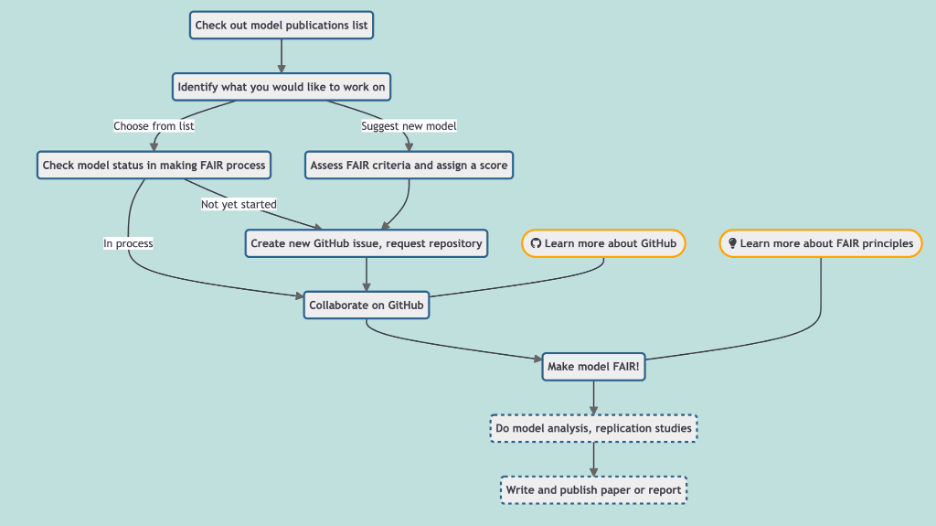
The initiative – Making Models FAIR – aims to provide capacity building opportunities to improve the skills, practices, and protocols to make computational models findable, accessible, interoperable and reusable (FAIR). You can find detailed information about the project on the website (tobefair.org), but here we will present the motivations behind the initiative and a brief outline of the activities.

There is increasing interest to make data and model code FAIR, and there is quite a lot of discussion on standards (https://www.openmodelingfoundation.org/ ). What is lacking are opportunities to gain skills for how to do this in practice. We have selected a list of highly cited publications from different domains and developed a protocol for making those models FAIR. The protocol may be adapted over time when we learn what works well.

This list of model publications provides opportunities to learn the skills needed to make models FAIR. The current list is a starting point, and you can suggest alternative model publications as desired. The main goal is to provide the modeling community a place to build capacity in making models FAIR. How do you use Github, code a model in a language or platform of your choice, and write good model documentation? These are necessary skills for collaboration and developing FAIR models. A suggested way of participating is for an instructor to have student groups participate in this activity, selecting a model publication that is of interest to their research.

To make a model FAIR, we focus on five activities:

  1. If the code is not available with the publication, find out whether the code is available (contact the authors) or replicate the model based on the model documentation. It might also happen that the code is available in programming language X, but you want to have it available in another language.
  2. If the code does not have a license, make sure an appropriate license is selected to make it available.
  3. Get a DOI, which is a permanent link to the model code and documentation. You could use comses.net or zenodo.org or similar services.
  4. Can you improve the model documentation? There is typically a form of documentation in a publication, in the article or an appendix, but is this detailed enough to understand how and why certain model choices have been made? Could you replicate the model from the information provided in the model documentation?
  5. What is the state of the model code? We know that most of us are not professional programmers and might be hesitant to share our code. Good practice is to provide comments on what different procedures are doing, defining variables, and not leave all kinds of wild ideas commented out left in the code base.

Most of the models listed do not have code available with the publication, which will require participants to contact the original others to obtain the code and/or to reproduce the code from the model documentation.

We are eager to learn what challenges people experience to make models FAIR. This could help to improve the protocols we provide. We also hope that those who made a model FAIR publish a contribution in RofASSS or relevant modeling journals. For publishing contributions in journals, it would be interesting to use a FAIR model to explore the robustness of the model results, especially for models that have been published many years ago and for which there were less computational resources available.

The tobefair.org website contains a lot of detailed information and educational opportunities. Below is a diagram from the site that aims to illustrate the road map of making models FAIR, so you can easily find the relevant information. Learn more by navigating to the About page and clicking through the diagram.

Making simulation models findable, accessible, interoperable and reusable is an important part of good scientific practice for simulation research. If important models fail to reach this standard, then this makes it hard for others to reproduce, check and extend them. If you want to be involved – to improve the listed models, or to learn the skills to make models FAIR – we hope you will participate in the project by going to tobefair.org and contributing.


Janssen, M.A., Claborn, K., Edmonds, B., Shahbaznezhadfard, M. and Vanegas-Ferro, M. (2023) Making Models FAIR: An educational initiative to build good ABM practices. Review of Artificial Societies and Social Simulation, 8 May 2023. https://rofasss.org/2023/05/11/fair/


© The authors under the Creative Commons’ Attribution-NoDerivs (CC BY-ND) Licence (v4.0)

Designing Crisis Models: Report of Workshop Activity and Prospectus for Future Research

By: Mike Bithell1, Giangiacomo Bravo2, Edmund Chattoe-Brown3, René Mellema4, Harko Verhagen5 and Thorid Wagenblast6

  1. Formerly Department of Geography, University of Cambridge
  2. Center for Data Intensive Sciences and Applications, Linnaeus University
  3. School of Media, Communication and Sociology, University of Leicester
  4. Department of Computing Science, Umeå Universitet
  5. Department of Computer and Systems Sciences, Stockholm University
  6. Department of Multi-Actor Systems, Delft University of Technology

Background

This piece arose from a Lorentz Center (Leiden) workshop on Agent Based Simulations for Societal Resilience in Crisis Situations held from 27 February to 3 March 2023 (https://www.lorentzcenter.nl/agent-based-simulations-for-societal-resilience-in-crisis-situations.html). During the week, our group was tasked with discussing requirements for Agent-Based Models (hereafter ABM) that could be useful in a crisis situation. Here we report on our discussion and propose some key challenges for platform support where models deal with such challenges.

Introduction

When it comes to crisis situations, modelling can provide insights into which responses are best, how to avoid further negative spill over consequences of policy interventions, and which arrangements could be useful to increase present or future resilience. This approach can be helpful in preparation for a crisis situation, for management during the event itself, or in the post-crisis evaluation of response effectiveness. Further, evaluation of performance in these areas can also lead to subsequent progressive improvement of the models themselves. However, to serve these ends, models need to be built in the most effective way possible. Part of the goal of this piece is to outline what might be needed to make such models effective in various ways and why: Reliability, validity, flexibility and so on. Often, diverse models seem to be built ad hoc when the crisis situation occurs, putting the modellers under time pressure, which can lead to important system aspects being neglected (https://www.jasss.org/24/4/reviews/1.html). This is part of a more general tendency, contrary to say the development of climate modelling, to merely proliferate ABM rather than progress them (https://rofasss.org/2021/05/11/systcomp/). Therefore, we propose some guidance about how to make models for crises that may better inform policy makers about the potential effects of the policies under discussion. Furthermore, we draw attention to the fact that modelling may need to be just part of a wider process of crisis response that occurs both before and after the crisis and not just while it is happening.

Crisis and Resilience: A Working Definition

A crisis can be defined as an initial (relatively stable) state that is disrupted in some way (e.g., through a natural disaster such as a flood) and after some time reaches a new relatively stable state, possibly inferior (or rarely superior – as when an earthquake leads to reconstruction of safer housing) to the initial one (see Fig. 1).

fig1

Fig. 1: Potential outcomes of a disruption of an initial (stable) state.

While some data about daily life may be routinely collected for the initial state and perhaps as the disruption evolves, it is rarely known how the disruption will affect the initial state and how it will subsequently evolve into the new state. (The non-feasibility of collecting much data during a crisis may also draw attention to methods that can more effectively be used, for example, oral history data – see, for example, Holmes and Pilkington 2011.) ABM can help increase the understanding of those changes by providing justified – i. e. process based – scenarios under different circumstances. Based on this definition, and justifying it, we can identify several distinct senses of resilience (for a wider theoretical treatment see, for example, Holing 2001). We decided to use the example of flooding because the group did not have much pre-existing expertise and because it seemed like a fairly typical kind of crisis to draw potentially generalisable conclusions from. However, it should be recognised that not all crises are “known” and building effective resilience capacity for “unknown” crises (like alien invasion) remains an open challenge.

Firstly, a system can be resilient if it is able to return quickly to a desirable state after disruption. For example, a system that allows education and healthcare to become available again in at least their previous forms soon after the water goes down.

Secondly, however, the system is not resilient if it cannot return to anything like its original state (i. e. the society was only functioning at a particular level because it happened that there was no flood in a flood zone) usually owing to resource constraints, poor governance and persistent social inequality. (It is probably only higher income countries that can afford to “build back better” after a crisis. All low income countries can often do is hope they do not happen.) This raises the possibility that more should be invested in resilience without immediate payoff to create a state you can actually return to (or, better, one where vulnerability is reduced) rather than a “Fool’s Paradise” state. This would involve comparison of future welfare streams and potential trade-offs under different investment strategies.

Thirdly, and probably more usually, the system can be considered resilient if it can deliver alternative modes of provision (for example of food) during the crisis. People can no longer go shopping when they want but they can be fed effectively at local community centres which they are nonetheless able to reach despite the flood water.

The final insight that we took from these working definitions is that daily routines operate over different time scales and it may be these scales that determine the unfolding nature of different crises. For example, individuals in a flood area must immediately avoid drowning. They will very rapidly need clean water to drink and food to eat. Soon after, they may well have shelter requirements. After that, there may be a need for medical care and only in the rather longer term for things like education, restored housing and community infrastructure.

Thus, an effective response to a crisis is one that is able to provide what is needed over the timescale at which it occurs (initially escape routes or evacuation procedures, then distribution of water and food and so on), taking into account different levels of need. It is an inability to do this (or one goal conflicting with another as when people escape successfully but in a way that means they cannot then be fed) which leads to the various causes of death (and, in the longer term things like impoverishment – so ideally farmers should be able to save at least some of their livestock as well as themselves) like drowning, starvation, death by waterborne diseases and so on. The effects of some aspects of a crisis (like education disruption and “learning loss”, destruction of community life and of mental health or loss of social capital) may be very long term if they cannot be avoided (and there may therefore be a danger of responding mainly to the “most obvious” effects which may not ultimately be the most damaging).

Preparing for the Model

To deal effectively with a crisis, it is crucial not to “just start building an ABM”, but to approach construction in a structured manner. First, the initial state needs to be defined and modelled. As well as making use of existing data (and perhaps identifying the need to collect additional data going forward, see Gilbert et al. 2021), this is likely to involve engaging with stakeholders, including policy makers, to collect information, for example, on decision-making procedures. Ideally, the process will be carried out in advance of the crisis and regularly updated if changes in the represented system occur (https://rofasss.org/2018/08/22/mb/). This idea is similar to a digital twin https://www.arup.com/perspectives/digital-twin-managing-real-flood-risks-in-a-virtual-world or the “PetaByte Playbook” suggested by Joshua Epstein – Epstein et al. 2011. Second, as much information as possible about potential disruptions should be gathered. This is the sort of data often revealed by emergency planning exercises (https://www.osha.gov/flood), for example involving flood maps, climate/weather assessments (https://check-for-flooding.service.gov.uk/)  or insight into general system vulnerabilities – for example the effects of parts of the road network being underwater – as well as dissections of failed crisis responses in the particular area being modelled and elsewhere (https://www.theguardian.com/environment/2014/feb/02/flooding-winter-defences-environment-climate-change). Third, available documents such as flood plans (https://www.peterborough.gov.uk/council/planning-and-development/flood-and-water-management/water-data) should be checked to get an idea of official crisis response (and also objectives, see below) and thus provide face validity for the proposed model. It should be recognised that certain groups, often disadvantaged, may be engaging in activities – like work – “under the radar” of official data collection: https://www.nytimes.com/2021/09/27/nyregion/hurricane-ida-aid-undocumented-immigrants.html. Engaging with such communities as well as official bodies is likely to be an important aspect of successful crisis management (e.g. Mathias et al. 2020). The general principle here is to do as much effective work as possible before any crisis starts and to divide what can be done in readiness from what can only be done during or after a crisis.

Scoping the Model

As already suggested above, one thing that can and should be done before the crisis is to scope the model for its intended use. This involves reaching a consensus on who the model and its outputs are for and what it is meant to achieve. There is some tendency in ABM for modellers to assume that whatever model they produce (even if they don’t attend much to a context of data or policy) has to be what policy makers and other users must need. Besides asking policy makers, this may also require the negotiation of power relationships so that the needs of the model don’t just reflect the interests/perspective of politicians but also numerous and important but “politically weak” groups like small scale farmers or local manufacturers. Scoping refers not just to technical matters (Is the code effectively debugged? What evidence can be provided that the policy makers should trust the model?) but also to “softer” preparations like building trust and effective communication with the policy makers themselves. This should probably focus any literature reviewing exercise on flood management using models that are least to some extent backed by participatory approaches (for example, work like Mehryar et al. 2021 and Gilligan et al. 2015). It would also be useful to find some way to get policy makers to respond effectively to the existing set of models to direct what can most usefully be “rescued” from them in a user context. (The models that modellers like may not be the ones that policy makers find most useful.)

At the same time, participatory approaches face the unavoidable challenge of interfacing with the scientific process. No matter how many experts believe something to be true, the evidence may nonetheless disagree. So another part of the effective collaboration is to make sure that, whatever its aims, the model is still constructed according to an appropriate methodology (for example being designed to answer clear and specific research questions). This aim obliges us to recognise that the relationship between modellers and policy makers may not just involve evidence and argument but also power, so that modellers then have to decide what compromises they are willing to make to maintain a relationship. In the limit, this may involve negotiating the popular perception that policy makers only listen to academics when they confirm decisions that have already been taken for other reasons. But the existence of power also suggests that modelling may not only be effective with current governments (the most “obvious” power source) but also with opposition parties, effective lobbyists, and NGOs, in building bridges to enhance the voice of “the academic community” and so on.

Finally, one important issue may be to consider whether “the model” is a useful response at all. In order to make an effective compromise (or meet various modelling challenges) it might be necessary to design a set of models with different purposes and scales and consider how/whether they should interface. The necessity for such integration in human-environments systems is already widely recognised (see for example Luus et al. 2013) but it may need to be adjusted more precisely to crisis management models. This is also important because it may be counter-productive to reify policy makers and equate them to the activities of the central government. It may be more worthwhile to get emergency responders or regional health planners, NGOs or even local communities interested in the modelling approach in the first instance.

Large Scale Issues of Model Design

Much as with the research process generally, effective modelling has to proceed through a sequence of steps, each one dependent on the quality of the steps before it. Having characterised a crisis (and looked at existing data/modelling efforts) and achieved a workable measure of consensus regarding who the model is for and (broadly) what it needs to do, the next step is to consider large scale issues of model design (as opposed, for example, to specific details of architecture or coding.)

Suppose, for example, that a model was designed to test scenarios to minimise the death toll in the flooding of a particular area so that governments could focus their flood prevention efforts accordingly (build new defences, create evacuation infrastructure, etc.) The sort of large scale issues that would need to be addressed are as follows:

Model Boundaries: Does it make sense just to model the relevant region? Can deaths within the region be clearly distinguished from those outside it (for example people who escape to die subsequently)? Can the costs and benefits of specific interventions similarly be limited to being clearly inside a model region? What about the extent to which assistance must, by its nature, come from outside the affected area? In accordance with general ABM methodology (Gilbert and Troitzsch 2005), the model needs to represent a system with a clearly and coherently specified “inside” and “outside” to work effectively. This is another example of an area where there will have to be a compromise between the sway of policy makers (who may prefer a model that can supposedly do everything) and the value of properly followed scientific method.

Model Scale: This will also inevitably be a compromise between what is desirable in the abstract and what is practical (shaped by technical issues). Can a single model run with enough agents to unfold the consequences of a year after a flood over a whole region? If the aim is to consider only deaths, then does it need to run that long or that widely? Can the model run fast enough (and be altered fast enough) to deliver the answers that policy makers need over the time scale at which they need them? This kind of model practicality, when compared with the “back of an envelope” calculations beloved of policy advisors, is also a strong argument for progressive modelling (where efforts can be combined in one model rather than diffused among many.)

Model Ontology: One advantage of the modelling process is to serve as a checklist for necessary knowledge. For example, we have to assume something about how individuals make decisions when faced with rising water levels. Ontology is about the evidence base for putting particular things in models or modelling in certain ways. For example, on what grounds do we build an ABM rather than a System Dynamics model beyond doing what we prefer? On what grounds are social networks to be included in a model of emergency evacuation (for example that people are known to rescue not just themselves but their friends and kin in real floods)? Based on wider experience of modelling, the problems here are that model ontologies are often non-empirical, that the assumptions of different models contradict each other and so on. It is unlikely that we already have all the data we need to populate these models but we are required for their effectiveness to be honest about the process where we ideally proceed from completely “made up” models to steadily increasing quality/consensus of ontology. This will involve a mixture of exploring existing models, integrating data with modelling and methods for testing reliability, and perhaps drawing on wider ideas (like modularisation where some modellers specialise in justifying cognitive models, others in transport models and so on). Finally, the ontological dimension may have to involve thinking effectively about what it means to interface a hydrological model (say) with a model of human behaviour and how to separate out the challenges of interfacing the best justified model of each kind. This connects to the issue above about how many models we may need to build an effective compromise with the aims of policy makers.

It should be noted that these dimensions of large scale design may interact. For example, we may need less fine grained models of regions outside the flooded area to understand the challenges of assistance (perhaps there are infrastructure bottlenecks unrelated to the flooding) and escape (will we be able to account for and support victims of the flood who scatter to friends and relatives in other areas? Might escapees create spill over crises in other regions of a low income country?). Another example of such interactions would be that ecological considerations might not apply to very short term models of evacuation but might be much more important to long term models of economic welfare or environmental sustainability in a region. It is instructive to recall that in Ancient Egypt, it was the absence of Nile flooding that was the disaster!

Technical Issues: One argument in favour of trying to focus on specific challenges (like models of flood crises suitable for policy makers) is that they may help to identify specific challenges to modelling or innovations in technique. For example, if a flooding crisis can be usefully divided into phases (immediate, medium and long term) then we may need sets of models each of which creates starting conditions for the next. We are not currently aware of any attention paid to this “model chaining” problem. Another example is the capacity that workshop participants christened “informability”, the ability of a model to easily and quickly incorporate new data (and perhaps even new behaviours) as a situation unfolds. There is a tendency, not always well justified, for ABM to be “wound up” with fixed behaviours and parameters and just left to run. This is only sometimes a good approximation to the social world.

Crisis, Response and Resilience Features: This has already been touched on in the preparatory phase but is also clearly part of large scale model design. What is known (and needs to be known) about the nature of flooding? (For example, one important factor we discovered from looking at a real flood plan was that in locations with dangerous animals, additional problems can be created by these also escaping to unflooded locations (https://www.youtube.com/watch?v=PPpvciP5im8). We would have never worked that out “from the armchair”, meaning it would be left out of a model we would have created.) What policy interventions are considered feasible and how are they supposed to work? (Sometimes the value of modelling is just to show that a plausible sounding intervention doesn’t actually do what you expect.) What aspects of the system are likely to promote (tendency of households to store food) or impede (highly centralised provision of some services) resilience in practice? (And this in turn relates to a good understanding of as many aspects of the pre-crisis state as possible.)

Although a “single goal” model has been used as an example, it would also be a useful thought experiment to consider how the model would need to be different if the aim was the conservation of infrastructure rather than saving lives. When building models really intended for crisis management, however, single issue models are likely to be problematic, since they might show damage in different areas but make no assessment of trade-offs. We experienced a recent example of this where epidemiological COVID models focusing on COVID deaths but not on deaths caused by postponed operations or the health impact from the economic costs of interventions – for example depression and suicide caused by business failure. For an example of attempts at multi-criteria analyses see for example the UK NEA synthesis of key findings (http://uknea.unep-wcmc.org/Resources/tabid/82/Default.aspx), and the IPCC AR6 synthesis for policy makers (https://report.ipcc.ch/ar6syr/pdf/IPCC_AR6_SYR_SPM.pdf).

Model Quality Assurance and “Overheads”

Quality assurance runs right through the development of effective crisis models. Long before you start modelling it is necessary to have an agreement on what the model should do and the challenge of ontology is to justify why the model is as it is and not some other way to successfully achieve this goal. Here, ABM might benefit from more clearly following the idea of “research design”: a clear research question leading to a specifically chosen method, corresponding data collection and analysis leading to results that “provably” answer the right question. This is clearly very different from the still rather widespread “here’s a model and it does some stuff” approach. But the large scale design for the model should also (feeding into the specifics of implementation) set up standards to decide how the model is performing. In the case of crises rather than everyday repeated behaviours, this may require creative conceptual thinking about, for instance, “testing” the model on past flooding incidents (perhaps building on ideas about retrodiction, see for example, Kreps and Ernst 2017). At the same time, it is necessary to be aware of the “overheads” of the model: What new data is needed to fill discovered gaps in the ontology and what existing data must continue to be collected to keep the model effective. Finally, attention must be paid to mundane quality control. How do we assure the absence of disastrous programming bugs? How sensitive is the model to specific assumptions, particularly those with limited empirical support? The answers to these questions obviously matter far more when someone is actually using the model for something “real” and where decisions may be taken that affect people’s livelihoods.

The “Dark Side”

It is also necessary to have a reflexive awareness of ways in which floods are not merely technocratic or philanthropic events. What if the unstated aims of a government in flood control are actually preserving the assets of their political allies? What if a flood model needs to take account of looters and rapists as well as the thirsty and homeless? And, of course, the modellers themselves have to guard against the possibility that models and their assumptions discriminate against the poor, the powerless, or the “socially invisible”. For example, while we have to be realistic about answering the questions that policy makers want answered, we also have to be scientifically critical about what problems they show no interest in.

Conclusion and Next Steps

One way to organise the conclusion of a rather wide-ranging group discussion is to say that the next steps are to make the best use of what already exists and (building on this) to most effectively discover what does not. This could be everything from a decent model of “decision making” during panic to establishing good will from relevant policy makers. At the same time, the activities proposed have to take place within a broad context of academic capabilities and dissemination channels (when people are very busy and have to operate within academic incentive structures). This process can be divided into a number of parts.

  • Getting the most out of models: What good work has been done in flood modelling and on what basis do we call it good? What set of existing model elements can we justify drawing on to build a progressive model? This would be an obvious opportunity for a directed literature review, perhaps building on the recent work of Zhuo and Han (2020).
  • Getting the most out of existing data: What is actually known about flooding that could inform the creation of better models? Do existing models use what is already known? Are there stylised facts that could prune the existing space of candidate models? Can an ABM synthesise interviews, statistics and role playing successfully? How? What appears not to be known? This might also suggest a complementary literature review or “data audit”. This data auditing process may also create specific sub-questions: How much do we know about what happens during a crisis and how do we know it? (For example, rather than asking responders to report when they are busy and in danger, could we make use of offline remote analysis of body cam data somehow?)
  • Getting the most out of the world: This involves combining modelling work with the review of existing data to argue for additional or more consistent data collection. If data matters to the agreed effectiveness of the model, then somehow it has to be collected. This is likely to be carried out through research grants or negotiation with existing data collection agencies and (except in a few areas like experiments) seems to be a relatively neglected aspect of ABM.
  • Getting the most out of policy makers: This is probably the largest unknown quantity. What is the “opening position” of policy makers on models and what steps do we need to take to move them towards a collaborative position if possible? This may have to be as basic as re-education from common misperceptions about the technique (for example that ABM are unavoidably ad hoc.) While this may include more standard academic activities like publishing popular accounts where policy makers are more likely to see them, really the only way to proceed here seems to be to have as many open-minded interactions with as many relevant people as possible to find out what might help the dialogue next.
  • Getting the most out of the population: This overlaps with the other categories. What can the likely actors in a crisis contribute before, during and after the crisis to more effective models? Can there be citizen science to collect data or civil society interventions with modelling justifications? What advantages might there be to discussions that don’t simply occur between academics and central government? This will probably involve the iteration of modelling, science communication and various participatory activities, all of which are already carried out in some areas of ABM.
  • Getting the most out of modellers: One lesson from the COVID crisis is that there is a strong tendency for the ABM community to build many separate (and ultimately non-comparable) models from scratch. We need to think both about how to enforce responsibility for quality where models are actually being used and also whether we can shift modelling culture towards more collaborative and progressive modes (https://rofasss.org/2020/04/13/a-lot-of-time-and-many-eyes/). One way to do this may be precisely to set up a test case on which people can volunteer to work collaboratively to develop this new approach in the hope of demonstrating its effectiveness.

If this piece can get people to combine to make these various next steps happen then it may have served its most useful function!

Acknowledgements

This piece is a result of discussions (both before and after the workshop) by Mike Bithell, Giangiacomo Bravo, Edmund Chattoe-Brown, Corinna Elsenbroich, Aashis Joshi, René Mellema, Mario Paolucci, Harko Verhagen and Thorid Wagenblast. Unless listed as authors above, these participants bear no responsibility for the final form of the written document summarising the discussion! We are grateful to the organisers of the workshop and to the Lorentz Center as funders and hosts for such productive enterprises.

References

Epstein, J. M., Pankajakshan, R., and Hammond, R. A. (2011) ‘Combining Computational Fluid Dynamics and Agent-Based Modeling: A New Approach to Evacuation Planning’, PLoS ONE, 6(5), e20139. doi:10.1371/journal.pone.0020139

Gilbert, N., Chattoe-Brown, E., Watts, C., and Robertson, D. (2021) ‘Why We Need More Data before the Next Pandemic’, Sociologica, 15(3), pp. 125-143. doi:10.6092/issn.1971-8853/13221

Gilbert, N. G., and Troitzch, K. G. (2005) Simulation for the Social Scientist (Buckingham: Open University Press).

Gilligan, J. M., Brady, C., Camp, J. V., Nay, J. J., and Sengupta, P. (2015) ‘Participatory Simulations of Urban Flooding for Learning and Decision Support’, 2015 Winter Simulation Conference (WSC), Huntington Beach, CA, USA, pp. 3174-3175. doi:10.1109/WSC.2015.7408456.

Holling, C. (2001) ‘Understanding the Complexity of Economic, Ecological, and Social Systems’, Ecosystems, 4, pp. 390-405. doi:10.1007/s10021-001-0101-5

Holmes, A. and Pilkington, M. (2011) ‘Storytelling, Floods, Wildflowers and Washlands: Oral History in the River Ouse Project’, Oral History, 39(2), Autumn, pp. 83-94. https://www.jstor.org/stable/41332167

Krebs, F. and Ernst, A. (2017) ‘A Spatially Explicit Agent-Based Model of the Diffusion of Green Electricity: Model Setup and Retrodictive Validation’, in Jager, W., Verbrugge, R., Flache, A., de Roo, G., Hoogduin, L. and Hemelrijk, C. (eds.) Advances in Social Simulation 2015 (Cham: Springer), pp. 217-230. doi:10.1007/978-3-319-47253-9_19

Luus, K. A., Robinson, D. T., and Deadman, P. J. (2013) ‘Representing ecological processes in agent-based models of land use and cover change’, Journal of Land Use Science, 8(2), pp. 175-198. doi:10.1080/1747423X.2011.640357

Mathias, K., Rawat, M., Philip, S. and Grills, N. (2020) ‘“We’ve Got Through Hard Times Before”: Acute Mental Distress and Coping among Disadvantaged Groups During COVID-19 Lockdown in North India: A Qualitative Study’, International Journal for Equity in Health, 19, article 224. doi:10.1186/s12939-020-01345-7

Mehryar, S., Surminski, S., and Edmonds, B. (2021) ‘Participatory Agent-Based Modelling for Flood Risk Insurance’, in Ahrweiler, P. and Neumann, M. (eds) Advances in Social Simulation, ESSA 2019 (Springer: Cham), pp. 263-267. doi:10.1007/978-3-030-61503-1_25

Zhuo, L. and Han, D. (2020) ‘Agent-Based Modelling and Flood Risk Management: A Compendious Literature Review’, Journal of Hydrology, 591, 125600. doi:10.1016/j.jhydrol.2020.125600


Bithell, M., Bravo, G., Chattoe-Brown, E., Mellema, R., Verhagen, H. and Wagenblast, T. (2023) Designing Crisis Models: Report of Workshop Activity and Prospectus for Future Research. Review of Artificial Societies and Social Simulation, 3 May 2023. https://rofasss.org/2023/05/03/designingcrisismodels


© The authors under the Creative Commons’ Attribution-NoDerivs (CC BY-ND) Licence (v4.0)