A Reminder – computability limits on “vibe coding” ABMs (using LLMS to do the programming for us)

By Bruce Edmonds

Introduction

Machine-learning systems, including Large Language Models (LLMs), are algorithms trained on large datasets rather than something categorically different. Consequently, they inherit the standard theoretical and practical limitations that apply to all algorithmic methods. Here we look at the computational limits in terms of “Vibe coding” – where the LLM writes some of the code for an Agent-Based Model (ABM) in response to a descriptive prompt. Firstly, we review a couple of fundamental theorems in terms of producing or checking code relative to its descriptive specification. In general, this is shown to be impossible (Edmonds & Bryson 2004). However, this does not rule out the possibility that this could work with simpler classes of code that fall short of full Turing completeness (being able to mimic any conceivable computation). Thus, I recap a result that shows how simple a class of ABMs can be and still be Turing complete (and thus subject to the previous results) (Edmonds 2004). If you do not like discussion of proofs, I suggest you skip to the concluding discussion. More formal versions of the proofs can be found in the Appendix.

Descriptions of Agent-Based Models

When we describe code, the code should be consistent with that description. That is, the code should be one of the possible codes which are right for the code. In this paper we are crucially concerned with the relationship between code and its description and the difficulty of passing from one to the other.

When we describe an ABM, we can do so in a number of different ways. We can do this with different degrees of formality: from chatty natural language to pseudo code to UML diagrams. The more formal the method of description, the less ambiguity there is concerning its meaning. We can also describe what we want at low or high levels. A low-level description specifies the detail of what bit of code does at each time – an imperative description. A high-level description specifies what the system should do as a whole or what the results should be like. These tend to be declarative descriptions.

Whilst a compiler takes a formal, low-level description of code, an LLM takes a high-level, informal description – in the former case the description is very prescriptive with the same description always producing the same code, but in the case of LLMs there are usually a great many sets of code that are consistent with the input prompt. In other words, the LLM makes a great many decisions for the user, saving time – decisions that a programmer would be forced to confront if using a compiler (Keles 2026).

Here, we are focusing on the latter case, when we use an LLM to do some or all of our ABM programming for us. We use high-level, informal natural language in order to direct the LLM as to what ABM (or aspect of ABM) we would like. Of course, one can be more precise in one’s use of language, but it will tend to remain at a fairly high level (if we are going to do a complete low-level description then we might as well write the code ourselves).

In the formal results below, we restrict ourselves to formal descriptions as this is necessary to do any proofs. However, what is true below for formal descriptions is also true for the wider class of any description as one can always use natural language in a precise manner. For a bit more detail in what we mean here by a formal language, see the Appendix.

The impossibility of a general “specification compiler”

The dream is that one could write a description of what one would like and an algorithm, T, would produce code that fitted that description. However, to enable proofs to be used we need to formalize the situation so that the description, is in some suitably expressive but formal language (e.g. a logic with enumerable expressions). This situation is illustrated in figure 1.
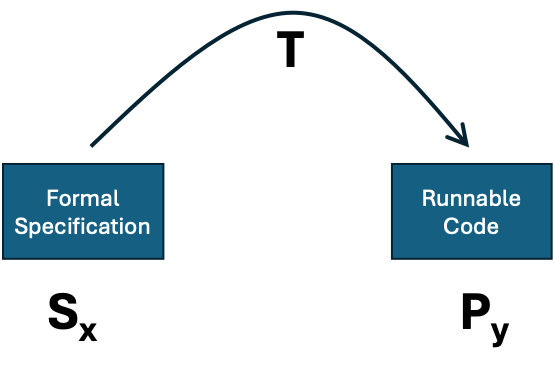
Figure 1. Automatically generating code from a specification.

Obviously, it is easy to write an impossible formal specification – one for which no code exists –so the question is whether there could be such an algorithm, T, that would give us code that fitted a specification when it does exist. The proof is taken from (Edmonds & Bryson 2004) and given in more formal detail in the Appendix.

The proof uses a version of Turing’s “halting problem” (Turing 1937). This is the problem of checking some code (which takes a number as an input parameter) to see if would come to a halt (the program finishes) or go on for ever. The question here is whether there is any effective and systematic way of doing this. In other words, whether there an “automatic program checker” is possible – a program, H, which takes two inputs: the program number, x, and a possible input, y and then works out if the computation Px(y) ever ends.  Whilst in some cases spotting this is easy – e.g. trivial infinite loops – other cases are hard (e.g. testing the even numbers to find one that is not the sum of two prime numbers1).

For our purposes, let us consider a series of easier problems – what I call “limited halting problems”. This is the problem of checking whether programs, x, applied to inputs y ever come to an end, but only for x, y ≤ n, where n is a fixed upper limit. Imagine a big n ´ n table with the columns being the program numbers and the rows being the inputs. Each element is 0 if the combination never stops and 1 if it does. A series of simpler checking programs, Hn, would just look up the answers in the table as long as they had been filled in correctly. We know that these programs exist, since programs that implement simple look up tables always exist and that one of the possible n x´n tables will be the right one for Hn. For each limited halting problem, we can write a formal specification for this, giving us a series of specifications (one for each n).

Now imagine that we had a general-purpose specification compiling program, T, as described above and illustrated in Figure 1. Then, we could do the following:

  1. work out max(x,y)
  2. given any computation Px(y) we could construct the specification for the limited halting problem with index, max(x,y)
  3. then we could use T to construct some code for Hn and
  4. use that code to see if Px(y) ever halted.

Taken together, these steps (a-d) can be written as a new piece of computer code that would solve the general halting problem. However, this we know is impossible (Turing 1937), therefore there is not a general compiling program like T above, it is impossible.

The impossibility of a general “code checker”

The checking problem is apparently less ambitious than the programming problem – here we are given a program and a specification and have ‘only’ to check whether they correspond.  That is whether the code satisfies the specification.
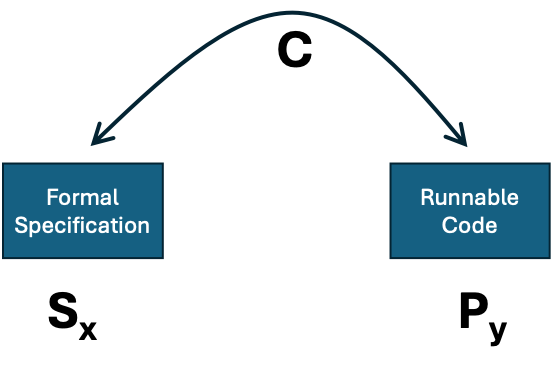
Figure 2. Algorithmically checking if some code satisfies a descriptive specification.

Again, the answer is in the negative.  The proof to this is similar. If there were a checking program C that, given a program and a formal specification would tell us whether the program met the specification, we could again solve the general halting problem.  We would be able to do this as follows:

  1. work out the maximum of x and y (call this m);
  2. construct a sequence of programs implementing all possible finite lookup tables of type: mxm→{0,1};
  3. test these programs one at a time using C to find one that satisfies SHn (we know there is at least one);
  4. use this program to compute whether Px(y) halts. 

Thus, there is no general specification checking program, like C.

Thus, we can see that there are some, perfectly well-formed specifications, where we know code exists that would comply with the specification but where there is no such algorithm, however clever, that will always take us from a specification to the code. Since trained neural nets are a kind of clever algorithm, they cannot do this either.

What about simple Agent-Based Models?

To illustrate how simple such systems can be, I defined a particular class of particularly simple multi-agent system, called “GASP” systems (Giving Agent System with Plans).  These are defined as follows.  There are n agents, labelled: 1, 2, 3, etc., each of which has an integer store which can change and a finite number of simple plans (which do not change).  Each time interval the store of each agent is incremented by one.  Each plan is composed of: a (possibly empty) sequence of ‘give instructions’ and finishes with a single ‘test instruction’.  Each ‘give instruction’, Ga, has the effect of giving 1 unit to agent a (if the store is non-zero).  The ‘test instruction’ is of the form JZa,p,q, which has the effect of jumping (i.e. designating the plan that will be executed next time period) to plan p if the store of agent a is zero and plan q otherwise.  This class is described more in (Edmonds 2004). This is illustrated in Figure 3.
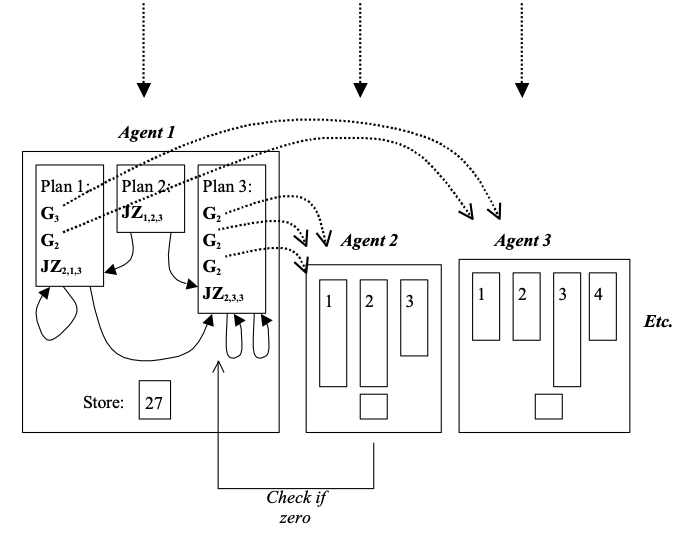
Figure 3. An Illustration of a “GASP” multi-agent system.

Thus ‘all’ that happens in this class of GASP systems is the giving of tokens with value 1 to other agents and the testing of other agents’ store to see if they are zero to determine the next plan.  There is no fancy communication, learning or reasoning done by agents. Agents have fixed and very simple plans and only one variable. However, this class of agent can be shown to be Turing Complete. The proof is taken from (Edmonds & Bryson 2004).

The detail of this proof is somewhat tedious, but basically involves showing that any computation (any Turing Machine) can be mapped to a GASP machine using a suitable effective and systematic mapping. This is done in three stages. That is for any particular Turing Machine:

  1. Create an equivalent “Unlimited Register Machine” (URM), with an indefinitely large (but finite) number of integer variables and four basic kinds of instruction (add one to a variable, set a variable to 0, copy the number in a variable to another, jump to a set instruction if two specified variables are equal. This is known to be possible (Cutland page 57).
  2. Create an equivalent “AURA” machine for this URM machine (Moss & Edmonds 1994)
  3. Create an equivalent “GASP” ABM for this AURA system.

This is unsurprising – many systems that allow for an indefinite storage, basic arithmetic operations and a kind of “IF” statement are Turing Complete (see any textbook on computability, e.g. Cutland 1980).

This example of a class of GASP agents shows just how simple an ABM can be and still be Turing Complete, and subject to the impossibility of a general compiler (like T above) or checker (like C above), however clever these might be.

Discussion

What the above results show is that:

  1. There is no algorithm that will take any formal specification and give you code that satisfies it. This includes trained LLMs.
  2. There is no algorithm that will take any formal specification and some code and then check whether the code satisfies that specification. This includes trained LLMs.
  3. Even apparently simple classes of agent-based model are capable of doing any computation and so there will be examples where the above two negative results hold.

These general results do not mean that there are not special cases where programs like T or C are possible (e.g. compilers). However, as we see from the example ABMs above, it does not take much in the way of its abilities to make this impossible for high level descriptions. Using informal, rather than formal, language does not escape these results, but merely adds more complication (such as vagueness).

In conclusion, this means that there will be kinds of ABMs for which no algorithm can turn descriptions into the correct, working code2. This does not mean that LLMs can’t be very good at producing working code from the prompts given to them. They might (in some cases) be better than the best humans at this but they can never be perfect. There will always be specifications where they either cannot produce the code or produce the wrong code.

The underlying problem is that coding is a very hard, in general. There are no practical, universal methods that always work – even when it is known to be possible. Suitably-trained LLMs, human ingenuity, various methodologies can help but none will be a panacea.

Notes

1. Which would disprove “Goldbach’s conjecture”, whose status is still unknown despite centuries of mathematical effort. If there is such a number it is known to be more than 4×10¹⁷.

2. Of course, if humans are limited to effective procedures – ones that could be formally written down as a program (which seems likely) – then humans are similarly limited.

Acknowledgements

Many thanks for the very helpful comments on earlier drafts of this by Peer-Olaf Siebers, Luis Izquierdo and other members of the LLM4ABM SIG. Also, the participants of AAMAS 2004 for their support and discussion on the formal results when they were originally presented.

Appendix

Formal descriptions

The above proofs rely on the fact that the descriptions are “recursively enumerable”, as in the construction of Gödel (1931). That is, one can index the descriptions (1, 2, 3…) in such a way that once can reconstruct the description from the index. Most formal languages, including those compilers take, computer code, formal logic expressions, are recursively enumerable since they can be constructed from an enumerable set of atoms (e.g. variable names) using a finite number of formal composition rules (e.g. if A and B are allowed expressions, then so are A → B, A & B etc. Any language that can be specified using syntax diagrams (e.g. using Backus–Naur form) will be recursively enumerable in this sense.

Producing code from a specification

The ‘halting problem’ is an undecidable problem (Turing 1937), (that is it is a question for which there does not exist a program that will answer it, say outputting 1 for yes and 0 for no).  This is the problem of whether a given program will eventually come to a halt with a given input.  In other words, whether Px(y), program number x applied to input y, ever finishes with a result or whether it goes on for ever.  Turing proved that there is no such program (Turing 1937).

Define a series of problems, LH1, LH2, etc., which we call ‘limited halting problems’.  LHn is the problem of ‘whether a program with number £n and an input £n will ever halt’.  The crucial fact is that each of these is computable, since each can be implemented as a finite lookup table.  Call the programs that implement these lookup tables: PH1, PH2, etc. respectively.  Now if the specification language can specify each such program, one can form a corresponding enumeration of formal specifications: SH1, SH2,etc. 

The question now is whether there is any way of computationally finding PHn from the specification SHn.  But if there were such a way we could solve Turing’s general halting problem in the following manner: first find the maximum of x and y (call this m); then compute PHm from SHm; and finally use PHm to compute whether Px(y) halts.  Since we know the general halting problem is not computable, we also know that there is no effective way of discovering PHn from SHn even though for each SHn we know an appropriate PHn exists!

Thus, the only question left is whether the specification language is sufficiently expressive to enable SH1, SH2, etc. to be formulated.  Unfortunately, the construction in Gödel’s famous incompleteness proof (Gödel 1931) guarantees that any formal language that can express even basic arithmetic properties will be able to formulate such specifications.

Checking code meets a specification

To demonstrate this, we can reuse the limited halting problems defined in the last subsection.  The counter-example is whether one can computationally check (using C) that a given program P meets the specification SHn.  In this case we will limit ourselves to programs, P, that implement n´n finite lookup tables with entries: {0,1}

Now we can see that if there were a checking program C that, given a program and a formal specification would tell us whether the program met the specification, we could again solve the general halting problem.  We would be able to do this as follows: first find the maximum of x and y (call this m); then construct a sequence of programs implementing all possible finite lookup tables of type: mxm{0,1}; then test these programs one at a time using C to find one that satisfies SHn (we know there is at least one: PHm);and finally use this program to compute whether Px(y) halts.  Thus, there is no such program, C.

Showing GASP ABMs are Turning Complete

The class of Turing machines is computationally equivalent to that of unlimited register machines (URMs) (Cutland page 57).  That is the class of programs with 4 types of instructions which refer to registers, R1, R2, etc. which hold positive integers.  The instruction types are: Sn, increment register Rn by one; Zn, set register Rn to 0; Cn,m, copy the number from Rn to Rm (erasing the previous value); and Jn,m,q, if Rn=Rm jump to instruction number q.  This is equivalent to the class of AURA programs which just have two types of instruction: Sn, increment register Rn by one; and DJZn,q, decrement Rn if this is non-zero then if the result is zero jump to instruction step q (Moss & Edmonds 1994).   Thus we only need to prove that given any AURA program we can simulate its effect with a suitable GASP system.  Given an AURA program of m instructions: i1, i2,…, im which refers to registers R1, …, Rn, we construct a GASP system with n+2 agents, each of which has m plans.   Agent An+1 is basically a dump for discarded tokens and agent An+2 remains zero (it has the single plan: (Gn+1, Ja+1,1,1)). Plan s (sÎ{1,…,m}) in agent number a (aÎ{1,…,n}) is determined as follows: there are four cases depending on the nature of instruction number s:

1.        is is Sa: plan s is (Ja,s+1,s+1);

2.        is is Sb where b¹a: plan s is (Gn+1, Ja,s+1,s+1);

3.        is is DJZa,q: plan s is (Gn+1, Gn+1, Ja,q,s+1);

4.        is is DJZb,q where b¹a: plan s is (Gn+1, Ja,q,s+1).

Thus, each plan s in each agent mimics the effect of instruction s in the AURA program with respect to the particular register that the agent corresponds to.


References

Cutland, N. (1980) Computability: An Introduction to Recursive Function Theory. Oxford University Press.

Edmonds, B. (2004) Using the Experimental Method to Produce Reliable Self-Organised Systems. In Brueckner, S. et al. (eds.) Engineering Self Organising Sytems: Methodologies and Applications, Springer, Lecture Notes in Artificial Intelligence, 3464:84-99. http://cfpm.org/cpmrep131.html

Edmonds, B. & Bryson, J. (2004) The Insufficiency of Formal Design Methods – the necessity of an experimental approach for the understanding and control of complex MAS. In Jennings, N. R. et al. (eds.) Proceedings of the 3rd Internation Joint Conference on Autonomous Agents & Multi Agent Systems (AAMAS’04), July 19-23, 2004, New York. ACM Press, 938-945. http://cfpm.org/cpmrep128.html

Gödel, K. (1931), Über formal unentscheidbare Sätze der Principia Mathematica und verwandter Systeme, I, Monatshefte für Mathematik und Physik, 38(1):173–198. http://doi.org/10.1007/BF01700692

Keles, A. (2026) LLMs could be, but shouldn’t be compilers. Online https://alperenkeles.com/posts/llms-could-be-but-shouldnt-be-compilers/ (viewed 11 Feb 2026)

Moss, S. and Edmonds, B. (1994) Economic Methodology and Computability: Some Implications for Economic Modelling, IFAC Conf. on Computational Economics, Amsterdam, 1994. http://cfpm.org/cpmrep01.html

Turing, A.M. (1937), On Computable Numbers, with an Application to the Entscheidungsproblem. Proceedings of the London Mathematical Society, s2-42: 230-265. https://doi.org/10.1112/plms/s2-42.1.230


Edmonds, B. (2026) A Reminder – computability limits on “vibe coding” ABMs (using LLMS to do the programming for us). Review of Artificial Societies and Social Simulation, 12 Feb 2026. https://rofasss.org/2026/02/12/vibe


© The authors under the Creative Commons’ Attribution-NoDerivs (CC BY-ND) Licence (v4.0)

Why Object-Oriented Programming is not the best method to implement Agent-Based Models

By Martin Hinsch

Research Department of Genetics, Evolution and Environment
University College London

Introduction

A considerable part of the history of software engineering consists of attempts to make the complexity of software systems manageable in the sense of making them easier to implement, understand, modify, and extend. An important aspect of this is the separation of concerns (SoC, Dijkstra 1982). SoC reduces complexity by dividing the implementation of a system into (presumably simpler) problems that can be solved without having to spend too much thought on other aspects of the system. Architecturally, SoC is accomplished through modularity and encapsulation. This means that parts of the system that have strong inter-dependencies are put together into a “module” (in the widest sense) that presents only aspects of itself to the outside that are required to interact with other modules. This is based on the fundamental assumption that the visible behaviour of a component (its interface) is simpler than its potentially complex inner workings which can be ignored when interacting with it.

The history of Object-Oriented Programming (OOP) is complicated and there are various flavours and philosophies of OOP (Black 2013). However, one way to see Object Orientation (OO) is as a coherent, formalised method to ensure modularisation and encapsulation. In OOP data and functions to create and manipulate that data are combined in objects. Depending on programming language, some object functions (methods) and properties can be made inaccessible to users of the object, thereby hiding internal complexity and presenting a simplified behaviour to the outside. Many OO languages furthermore allow for polymorphism, i.e. different types of objects can have the same interface (but different internal implementations) and can therefore be used interchangeably.

After its inception in the 1960s (Dahl and Nygaard 1966) OOP gained popularity throughout the 80s and 90s, to the point that many established programming languages were retrofitted with language constructs that enabled OOP (C++, Delphi, OCaml, CLOS, Visual Basic, …) and new languages were designed based on OOP principles (Smalltalk, Python, Ruby, Java, Eiffel,…). By the mid-90s many computer science departments taught OOP not as one, or even just a useful paradigm, but as the paradigm that would make all other methods obsolete.

This is the climate in which agent-based or individual-based modelling (ABM) emerged as a new modelling methodology. In ABM the behaviour of a system is not modelled directly but instead the model consists of (many, similar or identical) individual components. The interactions between these components leads to the emergence of global behaviour.

While the origins of the paradigm reach further back, it only started to become popular in the 90s (Bianchi and Squazzoni 2015). As the method requires programming expertise, which in academia was rare outside of computer science, the majority of early ABMs were created by or with the help of computer scientists, which in turn applied the at the time most popular programming paradigm. At first glance OOP also seems to be an excellent fit for ABM – agents are objects, their state is represented by object variables, and their behaviour by methods. It is therefore no surprise that OOP has become and remained the predominant way to implement ABMs (even after the enthusiasm for OOP has waned to some degree in mainstream computer science).

In the following I will argue that OOP is not only not necessarily the best method to write ABMs, but that it has, in fact, some substantial drawbacks. More specifically, I think that the claim that OOP is uniquely suited for ABM is based on a conceptual confusion that can lead to a number of bad modelling habits. Furthermore the specific requirements of ABM implementations do not mesh well with an OOP approach.

Sidenote: Strictly speaking, for most languages we have to distinguish between objects (the entities holding values) and classes (the types that describe the makeup and functionality of objects). This distinction is irrelevant for the point I am making, therefore I will only talk about objects.

Conceptual confusion

About every introduction to OOP I have come across starts with a simple toy example that demonstrates core principles of the methods. Usually a few classes corresponding to everyday objects from the same category are declared (e.g. animal, cat, dog or vehicle, car, bicycle). These classes have methods that usually correspond to activities of these objects (bark, meow, drive, honk).

Beyond introducing the basic syntax and semantics of the language constructs involved, these introductions also transport a message: OOP is easy and intuitive because OOP objects are just representations of objects from the real world (or the problem domain). OOP is therefore simply the process of translating objects in the problem domain into software objects.

OOP objects are not representations of real-world objects

While this approach makes the concept of OOP more accessible, it is misleading. At its core the motivation behind OOP is the reduction of complexity by rigorous application of some basic tenets of software engineering (see Introduction). OOP objects therefore are not primarily defined by their representational relationship to real-world objects, but by their functionality as modules in a complicated machine.

For programmers, this initial misunderstanding is harmless as they will undergo continued training. For nascent modellers without computer science background, however, these simple explanations often remain the extent of their exposure to software engineering principles, and the misunderstanding sticks. This is unfortunately further reinforced by many ABM tutorials. Similar to introductions to OOP they present the process of the implementation of an ABM as simply consisting of defining agents as objects, with object properties that represent the real-world entities’ state and methods that implement their behaviour.

At this point a second misunderstanding almost automatically follows. By emphasising a direct correspondence between real-world entities and OOP objects, it is often implied (and sometimes explicitly stated) that modelling is, in fact, the process of translating from one to the other.

OOP is not modelling

As mentioned above, this is a misinterpretation of the intent behind OOP – to reduce software complexity. Beyond that, however, it is also a misunderstanding of the process of modelling. Unfortunately, it connects very well with a common “lay theory of modelling” that I have encountered many times when talking to domain experts with no or little experience with modelling: the idea that a model is a representation of a real system where a “better” or “more correct” representation is a better model.

Models are not (simply) representations

There are various ways to use a model and reasons to do it (Epstein 2008), but put in the most general terms, a (simulation) model is an artificial (software) system that in one way or other teaches us something about a real system that is similar in some aspects (Noble 1997). Importantly, however, the question or purpose for which the model was built determines which aspects of the real system will be part of the model. As a corollary, even given the same real-world system, two models with different questions can look very different, to the point that they use different modelling paradigms (Hinsch and Bijak 2021).

Experienced modellers are aware of all this, of course, and will not be confused by objects and methods. For novices and domain experts without that experience, however, OOP and the way it is taught in connection with ABM can lead to a particular style of modelling where first, all entities in the system are captured as agents, and second, these agents are being equipped with more and more properties and methods, “because it is more realistic”. 

An additional issue with this is that it puts the focus of the modelling process on entities. The direct correspondence between nouns in our (natural language-based) description of the model and classes in our object-oriented implementation makes it very tempting to think about the model solely in terms of entities and their properties.

ABMs are not (just) collections of entities

There are other reasons to build a simulation model, but in most cases the dynamic behaviour of the finished model will be crucial. The reason to use an ABM as opposed to, say, a differential equation model, is not that the system is composed of entities, but that the behaviour of the system depends in such a way on interactions between entities that it cannot be reduced to aggregate population behaviour. The “interesting” part of the model is therefore not the agents per se, but their behaviour and the interactions between them. It is only possible to understand the model’s macroscopic behaviour (which is often the goal of ABM) by thinking about it in terms of microscopic interactions. When creating the model it is therefore crucial to think not (only) about which entities are part of the system, but primarily which entity-level interactions and behaviours are likely to affect the macroscopic behaviour of interest.

To summarise the first part, OOP is a software engineering methodology, not a way to create models. This unfortunately often gets lost in the way it is commonly taught (in particular in connection with ABM), so that OOP can easily lead to a mindset that sees models as representations, emphasises “realism”, and puts the focus on entities rather than the more important interactions.

Practical considerations

But assuming a seasoned modeller who understands all this – surely there would be no harm in choosing an OOP implementation?

At first approximation this is certainly true. The points discussed above apply to the modelling process, so assuming all of the mentioned pitfalls are avoided, the implementation should only be a matter of translating a formal structure into working program code. As long as the code is exactly functionally equivalent to the formal model, it should not matter which programming paradigm is used.

In reality things are a little bit more complicated, however. For a number of reasons model code has different properties and requirements to “normal” code. These combine to make OOP not very suitable for the implementation of ABMs.

OOP does not reduce complexity of an ABM

Any non-trivial piece of software is too complicated to understand all at once. At the same time, we usually want its behaviour to be well-defined, well-understood, and predictable. OOP is a way to accomplish this by partitioning the complexity into manageable pieces. By composing the program of simple(r) modules, which in turn have well-defined, well-understood, and predictable behaviour and which interact in a simple, predictable manner, the complexity of the system remains manageable and understandable.

An ABM has parts that we want to be well-understood and predictable as well, such as parameterisation, data output, visualisation, etc. For these “technical” parts of the simulation program, the usual rules of software engineering apply, and OOP can be a helpful technique. The “semantic” part, i.e. the implementation of the model itself is different, however. By definition, the behaviour of a model is unpredictable and difficult to understand. Furthermore, in an ABM the complexity of the model behaviour is the result of the (non-linear) interactions between its components – the agents – which themselves are often relatively simple. The benefit of OOP – a reduction in complexity by hiding it behind simple object interfaces – therefore does not apply for the semantic part of the implementation of an ABM.

OOP makes ABMs more difficult to read and understand

There is more, however. Making code easy to read and understand is an important part of good practice in programming. This holds even more so for ABM code.

First, most ordinary application code is constructed to produce very specific runtime behaviour. To put it very simply – if the program does not show that behaviour, we have found an error; if it does, our program is by definition correct. For ABM code the behaviour can not be known in advance (otherwise we would not need to simulate). Some of it can be tested by running edge cases with known behaviour, but to a large degree making sure that the simulation program is implemented correctly has to rely on inspection of the source code.

Second, for more complicated models such as ABMs the simulation program is very rarely just the translation of a formal specification. Language is inherently ambiguous and to my knowledge there is no practical mathematical notation for ABMs (or software in general). Given further factors such as turnaround times of scientific work, ambiguity of language and documentation drift, it is often unavoidable that the code remains the ultimate authority on what the model does. In fact, good arguments have been made to embrace this reality and its potential benefits (Meisser 2016), but even so we have to live with the reality that for most ABMs, most of the time, the code is the model.

Finally, an important part of the modelling process is working out the mechanisms that lead to the observed behaviour. This involves trying to relate the observed model behaviour to the effect of agent interactions, often by modifying parameter values or making small changes to the model itself. During this process, being able to understand at a glance what a particular piece of the model does can be very helpful.

For all of these reasons, readability and clarity are paramount for ABM code. Implementing the model in an OO manner directly contradicts this requirement. We would try to implement most functionality as methods of an object. The processes that make up the dynamic behaviour of the model – the interactions between the agents – are then split into methods belonging to various objects. Someone who tries to understand – or modify – a particular aspect of the behaviour then has to jump between these methods, often distributed over different files, having to assemble the interactions that actually take place in their mind. Furthermore, encapsulation, i.e. the hiding of complexity behind simple interfaces, can make ABM code more difficult to understand by giving the misleading impression of simplicity. If we encounter agent.get_income() for example, we might access a simple state variable or we might get the result of a complex calculation. For normal code this would not make a difference since the potential complexity hidden behind that function call should not affect the caller. For ABM code, however, the difference might be crucial.

To sum up the second part – due to the way complexity arises in ABMs an OOP implementation does not lead to simplification, but on the contrary can make the code more difficult to understand and maintain.

Conclusion and discussion

Obviously none of the points mentioned above are absolutes and excellent models have been created using object-oriented languages and implementation principles. However, I would like to argue that the current state of affairs where object-orientation is uncritically presented as the best or even only way to implement agent-based models does on average lead to worse models and worse model implementations. I think that in the future any beginner’s course on agent-based modelling should at least:

  • Clarify the difference between model and implementation.
  • Show examples of the same model implemented according to a number of different paradigms.
  • Emphasise that ABMs are about interactions, not entities.

Concerning best practices for implementation, I think readability is the best guideline. Personally, I have found it useful to implement agents as “shallow” objects with the rule of thumb that only functions that a) have an obvious meaning and b) only affect the agent in question become methods implemented at the same place as the agent definition. Everything else is implemented as free functions, which can then be sorted into files by processes, e.g. ’reproduction’ or ’movement’. This avoids philosophical problems – does infection in a disease model, for example, belong to the agents, some environment object or maybe even a disease object? But above all it makes it easy to quickly find and understand a specific aspect of the model.

If at the same time the model code is kept as independent of the parts of the code that manages technical infrastructure (such as parameter loading or gui) as possible, we can maintain the implementation of the model (and only the model) as a self-contained entity in a form that is optimised for clarity and readability.

References

Bianchi, Federico, and Flaminio Squazzoni. 2015. “Agent-Based Models in Sociology.” Wiley Interdisciplinary Reviews: Computational Statistics 7 (4): 284–306. https://doi.org/10.1002/wics.1356.

Black, Andrew P. 2013. “Object-Oriented Programming: Some History, and Challenges for the Next Fifty Years.” Information and Computation, Fundamentals of Computation Theory, 231 (October): 3–20. https://doi.org/10.1016/j.ic.2013.08.002.

Dahl, Ole-Johan, and Kristen Nygaard. 1966. “SIMULA: An ALGOL-Based Simulation Language.” Commun. ACM 9 (9): 671–78. https://doi.org/10.1145/365813.365819.

Dijkstra, Edsger W. 1982. “On the Role of Scientific Thought.” In Selected Writings on Computing: A Personal Perspective, edited by Edsger W. Dijkstra, 60–66. New York, NY: Springer. https://doi.org/10.1007/978-1-4612-5695-3_12.

Epstein, Joshua M. 2008. “Why Model?” Jasss-the Journal of Artificial Societies and Social Simulation 11 (4): 12. https://doi.org/10.13140/2.1.5032.9927.

Hinsch, Martin, and Jakub Bijak. 2021. “Principles and State of the Art of Agent-Based Migration Modelling.” In Towards Bayesian Model-Based Demography: Agency, Complexity and Uncertainty in Migration Studies. Methodos Series 17, 33-49.

Meisser, Luzius. 2016. “The Code Is the Model.” International Journal of Microsimulation 10 (3): 184–201. https://doi.org/10.34196/ijm.00169.

Noble, Jason. 1997. “The Scientific Status of Artificial Life.” In Poster Presented at the Fourth European Conference on Artificial Life (ECAL97), Brighton, UK.

Hinsch, M.(2025) Why Object-Oriented Programming is not the best method to implement Agent-Based models. Review of Artificial Societies and Social Simulation, 3 Feb 2026. https://rofasss.org/2026/02/03/oop


© The authors under the Creative Commons’ Attribution-NoDerivs (CC BY-ND) Licence (v4.0)

Modelling Deep Structural Change in Agent-Based Social Simulation

By Thorid Wagenblast1, Nicholas Roxburgh2 and Alessandro Taberna3

1 Delft University of Technology, 0009-0003-5324-3778
2 The James Hutton Institute, 0000-0002-7821-1831
3 CMCC Foundation – Euro-Mediterranean Center on Climate Change, RFF-CMCC European Institute on Economics and the Environment, 0000-0002-0207-4148

Introduction

Most agent-based models (ABMs) are designed around the assumption of a broadly stable system architecture. Whether exploring emergent dynamics or testing the effects of external interventions or stressors, such models typically operate with a fixed ontology – predefined agent types, attribute classes, behavioural repertoires, processes, and social and institutional structures. While this can allow rich exploration of dynamics within the given configuration, it limits the model’s possibility space by excluding forms of change that would require the structure itself to evolve.

Some of the most consequential forms of real-world change involve shifts in the system architecture itself. These forms of change – what we refer to here as deep structural change – reconfigure the underlying logic and potentialities of the system. This may involve, for example, dramatic shifts in the environment in which agents operate, the introduction of novel technologies, or reshaping of the roles and categories through which agents understand and act in the world. Such transformations pose a fundamentally different challenge from those typically addressed in most agent-based modelling studies to date – one that pushes beyond parameter tuning or rule adjustment, and calls for new approaches to ontology design, model construction, and the conceptualisation of structural transformation and uncertainty in simulation.

Various theoretical lenses can be applied to this topic. The concepts of transformations or regime shifts seem particularly pertinent. Transformations, in contrast to incremental or minor changes, are changes that are large-scale and significant, but apart from that do not seem to consist of any specific features (Feola, 2015). The changes we explore here are more closely linked to regime shifts, which are characterised by structural changes, but with a notion of abruptness. Methods to detect and understand these regime shifts and the structural changes in relation to social simulation have been discussed for some time (Filatova, Polhill & van Ewijk, 2016). Nonetheless, there is still a lack of understanding around what this structural change entails and how this applies in social simulation, particularly ABMs.

To explore these issues, the European Social Simulation Association (ESSA) Special Interest Group on Modelling Transformative Change (SIG-MTC) organised a dedicated session at the Social Simulation Fest 2025. The session aimed to elicit experiences, ideas, and emerging practices from the modelling community around how deep structural change is understood and approached in agent-based simulation. Participants brought perspectives from a wide range of modelling contexts – including opinion dynamics, energy systems, climate adaptation, food systems, and pandemic response – with a shared interest in representing deep structural change. A majority of participants (~65%) reported that they were already actively working on, or thinking about, aspects of deep structural change in their modelling practice.

The session was framed as an opportunity to move beyond static ontologies and explore how models might incorporate adaptive structures or generative mechanisms capable of capturing deep structural shifts. As described in the session abstract:

We will discuss what concepts related to deep structural change we observe and how models can incorporate adaptive ontologies or generative mechanisms to capture deep structural shifts. Furthermore, we want to facilitate discussion on the challenges we face when trying to model these deep changes and what practices are currently used to overcome these.

This article reflects on key insights from that session, offering a synthesis of participant definitions, identified challenges, and promising directions for advancing the modelling of deep structural change in agent-based social simulation.

Defining deep structural change

Participant perspectives


To explore how participants understood deep structural change and its characteristics, we used both a pre-workshop survey (N=20) and live group discussion activities (N ≈ 20; divided into six discussion groups). The survey asked participants to define “deep structural change” in the context of social systems or simulations, and to explain how it differs from incremental change. During the workshop, groups expanded on these ideas using a collaborative Miro board, where they responded to three prompts: “What is deep structural change?”, “How does it differ from incremental change?”, and they were asked to come up with a “Group definition”. The exercises benefited from the conceptual and disciplinary diversity of participants. Individuals approached the prompts from different angles – shaped by their academic backgrounds and modelling traditions – resulting in a rich and multifaceted view of what deep structural change can entail.

Across the different exercises, a number of common themes emerged. One of the most consistent themes was the idea that deep structural change involves a reconfiguration of the system’s architecture – a shift in its underlying mechanisms, causal relationships, feedback loops, or rules of operation. This perspective goes beyond adjusting parameters; it points to transformations in what the system is, echoing the emphasis in our introductory framing on changes to the system’s underlying logic and potentialities. Participants described this in terms such as “change in causal graph”, “drastic shift in mechanisms and rules”, and “altering the whole architecture”. Some also emphasised the outcomes of such reconfigurations – the emergence of a new order, new dominant feedbacks, or a different equilibrium. As one participant put it, deep structural change is “something that brings out new structure”; others described “profound, systemic shifts that radically reshape underlying structures, processes and relationships”.

Another frequently discussed theme was the role of social and behavioural change in structural transformation – particularly shifts in values, norms, and decision-making. Several groups suggested that changes in attitudes, awareness, or shared meanings could contribute to or signal deeper structural shifts. In some cases, these were framed as indicators of transformation; in others, as contributing factors or intended outcomes of deliberate change efforts. Examples included evolving diets, institutional reform, and shifts in collective priorities. Participants referred to “behavioural change coming from a change in values and/or norms” and “a fundamental shift in values and priorities”.
Furthermore, participants discussed how deep structural change differs from incremental change. They described deep structural change as difficult to reverse and characterised by discontinuities or thresholds that shift the system into a new configuration, compared to slow, gradual incremental change. While some noted that incremental changes might accumulate and contribute to structural transformation, deep structural change was more commonly seen as involving a qualitative break from previous patterns. Several responses highlighted periods of instability or disruption as part of this process, in which the system may reorder around new structures or priorities.

Other topics emerging in passing included the distinction between scale and depth, the role of intentionality, and the extent to which a change must be profound or radical to qualify as deeply structural. This diversity of thought reflects both the complexity of deep structural change as a phenomenon and the range of domains in which it is seen as relevant. Rather than producing a single definition, the session surfaced multiple ways in which change can be considered structural, opening up productive space for further conceptual and methodological exploration.

A distilled definition

Drawing on both existing literature and the range of perspectives shared by participants, we propose the following working definition. It aims to clarify what is meant by deep structural change from the standpoint of agent-based modelling, while acknowledging its place within broader discussions of transformative change.

Deep structural change is a type of transformative change: From an agent-based modelling perspective, it entails an ontological reconfiguration. This reconfiguration is related to the emergence, disappearance, or transformation of entities, relationships, structures, and contextual features. While transformative change can occur within a fixed model ontology, deep structural change entails a revision of the ontology itself.

Challenges in modelling deep structural change

To understand the challenges modellers face when trying to incorporate deep structural change in ABMs or social simulations in general, we again asked participants in the pre-conference survey and had them brainstorm using a Miro board. We asked them about the “challenges [they] have encountered in this process” and “how [they] would overcome these challenges”. The points raised by the participants can roughly be grouped into: theory and data, model complexity, definition and detection.

The first challenge relates to availability of data on deep structural change and formalisation of related theory. Social simulations are increasingly based on empirical data to be able to model real-world phenomena more realistically. However, the data is often not good at capturing structural system changes, reflecting the status quo rather than the potential. While there are theories describing change, formalising this qualitative process comes with its own challenges, leading to hypothesising of the mechanisms and large uncertainties about model accuracy.

Second, a fine line has to be struck between keeping the model simple and understandable, while making it complex enough to allow for ontologies to shift and deep structural change to emerge. Participants highlighted the need for flexibility in the model structures, to allow new structures to develop. On the other hand, there is a risk of imposing transformation paths, so basically “telling” the model how to transform. In other words, it is often unclear how to make sure the necessary conditions for modelling deep structural change are there, without imposing the pathway of change.

The final challenge concerns the definition and detection of deep structural change. This article begins to address the question of definition, but detection remains difficult — even with greater conceptual clarity. How can one be confident that an observed change is genuinely deep and structural, and that the system has entered a new regime? This question touches on our ability to characterise system states, dominant feedbacks, necessary preconditions, and the timescales over which change occurs.

Closing remarks

Understanding transformative change in general, but increasingly so with the use of social simulation, is gaining attention to provide insights into complex issues. For social simulation modellers, it is therefore important to model deep structural changes. This workshop serves as a starting point for hopefully a wider discussion within the ESSA community on how to model transformative change. Bringing together social simulation researchers showed us that this is tackled from different angles. The definition provided above is a first attempt to combine these views, but key challenges remain. Thus far, people have approached this in a case-by-case manner; it would be useful to have a set of more systematic approaches.

The SIG-MTC will continue to examine questions around how we might effectively model deep structural change over the coming months and years, working with the ABM community to identify fruitful routes forward. We invite readers to comment  below on any further approaches to modelling deep structural change that they view as promising and to provide their own reflections on the topics discussed above. If you are interested in this topic and would like to engage further, please check out our ESSA Special Interest Group on Modelling Transformative Change or reach out to any one of us.

Acknowledgements

We would like to thank the participants of the SimSocFest 2025 Workshop on Modelling Deep Structural Change for their engagement in the workshop and the willingness to think along with us.

References

Feola, G. (2015). Societal transformation in response to global environmental change: A review of emerging concepts. Ambio, 44(5), 376–390. https://doi.org/10.1007/s13280-014-0582-z

Filatova, T., Polhill, J. G., & van Ewijk, S. (2016). Regime shifts in coupled socio-environmental systems: Review of modelling challenges and approaches. Environmental Modelling & Software, 75, 333–347. https://doi.org/10.1016/j.envsoft.2015.04.003


Wagenblast, T., Roxburgh, N. and Taberna, A. (2025) Modelling Deep Structural Change in Agent-Based Social Simulation. Review of Artificial Societies and Social Simulation, 8 Aug 2025. https://rofasss.org/2025/08/08/structch


© The authors under the Creative Commons’ Attribution-NoDerivs (CC BY-ND) Licence (v4.0)

Make some noise! Why agent-based modelers should embrace the power of randomness

By Peter Steiglechner1, Marijn Keijzer2

1 Complexity Science Hub, Austria; steiglechner@csh.ac.at
2 Institute for Advanced Study in Toulouse, France

Abstract

‘Noisy’ behavior, belief updating, or decision-making is universally observed, yet typically treated superficially or not even accounted for at all by social simulation modelers. Here, we show how noise can affect model dynamics and outcomes, argue why injecting noise should become a central part of model analyses, and how it can help our understanding of (our mathematical models for) social behavior. We formulate some general lessons from the literature around noise, and illustrate how considering a more complete taxonomy of different types of noise may lead to novel insights.

‘Flooding the zone’ with noise

In his inaugural address in January 2025, US president Trump announced that he would “tariff and tax foreign countries to enrich [US] citizens”. Since then, Trump has flooded the world news with a back-and-forth of threatening, announcing, and introducing tariffs, only to pause, halt, or even revoke them within a matter of days. Trump’s statements on tariffs are just one (albeit rather extreme) example of how noisy and ambiguous political signaling can be. Ambiguity in politics can be strategic (Page, 1976), but it can also simply result from a failure to accurately describe one’s position. Most of us are probably familiar with examples of noise in our own personal lives as well—we may wholeheartedly support one thing, and take a skeptical stance in the next discussion. People have always been inherently noisy (Vul & Pashler, 2008; Kahneman, Sibony, & Sunstein, 2021). But the pervasiveness of noise has become particularly evident in recent years, as social media have made it easier to frequently signal our political opinions (e.g. through like-buttons) and to track the noisy or inconsistent behaviors of others.

Noise can flip model dynamics

As quantitative scientists, most of us are not aware of how important noise can be. Conventional statistical models used in the social sciences typically assume noise away. This is because unexplained variance in simple regression models—if not too abnormally distributed—should not affect the validity of the results; so why should we care? Social simulation models play by different rules. With strictly operating behavioral rules on the micro-level and strong interdependence, noise on the individual level plays a pivotal role in shaping collective outcomes. The importance of noise contrasts with the fact that many models still assume that individual-level properties and actions are fully deterministic, consistent, accurate, and certain.

For example, opinion dynamics models like the Bounded Confidence model (Deffuant et al., 2000; Hegselmann & Krause, 2002) and the Dissemination of Culture model (Axelrod, 1997), both illustrate how global diversity (or ‘polarization’) emerges because of local homogeneity (or ‘consensus’). But this core principle is highly dependent on the absence of noise! The persistence of different cultural areas completely collapses under even the smallest probability of differentiation (Klemm et al., 2003; Flache & Macy, 2011), and fragmentation and polarization become unlikely when agents sometimes independently change their opinions (Pineda, Toral, & Hernández-García, 2011). Similarly, adding noise to the topology of connections can drastically change the dynamics of diffusion and contagion (Centola & Macy, 2007). In computational, agent-based models of social systems, noise does not necessarily cancel out. Many social processes are complex, path-dependent, computationally irreducible and highly non-linear. As such, noise can trigger cascades of ‘errors’ that lead to statistically and qualitatively different behaviors (Macy & Tsvetkova, 2015).

What is noise? What is it not?

There is no one way to introduce noise, or to dedicate and define a source of noise. Noise comes in different shapes and forms. When introducing noise into a model of social phenomena, there are some important lessons to consider:

  1. Noise is not just unpredictable randomness. Instead, noise often represents uncertainty (Macy & Tsvetkova, 2015), which can mean a lack of precision in measurements, ambiguity, or inconsistency. Heteroskedasticity—or the fact that the variance of noise depends on the context—is more than a nuisance in statistical estimation. In ABM research in particular, the variance of uncertainty can be a source of nonlinearity. As such, introducing noise into a model should not be equated merely with ‘running the simulations with different random seeds’ or ‘drawing agent attributes from a normal distribution’.
  2. Noise enters social systems in many ways and in every aspect of the system. This includes noisy observations of others or the environment (Gigerenzer & Brighton, 2009), noisy transmission of signals (McMahan & Evans, 2018), noisy application of heuristics (Mäs & Nax, 2016), noisy interaction patterns (Lloyd-Smith et al., 2005), heterogeneity across societies and across individuals (Kahneman, Sunstein, & Sibony, 2021), and inconsistencies over time (Vul & Pashler, 2008). This is crucial because noise representing different forms and different sources of uncertainty or randomness can affect social phenomena such as social influence, consensus, and polarization in quite distinct ways (as we will outline in the next section).
  3. Noise can be adaptive and heterogeneous across individuals. Noise is not a passive property of a system, but can be a context-dependent, dynamically adapted strategy (Frankenhuis, Panchanathan, & Smaldino, 2022). For example, some individuals tend to be more covert and less precise than others for instance when they perceive themselves to be in a minority (Smaldino & Turner, 2022). Some situations require individuals to be more noisy or unpredictable, like when taking a penalty in soccer, other situations less so, such as writing an online dating ad. People need to decide and adapt the degree of noise in their social signals. Smaldino et al. (2023) highlighted that all strategies that lead collectives to perform well in solving complex tasks depend in some way on maintaining (but also adapting to) a certain level of transient noise.
  4. Noise is itself a signal. There are famous examples of institutions or individuals using noise signaling to spread doubt and uncertainty in debates about climate change or the health effects of smoking (see ‘Merchants of Doubt’ by Oreskes & Conway, 2010). Such actors signal noise to diffuse and discredit valuable information. One could certainly argue that Trump’s noisy stance on tariffs also falls into this category. 

In short, noise represents meaningful, multi-faceted, adaptive, and strategic aspects of a system. In social systems—which are, by definition, systems of interdependence—noise is essential to understanding that system. As Macy & Tsvetkova put it: ‘strip away the noise and you may strip away the explanation’ (2015).

A taxonomy of noise in opinion dynamics

In our paper ‘Noise and opinion dynamics’ published last year in Royal Society of Open Science, we reviewed and examined if and how different sources of noise affect the results in a model of opinion dynamics (Steiglechner et al., 2024). The model builds on the bounded confidence model by Deffuant et al. (2000), calibrated on a survey measuring environmental attitudes. We identified at least four different types of noise in a system of opinion formation through dyadic social influence: exogenous noise, selectivity noise, adaptation noise and ambiguity noise.

Figure 1. Sources of noise in social influence models for opinion dynamics (adapted from Steiglechner et al., 2024)

Each type of noise in our taxonomy enters at a different stage of the interaction process (as shown in Figure 1). Ambiguity and adaptation noise both depend on the current attitudes of the sender and the receiver, respectively, whereas selectivity noise acts on the connections between individuals. Exogenous noise is a ‘catch-all’ category of noise added to the agent’s attributes regardless of the (success of) interaction. Some of these types of noise may have similar effects on population-level opinion dynamics in the thermodynamic limit (Nugent , Gomes, & Wolfram; 2024). But they can lead to quite different trajectories and conclusions about the noise effect when we look at real cases of finite-size and finite-time simulations.

Previous work had established that even small amounts of noise can affect the tendency of the bounded confidence model to produce complete consensus or multiple fragmented, internally coherent groups, but our results highlight that different types of noise can have quite distinct signatures. For example, while selectivity noise always increases the coherence of groups, only intermediate levels of exogenous noise unite individuals. Moreover, exogenous noise leads to convergence because it destroys the internal coherence within the fragmented groups, whereas selectivity noise leads to convergence because it connects polarized individuals across these groups. Ambiguity noise has yet another signature. For example, while low levels of ambiguity have no effect on fragmentation (similar to exogenous and adaptation noise), intermediate and even high levels of ambiguity can produce a somewhat coherent majority-group (similar to selectivity noise). More importantly, ambiguity noise also produces drift: a gradual shift in the average opinion toward a more extreme position (Steiglechner et al., 2024). This is a remarkable result, because not only does ambiguous messaging alter the robustness of the clean, noiseless model, it actually produces a novel type of extremization using only positive influence!

Make some noise!

The above taxonomy is, of course, only a starting point for further discussion: It is not comprehensive and does not take into account adaptiveness or strategy. However, already this variety of effects of the different types of noise on consensus, polarization, and social influence should make us more aware of noise in general—not just as an ‘afterthought’ or a robustness check, but as a modeling choice that represents a critical component of the model. Many modeling studies do consider how noise can affect the model outputs, but it matters—a lot—where and how they introduce noise (see also De Sanctis & Galla, 2009).

Noise is an essential aspect of human behavior, social systems, and politics, as Trump’s back-and-forth on tariffs illustrates quite effectively these days. When studying social phenomena such as opinion formation and polarization, we should take the effects of noise as seriously as the effects of behavioral biases or heuristics (Kahneman, Sunstein, & Sibony, 2021). That is, while we social systems modelers tend to spend a lot of time to formulate, justify, and analyze behavioral rules of individuals—generally considered the core of the model—, we should devote more time to formalize what kind of noise enters the modeled system where and how and analyze how this affects the dynamics (as also argued in the exchange of letters between Kahneman et al. and Krakauer & Wolpert, 2022). Noise is a meaningful, multi-faceted, adaptive, and strategic component of social systems. Rather than ‘just a robustness check’, it is a fundamental ingredient of the modeled system—a type of behavior in itself—and, thus, an object of study on its own. This is a call to all modelers (in the house) to make some noise!

Acknowledgments

We thank Victor Møller Poulsen and Paul E. Smaldino for their feedback.

References

Axelrod, R. (1997). The dissemination of culture: A model with local convergence and global polarization. Journal of Conflict Resolution, 41(2), 203–226. https://doi.org/10.1177/0022002797041002001

Centola, D., & Macy, M. (2007). Complex contagions and the weakness of long ties. American Journal of Sociology, 113(3), 702–734. https://doi.org/10.1086/521848

Deffuant, G., Neau, D., Amblard, F., & Weisbuch, G. (2000). Mixing beliefs among interacting agents. Advances in Complex Systems, 3(1–4), 87–98. https://doi.org/10.1142/S0219525900000078

De Sanctis, L., & Galla, T. (2009). Effects of noise and confidence thresholds in nominal and metric Axelrod dynamics of social influence. Physical Review E, 79(4), 046108. https://doi.org/10.1103/PhysRevE.79.046108

Flache, A., & Macy, M. W. (2011). Local convergence and global diversity: From interpersonal to social influence. Journal of Conflict Resolution, 55(6), 970–995. https://doi.org/10.1177/0022002711414371

Frankenhuis, W. E., Panchanathan, K., & Smaldino, P. E. (2023). Strategic ambiguity in the social sciences. Social Psychological Bulletin, 18, e9923. https://doi.org/10.32872/spb.9923

Gigerenzer, G., & Brighton, H. (2009). Homo heuristicus: Why biased minds make better inferences. Topics in Cognitive Science, 1(1), 107–143. https://doi.org/10.1111/j.1756-8765.2008.01006.x

Hegselmann, R., & Krause, U. (2002). Opinion dynamics and bounded confidence models, analysis and simulation. Journal of Artificial Societies and Social Simulation, 5(3). http://jasss.soc.surrey.ac.uk/5/3/2.html

Kahneman, D., Sibony, O., & Sunstein, C. R. (2021). Noise: A flaw in human judgment. New York: Little, Brown Spark.

Kahneman, D., Krakauer, D.C., Sibony, O., Sunstein, C. and Wolpert, D. (2022) ‘An exchange of letters on the role of noise in collective intelligence’, Collective Intelligence, 1(1), p. 26339137221078593. doi: https://doi.org/10.1177/26339137221078593.

Klemm, K., Eguíluz, V. M., Toral, R., & Miguel, M. S. (2003). Global culture: A noise-induced transition in finite systems. Physical Review E, 67(4), 045101. https://doi.org/10.1103/PhysRevE.67.045101

Lloyd-Smith, J. O., Schreiber, S. J., Kopp, P. E., & Getz, W. M. (2005). Superspreading and the effect of individual variation on disease emergence. Nature, 438(7066), 355–359. https://doi.org/10.1038/nature04153

Macy, M., & Tsvetkova, M. (2015). The signal importance of noise. Sociological Methods & Research, 44(2), 306–328. https://doi.org/10.1177/0049124113508093

Mäs, M., & Nax, H. H. (2016). A behavioral study of “noise” in coordination games. Journal of Economic Theory, 162, 195–208. https://doi.org/10.1016/j.jet.2015.12.010

McMahan, P., & Evans, J. (2018). Ambiguity and engagement. American Journal of Sociology, 124(3), 860–912. https://doi.org/10.1086/701298

Nugent, A., Gomes, S. N., & Wolfram, M.-T. (2024). Bridging the gap between agent based models and continuous opinion dynamics. Physica A: Statistical Mechanics and its Applications, 651, 129886. https://doi.org/10.1016/j.physa.2024.129886

Oreskes, N., & Conway, E. M. (2010). Merchants of doubt: How a handful of scientists obscured the truth on issues from tobacco smoke to global warming. New York: Bloomsbury Press.

Page, B. I. (1976). The theory of political ambiguity. American Political Science Review, 70(3), 742–752. https://doi.org/10.2307/1959865

Pineda, M., Toral, R. & Hernández-García, E. (2011) ‘Diffusing opinions in bounded confidence processes’, The European Physical Journal D, 62(1), pp. 109–117. doi: 10.1140/epjd/e2010-00227-0.

Smaldino, P. E., & Turner, M. A. (2022). Covert signaling is an adaptive communication strategy in diverse populations. Psychological Review, 129(4), 812–829. https://doi.org/10.1037/rev0000344

Smaldino, P. E., Moser, C., Pérez Velilla, A., & Werling, M. (2023). Maintaining transient diversity is a general principle for improving collective problem solving. Perspectives on Psychological Science, Advance online publication. https://doi.org/10.1177/17456916231180100

Steiglechner, P., Keijzer, M. A., Smaldino, P. E., Moser, D., & Merico, A. (2024). Noise and opinion dynamics: How ambiguity promotes pro-majority consensus in the presence of confirmation bias. Royal Society Open Science, 11(4), 231071. https://doi.org/10.1098/rsos.231071

Vul, E., & Pashler, H. (2008). Measuring the crowd within: Probabilistic representations within individuals. Psychological Science, 19(7), 645–647. https://doi.org/10.1111/j.1467-9280.2008.02136.x


Steiglechner, P. & Keijzer, M.(2025) Make some noise! Why agent-based modelers should embrace the power of randomness. Review of Artificial Societies and Social Simulation, 30 May 2025. https://rofasss.org/2025/05/31/noise


© The authors under the Creative Commons’ Attribution-NoDerivs (CC BY-ND) Licence (v4.0)

Nigel Gilbert

By Corinna Elsenbroich & Petra Ahrweiler

The first piece on winners of the European Social Simulation Association’s Rosaria Conte Outstanding Contribution Award for Social Simulation.

Gilbert, a former sociologist of science, has been one of the chief links in Britain between computer scientists and sociologists of science” [1, p. 294]

Nigel has always been and still is a sociologist – not only of science, but also of technology, innovation, methods and many other subfields of sociology with important contributions in theory, empirical research and sociological methods.

He has pioneered a range of sociological areas such as Sociology of Scientific Knowledge, Secondary Analysis of Government Datasets, Access to Social Security Information, Social Simulation, and Complexity Methods of Policy Evaluation.

Collins is right, however, that Nigel is one of the chief links between sociologists and computer scientists in the UK and beyond. This earned him to be elected as the first practising social scientist elected as a Fellow of the Royal Academy of Engineering (1999). As the principal founding father of agent-based modelling as a method for the social sciences in Europe, he initiated, promoted and institutionalised a completely novel way of doing social sciences through the Centre for Research in Social Simulation (CRESS) at the University of Surrey, the Journal of Artificial Societies and Social Simulation (JASSS), founded Sociological Research Online (1993) and Social Research Update. Nigel has 100s of publications on all aspects of social simulation and seminal books like: Simulating societies: the computer simulation of social phenomena (Gilbert & Doran 1994), Artificial Societies: The Computer Simulation of Social Phenomena (Gilbert & Conte 1995), Simulation for the Social Scientist (Gilbert &Troitzsch 2005), and Agent-based Models (Gilbert 2019). His entrepreneurial spirit and acumen resulted in over 25 large project grants (across the UK and Europe), often in close collaboration with policy and decision makers to ensure real life impact, a simulation platform on innovation networks called SKIN, and a spin off company CECAN Ltd, training practitioners in complexity methods and bringing their use to policy evaluation projects.

Nigel is a properly interdisciplinary person, turning to the sociology of scientific knowledge in his PhD under Michael Mulkay after graduating in Engineering from Cambridge’s Emmanuel College. He joined the Sociology Department at the University of Surrey in 1976 where he became professor of sociology in 1991. Nigel was appointed Commander of the Order of the British Empire (CBE) in 2016 for contributions to engineering and social sciences.

He was the second president of the European Social Simulation Association ESSA, the originator of the SIMSOC mailing list, launched and edited the Journal of Artificial Societies and Social Simulation from 1998-2014 and he was the first holder of the Rosaria Conte Outstanding Contribution Award for Social Simulation in 2016, an unanimous decision by the ESSA Management Committee.

Despite all of this, all these achievements and successes, Nigel is the most approachable, humble and kindest person you will ever meet. In any peril he is the person that will bring you a step forward when you need a helping hand. On asking him, after getting a CBE etc. what is the recognition that makes him most happy, he said, with the unique Nigel Gilbert twinkle in his eye, “my Rosaria Conte Award”.

References

Collins, H. (1995). Science studies and machine intelligence. In Handbook of Science and Technology Studies, Revised Edition (pp. 286-301). SAGE Publications, Inc., https://doi.org/10.4135/9781412990127

Gilbert, N., & Doran, R. (Eds.). (1994). Simulating societies: the computer simulation of social phenomena. Routledge.

Gilbert, N. & Conte, R. (1995) Artificial Societies: the computer simulation of social life. Routeledge. https://library.oapen.org/handle/20.500.12657/24305

Gilbert, N. (2019). Agent-based models. Sage Publications.

Gilbert, N., & Troitzsch, K. (2005). Simulation for the social scientist. Open University Press; 2nd edition.


Elsenbroich, C. & Ahrweiler, P. (2025) Nigel Gilbert. Review of Artificial Societies and Social Simulation, 3 Mar 2025. https://rofasss.org/2025/04/03/nigel-gilbert


© The authors under the Creative Commons’ Attribution-NoDerivs (CC BY-ND) Licence (v4.0)

Rosaria Conte (1952–2016)

By Mario Paolucci

This is the “header piece” for a short series on those who have been awarded the “Rosaria Conte Outstanding Award for Social Simulation” awarded by the European Social Simulation Association every two years. It makes no sense to describe those who have got this award without information about the person which it is named after, so this is about her.

Rosaria Conte was one of the first researchers in Europe to recognize and champion agent-based social simulation. She became a leader of what would later become the ESSA community in the 1990s, chairing the 1997 ICCS&SS – First International Conference on Computer Simulation and the Social Sciences in Cortona, Italy, and co-editing with Nigel Gilbert the book Artificial Societies (Gilbert & Conte, 1995). With her unique approach, her open approach to interdisciplinarity, and her charisma, she inspired and united a generation of researchers who still pursue her scientific endeavour.

Known as a relentless advocate for cognitive agents in the agent-based modeling community, Conte stood firmly against the keep-it-simple principle. Instead, she argued that plausible agents—those capable of explaining complex social phenomena where immergence (Castelfranchi, 1998; Conte et al., 2009) is as critical as emergence—require explicit, theory-backed representations of cognitive artifacts (Conte & Paolucci, 2011).

Born in Foggia, Italy, Rosaria graduated in philosophy at the University of Rome La Sapienza in 1976, to later join the Italian National Research Council (Consiglio Nazionale delle Ricerche, CNR). In the ‘90s, she founded and directed the Laboratory of Agent-Based Social Simulation (LABSS) at the Institute of Cognitive Sciences and Technologies (ISTC-CNR). Under her leadership, LABSS became an internationally renowned hub for research on agent-based modeling and social simulation. Conte’s work at LABSS focused on the development of computational models to study complex social phenomena, including cooperation, reputation, and social norms.

Influenced by collaborators such as Cristiano Castelfranchi and Domenico Parisi, whose guidance helped shape her studies of social behavior through computational models, she proposed the integration of cognitive and social theories into agent-based models. Unlike approaches that treated agents as simple rule-followers, Rosaria emphasized the importance of incorporating cognitive and emotional processes into simulations. Her 1995 book, Cognitive and Social Action (Conte & Castelfranchi, 1995), became a landmark text in the field. The book employed their characteristic pre-formal approach—using logic formulas in order to illustrate relationships between concepts, without a fully developed system of postulates or theorem-proving tools. The reason for this approach was, as they noted, that “formalism sometimes disrupts implicit knowledge and theories” (p. 14). The ideas in the book, together with her attention to the dependance relations between agents (Sichman et al., 1998) would go on to inspire Rosaria’s approach to simulation throughout her career.

Rosaria’s research extended to the study of reputation and social norms. For reputation (Conte & Paolucci, 2002), an attempt to create a specific, cognitive-based model has been made with the Repage approach (Sabater et al., 2006). Regarding social norms (Andrighetto et al., 2007), she explored how norms emerge, spread, and influence individual and collective behavior. This work had practical implications for a range of fields, including organizational behavior, policy design, and conflict resolution. She had a key role in the largest recent attempt to create a center for complexity and social sciences, the FuturICT project (Conte et al., 2012).

Rosaria Conte held several leadership positions. She served as President of the European Social Simulation Society (ESSA) from 2010 to 2012. Additionally, she was President of the Italian Cognitive Science Association (AISC) from 2008 to 2009, member of the Italian Bioethics Committee (CNB) from 2013 to 2016, and Vice President of the Italian CNR Scientific Council.

You can watch an interview with Rosaria about FuturICT here: https://www.youtube.com/watch?v=ghgzt5zgGP8

References

Andrighetto, G., Campenni, M., Conte, R., & Paolucci, M. (2007). On the immergence of norms: A normative agent architecture. Proceedings of AAAI Symposium, Social and Organizational Aspects of Intelligence. http://www.aaai.org/Library/Symposia/Fall/fs07-04.php

Castelfranchi, C. (1998). Simulating with Cognitive Agents: The Importance of Cognitive Emergence. Proceedings of the First International Workshop on Multi-Agent Systems and Agent-Based Simulation, 26–44. http://portal.acm.org/citation.cfm?id=665578

Conte, R., Andrighetto, G., & Campennì, M. (2009). The Immergence of Norms in Agent Worlds. In H. Aldewereld, V. Dignum, & G. Picard (Eds.), Engineering Societies in the Agents World X< (pp. 1–14). Springer. https://doi.org/10.1007/978-3-642-10203-5_1

Conte, R., & Castelfranchi, C. (1995). Cognitive Social Action. London: UCL Press.

Conte, R., Gilbert, N., Bonelli, G., Cioffi-Revilla, C., Deffuant, G., Kertesz, J., Loreto, V., Moat, S., Nadal, J.-P., Sanchez, A., Nowak, A., Flache, A., San Miguel, M., & Helbing, D. (2012). Manifesto of computational social science. The European Physical Journal Special Topics, 214(1), 325–346. https://doi.org/10.1140/epjst/e2012-01697-8

Conte, R., & Paolucci, M. (2002). Reputation in Artificial Societies—Social Beliefs for Social Order. Springer. https://iris.unibs.it/retrieve/ddc633e2-a83d-4e2e-e053-3705fe0a4c80/Review%20of%20Conte%2C%20Rosaria%20and%20Paolucci%2C%20Mario_%20Reputation%20in%20Artificial%20Socie.pdf

Conte, R., & Paolucci, M. (2011). On Agent Based Modelling and Computational Social Science. Social Science Research Network Working Paper Series. https://doi.org/10.3389/fpsyg.2014.00668

Gilbert, N., & Conte, R. (Eds.). (1995). Artificial Societies: The Computer Simulation of Social Life. Taylor & Francis, Inc. https://library.oapen.org/bitstream/handle/20.500.12657/24305/1005826.pdf

Sabater, J., Paolucci, M., & Conte, R. (2006). Repage: REPutation and ImAGE Among Limited Autonomous Partners. Journal of Artificial Societies and Social Simulation, 9<(2). http://jasss.soc.surrey.ac.uk/9/2/3.html

Sichman, J. S., Conte, R., Demazeau, Y., & Castelfranchi, C. (1998). A social reasoning mechanism based on dependence networks. 416–420.


Paolucci, M. (2023) Rosaria Conte (1952-2016). Review of Artificial Societies and Social Simulation, 11 Feb 2023. https://rofasss.org/2025/02/11/rosariaconte/


© The authors under the Creative Commons’ Attribution-NoDerivs (CC BY-ND) Licence (v4.0)

Short comment on ‘‘Editorial Note: We need to recognise that peer review is central to the ‘social contract’ of academic citizenship” (JASSS, 2025, 8, 1)

By Paola Galimberti

The editorial note recently published in JASSS (Squazzoni 2025) focuses on the central role of peer review, an issue that has now become central to the debate on scholarly communication, research integrity and the role of artificial intelligence tools in research validation processes, particularly for journals owned by commercial publishers (e.g. Tennant et al. 2017). The fact that reciprocity between scientists is a core value of the academic system, in particular to ensure rigorous validation of scientific claims and self-correction mechanisms, is undeniable, and the call for a more responsible attitude on the part of scientists is therefore timely.

The editorial note suggests initiatives to increase the sustainability of peer review in the journal, including better guidelines and training, linking the cooptation of editorial board members to peer review activities, and establishing rewards to compensate excellent peer reviewers. Regarding these initiatives, while I found the introduction of peer review training to be very appropriate and useful especially for junior researchers, I am concerned about the proposed evaluation of reviewers through ratings, as we all know that whenever a measure becomes a target, it can trigger adaptive behaviour (e.g. engagement in anticipation of a reward, only to decline once received), thus undermining the long-term effectiveness of peer review.

It is time for scientific communities to take responsibility for the reliability of research, which I do not think can be facilitated or enabled by positive or negative incentives alone. That is why I believe that open and public discussion of these issues, involving as many members of the community as possible, is the way forward.

References

Squazzoni, F. (2025). Editorial Note: We Need to Recognise That Peer Review is Central to the ‘Social Contract’ of Academic Citizenship. Journal of Artificial Societies and Social Simulation 28 (1) 6
https://www.jasss.org/28/1/6.html

Tennant, J. P. et al. (2017). A multi-disciplinary perspective on emergent and future innovations in peer review. F1000, 6: 115: https://f1000research.com/articles/6-1151/v3


Galimberti, P. (2025) Short comment on "Editorial Note: We need to recognise that peer review is central to the 'social contract' of academic citizenship" (JASSS, 2025, 8, 1). Review of Artificial Societies and Social Simulation, 3 Feb 2025. https://rofasss.org/2025/02/03/jassseditorial


© The authors under the Creative Commons’ Attribution-NoDerivs (CC BY-ND) Licence (v4.0)

Outlining some requirements for synthetic populations to initialise agent-based models

By Nick Roxburgh1, Rocco Paolillo2, Tatiana Filatova3, Clémentine Cottineau3, Mario Paolucci2 and Gary Polhill1

1  The James Hutton Institute, Aberdeen AB15 8QH, United Kingdom {nick.roxburgh,gary.polhill}@hutton.ac.uk

2  Institute for Research on Population and Social Policies, Rome, Italy {rocco.paolillo,mario.paolucci}@cnr.it

3 Delft University of Technology, Delft, The Netherlands {c.cottineau,t.filatova}@tudelft.nl

Abstract. We propose a wish list of features that would greatly enhance population synthesis methods from the perspective of agent-based modelling. The challenge of synthesising appropriate populations is heightened in agent-based modelling by the emphasis on complexity, which requires accounting for a wide array of features. These often include, but are not limited to: attributes of agents, their location in space, the ways they make decisions and their behavioural dynamics. In the real-world, these aspects of everyday human life can be deeply interconnected, with these associations being highly consequential in shaping outcomes. Initialising synthetic populations in ways that fail to respect these covariances can therefore compromise model efficacy, potentially leading to biased and inaccurate simulation outcomes.

1 Introduction

With agent-based models (ABMs), the rationale for creating ever more empirically informed, attribute-rich synthetic populations is clear: the closer agents and their collectives mimic their  real-world counterparts, the more accurate the models can be and the wider the range of questions they can be used to address (Zhou et al., 2022). However, while many ABMs would benefit from synthetic populations that more fully capture the complexity and richness of real-world populations – including their demographic and psychological attributes, social networks, spatial realms, decision making, and behavioural dynamics – most efforts are stymied by methodological and data limitations. One reason for this is that population synthesis methods have predominantly been developed with microsimulation applications in mind (see review by Chapuis et al. (2022)), rather than ABM. We therefore argue that there is a need for improved population synthesis methods, attuned to support the specific requirements of the ABM community, as well as commonly encountered data constraints. We propose a wish list of features for population synthesis methods that could significantly enhance the capability and performance of ABMs across a wide range of application domains, and we highlight several promising approaches that could help realise these ambitions. Particular attention is paid to methods that prioritise accounting for covariance of characteristics and attributes.

2 The interrelationships among aspects of daily life

2.1 Demographic and psychological attributes

To effectively replicate real-world dynamics, ABMs must realistically depict demographic and psychological attributes at both individual and collective levels. A critical aspect of this realism is accounting for the covariance of such attributes. For instance, interactions between race and income levels significantly influence spatial segregation patterns in the USA, as demonstrated in studies like Bruch (2014).

Several approaches to population synthesis have been developed over the years, often with a specific focus on assignment of demographic attributes. That said, where psychological attributes are collected in surveys alongside demographic data, they can be incorporated into synthetic populations just like other demographic attributes (e.g., Wu et al. (2022)). Among the most established methods is Iterative Proportional Fitting (IPF). While capable of accounting for covariances, it does have significant limitations. One of these is that it “matches distributions only at one demographic level (i.e., either household or individual)” (Zhou et al., 2022 p.2). Other approaches have sought to overcome this – such as Iterative Proportional Updating, Combinatorial Optimisation, and deep learning methods – but they invariably have their own limitations and downsides, though the extent to which these will matter depends on the application. In their overview of the existing population synthesis landscape, Zhou et al., (2022) suggest that deep learning methods appear particularly promising for high-dimensional cases. Such approaches tend to be data hungry, though – a potentially significant barrier to exploitation given many studies already face challenges with survey availability and sample size.

2.2 Social networks

Integrating realistic social networks into ABMs during population synthesis is crucial for effectively mimicking real-world social interactions, such as those underlying epidemic spread, opinion dynamics, and economic transactions (Amblard et al., 2015). In practice, this means generating networks that link agents by edges that represent particular associations between them. These networks may need to be weighted, directional, or multiplex, and potentially need to account for co-dependencies and correlations between layers. Real-world social networks emerge from distinct processes and tendencies. For example, homophily preferences strongly influence the likelihood of friendship formation, with connections more likely to have developed in cases where agents share attributes like age, gender, socio-economic context, and location (McPherson et al., 2001). Another example is personality which can strongly influence the size and nature of an individual’s social network (Zell et al., 2014). For models where social interactions play an important role, it is therefore critical that consideration be given to the underlying factors and mechanisms that are likely to have influenced the development of social networks historically, if synthetic networks are to have any chance of reasonably depicting real world network structures.

Generating synthetic social networks is challenging due to often limited or unavailable data. Consequently, researchers tend to use simple models like regular lattices, random graphs, small-world networks, scale-free networks, and models based on spatial proximity. These models capture basic elements of real-world social networks but can fall short in complex scenarios. For instance, Jiang et al. (2022) describes a model where agents, already assigned to households and workplaces, form small-world networks based on employment or educational ties. While this approach accounts for spatial and occupational similarities, it overlooks other factors, limiting its applicability for networks like friendships that rely on personal history and intangible attributes.

To address these limitations, more sophisticated methods have been proposed, including Exponential Random Graph Models (ERGM) (Robins et al., 2007) and Yet Another Network Generator (YANG) (Amblard et al., 2015). However, they also come with their own challenges; for example, ERGMs sometimes misrepresent the likelihood of certain network structures, deviating from real-world observations.

2.3 Spatial locations

The places where people live, work, take their leisure and go to school are critically interlinked and interrelated with social networks and demographics. Spatial location also affects options open to people, including transport, access to services, job opportunities and social encounters. ABMs’ capabilities in representing space explicitly and naturally is a key attraction for geographers interested in social simulation and population synthesis (Cottineau et al., 2018). Ignoring the spatial concentration of agents with common traits, or failing to account for the effects that space has on other aspects of everyday human existence, risks overlooking a critical factor that influences a wide range of social dynamics and outcomes.

Spatial microsimulation generates synthetic populations tailored to defined geographic zones, such as census tracts (Lovelace and Dumont, 2017). However, many ABM applications require agents to be assigned to specific dwellings and workplaces, not just aggregated zones. While approaches to dealing with this have been proposed, agreement on best practice is yet to cohere. Certain agent-location assignments can be implemented using straightforward heuristic methods without greatly compromising fidelity, if heuristics align well with real-world practices. For example, children might be allocated to schools simply based on proximity, such as in Jiang et al., (2022). Others use rule-based or stochastic methods to account for observed nuances and random variability, though these often take the form of crude approximations. One of the more well-rounded examples is detailed by Zhou et al. (2022). They start by generating a synthetic population, which they then assign to specific dwellings and jobs using a combination of rule-based matching heuristic and probabilistic models. Dwellings are assigned to households by considering factors like household size, income, and dwelling type jointly. Meanwhile, jobs are assigned to workers using a destination choice model that predicts the probability of selecting locations based on factors such as sector-specific employment opportunities, commuting costs, and interactions between commuting costs and individual worker attributes. In this way, spatial location choices are more closely aligned with the diverse attributes of agents. The challenge with such an approach is to obtain sufficient microdata to inform the rules and probabilities.

2.4 Decision-making and behavioural dynamics

In practice, peoples’ decision-making and behaviours are influenced by an array of factors, including their individual characteristics such as wealth, health, education, gender, and age, their social network, and their geographical circumstances. These factors shape – among other things – the information agents’ are exposed to, the choices open to them, the expectations placed on them, and their personal beliefs and desires (Lobo et al., 2023). Consequently, accurately initialising such factors is important for ensuring that agents are predisposed to make decisions and take actions in ways that reflect how their real world counterparts might behave. Furthermore, the assignment of psychographic attributes to agents necessitates the prior establishment of these foundational characteristics as they are often closely entwined.

Numerous agent decision-making architectures have been proposed (see Wijermans et al. (2023)). Many suggest that a range of agent state attributes could, or even should, be taken into consideration when evaluating information and selecting behaviours. For example, the MoHub Framework (Schlüter et al., 2017) proposes four classes of attributes as potentially influential in the decision-making process: needs/goals, knowledge, assets, and social. In practice, however, the factors taken into consideration in decision-making procedures tend to be much narrower. This is understandable given the higher data demands that richer decision-making procedures entail. However, it is also regrettable given we know that decision-making often draws on many more factors than are currently accounted for, and the ABM community has worked hard to develop the tools needed to depict these richer processes.

3 Practicalities

Our wish list of features for synthetic population algorithms far exceeds their current capabilities. Perhaps the main issue today is data scarcity, especially concerning less tangible aspects of populations, such as psychological attributes and social networks, where systematic data collection is often more limited. Another significant challenge is that existing algorithms struggle to manage the numerous conditional probabilities involved in creating realistic populations, excelling on niche measures of performance but not from a holistic perspective. Moreover, there are accessibility issues with population synthesis tools. The next generation of methods need to be made more accessible to non-specialists through developing easy to use stand-alone tools or plugins for widely used platforms like NetLogo, else they risk not having their potential exploited.

Collectively, these issues may necessitate a fundamental rethink of how synthetic populations are generated. The potential benefits of successfully addressing these challenges are immense. By enhancing the capabilities of synthetic population tools to meet the wish list set out here, we can significantly improve model realism and expand the potential applications of social simulation, as well as strengthen credibility with stakeholders. More than this, though, such advancements would enhance our ability to draw meaningful insights, respecting the complexities of real-world dynamics. Most critically, better representation of the diversity of actors and circumstances reduces the risk of overlooking factors that might adversely impact segments of the population – something there is arguably a moral imperative to strive for.

Acknowledgements

MP & RP were supported by FOSSR (Fostering Open Science in Social Science Research), funded by the European Union – NextGenerationEU under NPRR Grant agreement n. MUR IR0000008. CC was supported by the ERC starting Grant SEGUE (101039455).

References

Amblard, F., Bouadjio-Boulic, A., Gutiérrez, C.S. and Gaudou, B. 2015, December. Which models are used in social simulation to generate social networks? A review of 17 years of publications in JASSS. In 2015 Winter Simulation Conference (WSC) (pp. 4021-4032). IEEE. https://doi.org/10.1109/WSC.2015.7408556

Bruch, E.E., 2014. How population structure shapes neighborhood segregation. American Journal of Sociology119(5), pp.1221-1278. https://doi.org/10.1086/675411

Chapuis, K., Taillandier, P. and Drogoul, A., 2022. Generation of synthetic populations in social simulations: a review of methods and practices. Journal of Artificial Societies and Social Simulation25(2). https://doi.org/10.18564/jasss.4762

Cottineau, C., Perret, J., Reuillon, R., Rey-Coyrehourcq, S. and Vallée, J., 2018, March. An agent-based model to investigate the effects of social segregation around the clock on social disparities in dietary behaviour. In CIST2018-Représenter les territoires/Representing territories (pp. 584-589). https://hal.science/hal-01854398v1

Jiang, N., Crooks, A.T., Kavak, H., Burger, A. and Kennedy, W.G., 2022. A method to create a synthetic population with social networks for geographically-explicit agent-based models. Computational Urban Science2(1), p.7. https://doi.org/10.1007/s43762-022-00034-1

Lobo, I., Dimas, J., Mascarenhas, S., Rato, D. and Prada, R., 2023. When “I” becomes “We”: Modelling dynamic identity on autonomous agents. Journal of Artificial Societies and Social Simulation26(3). https://doi.org/10.18564/jasss.5146

Lovelace, R. and Dumont, M., 2017. Spatial microsimulation with R. Chapman and Hall/CRC. https://spatial-microsim-book.robinlovelace.net

McPherson, M., Smith-Lovin, L. and Cook, J.M., 2001. Birds of a feather: Homophily in social networks. Annual review of sociology27(1), pp.415-444. https://doi.org/10.1146/annurev.soc.27.1.415

Robins, G., Pattison, P., Kalish, Y. and Lusher, D., 2007. An introduction to exponential random graph (p*) models for social networks. Social networks29(2), pp.173-191. https://doi.org/10.1016/j.socnet.2006.08.002

Schlüter, M., Baeza, A., Dressler, G., Frank, K., Groeneveld, J., Jager, W., Janssen, M.A., McAllister, R.R., Müller, B., Orach, K. and Schwarz, N., 2017. A framework for mapping and comparing behavioural theories in models of social-ecological systems. Ecological economics131, pp.21-35. https://doi.org/10.1016/j.ecolecon.2016.08.008

Wijermans, N., Scholz, G., Chappin, É., Heppenstall, A., Filatova, T., Polhill, J.G., Semeniuk, C. and Stöppler, F., 2023. Agent decision-making: The Elephant in the Room-Enabling the justification of decision model fit in social-ecological models. Environmental Modelling & Software170, p.105850. https://doi.org/10.1016/j.envsoft.2023.105850

Wu, G., Heppenstall, A., Meier, P., Purshouse, R. and Lomax, N., 2022. A synthetic population dataset for estimating small area health and socio-economic outcomes in Great Britain. Scientific Data9(1), p.19. https://doi.org/10.1038/s41597-022-01124-9

Zell, D., McGrath, C. and Vance, C.M., 2014. Examining the interaction of extroversion and network structure in the formation of effective informal support networks. Journal of Behavioral and Applied Management15(2), pp.59-81. https://jbam.scholasticahq.com/article/17938.pdf

Zhou, M., Li, J., Basu, R. and Ferreira, J., 2022. Creating spatially-detailed heterogeneous synthetic populations for agent-based microsimulation. Computers, Environment and Urban Systems91, p.101717. https://doi.org/10.1016/j.compenvurbsys.2021.101717


Roxburgh, N., Paolillo, R., Filatova, T., Cottineau, C., Paolucci, M. and Polhill, G. (2025) Outlining some requirements for synthetic populations to initialise agent-based models. Review of Artificial Societies and Social Simulation, 27 Jan 2025. https://rofasss.org/2025/01/29/popsynth


© The authors under the Creative Commons’ Attribution-NoDerivs (CC BY-ND) Licence (v4.0)

Quantum computing in the social sciences

By Emile Chappin and Gary Polhill

The dream

What could quantum computing mean for the computational social sciences? Although quantum computing is at an early stage, this is the right time to dream about precisely that question for two reasons. First, we need to keep the computational social sciences ‘in the conversation’ about use cases for quantum computing to ensure our potential needs are discussed. Second, thinking about how quantum computing could affect the way we work in the computational social sciences could lead to interesting research questions, new insights into social systems and their uncertainties, and form the basis of advances in our area of work.

At first glance, quantum computing and the computational social sciences seem unrelated. Computational social science uses computer programs written in high-level languages to explore the consequences of assumptions as macro-level system patterns based on coded rules for micro-level behaviour (e.g., Gilbert, 2007). Quantum computing is in an early phase, with the state-of-the-art being in the order of 100s of qubits [1],[2], and a wide range of applications are envisioned (Hassija, 2020), e.g., in the areas of physics (Di Meglio et al., 2024) and drug discovery (Blunt et al., 2022). Hence, the programming of quantum computers is also in an early phase. Major companies (e.g., IBM, Microsoft, Alphabet, Intel, Rigetti Computing) are investing heavily and have put out high expectations – though how much of this is hyperbole to attract investors and how much it is backed up by substance remains to be seen. This means it is still hard to comprehend what opportunities may come from scaling up.

Our dream is that quantum computing enables us to represent human decision-making on a much larger scale, do more justice to how decisions come about, and embrace the influences people have on each other. It would respect that people’s actual choices are undetermined until they have to show behaviour. On a philosophical level, these features are consistent with how quantum computation operates. Applying quantum computing to decision-making with interactions may help us inform or discover behavioural theory and contribute to complex systems science.

The mysticism around quantum computing

There is mysticism around what qubits are. To start thinking about how quantum computing could be relevant for computational social science, there is no direct need to understand the physics of how qubits are physically set up. However, it is necessary to understand the logic and how quantum computers operate. At the logical level, there are similarities between quantum and traditional computers.

The main similarity is that the building blocks are bits and that they are either 0 or 1, but only when you measure them. A second similarity is that quantum computers work with ‘instructions’. Quantum ‘processors’ alter the state of the bits in a ‘memory’ using programs that comprise sequences of ‘instructions’ (e.g., Sutor, 2019).

There are also differences. They are: 1) qubits are programmed to have probabilities of being a zero or a one, 2) qubits have no determined value until they are measured, and 3) multiple qubits can be entangled. The latter means the values (when measured) depend on each other.

Operationally speaking, quantum computers are expected to augment conventional computers in a ‘hybrid’ computing environment. This means we can expect to use traditional computer programs to do everything around a quantum program, not least to set up and analyse the outcomes.

Programming quantum computers

Until now, programming languages for quantum computing are low-level; like assembly languages for regular machines. Quantum programs are therefore written very close to ‘the hardware’. Similarly, in the early days of electronic computers, instructions for processors to perform directly were programmed directly: punched cards contained machine language instructions. Over time, computers got bigger, more was asked of them, and their use became more widespread and embedded in everyday life. At a practical level, different processors, which have different instruction sets, and ever-larger programs became more and more unwieldy to write in machine language. Higher-level languages were developed, and reached a point where modellers could use the languages to describe and simulate dynamic systems. Our code is still ultimately translated into these lower-level instructions when we compile software, or it is interpreted at run-time. The instructions now developed for quantum computing are akin to the early days of conventional computing, but development of higher-level programming languages for quantum computers may happen quickly.

At the start, qubits are put in entangled states (e.g., Sutor, 2019); the number of qubits at your disposal makes up the memory. A quantum computer program is a set of instructions that is followed. Each instruction alters the memory, but only by changing the probabilities of qubits being 0 or 1 and their entanglement. Instruction sets are packaged into so-called quantum circuits. The instructions operate on all qubits at the same time, (you can think of this in terms of all probabilities needing to add up to 100%). This means the speed of a quantum program does not depend on the scale of the computation in number of qubits, but only depends on the number of instructions that one executes in a program. Since qubits can be entangled, quantum computing can do calculations that take too long to run on a normal computer.

Quantum instructions are typically the inverse of themselves: if you execute an instruction twice, you’re back at the state before the first operation. This means you can reverse a quantum program simply by executing the program again, but now in reverse order of the instructions. The only exception to this is the so-called ‘read’ instruction, by which the value is determined for each qubit to either be 1 or 0. This is the natural end of the quantum program.

Recent developments in quantum computing and their roadmaps

Several large companies such as Microsoft, IBM and Alphabet are investing heavily in developing quantum computing. The route currently is to move up in the scale of these computers with respect to the number of qubits they have and the number of gates (instructions) that can be run. IBM’s roadmap they suggest growing to 7500 instructions, as quickly as 2025[3]. At the same time, programming languages for quantum computing are being developed, on the basis of the types of instructions above. At the moment, researchers can gain access to actual quantum computers (or run quantum programs on simulated quantum hardware). For example, IBM’s Qiskit[4] is one of the first open-source software developing kit for quantum computing.

A quantum computer doing agent-based modelling

The exponential growth in quantum computing capacity (Coccia et al., 2024) warrants us to consider how it may be used in the computational social sciences. Here is a first sketch. What if there is a behavioural theory that says something about ‘how’ different people decide in a specific context on a specifical behavioural action. Can we translate observed behaviour into the properties of a quantum program and explore the consequences of what we can observe? Or, in contrast, can we unravel the assumptions underneath our observations? Could we look at alternative outcomes that could also have been possible in the same system, under the same conceptualization? Given what we observe, what other system developments could have had emerged that also are possible (and not highly unlikely)? Can we unfold possible pathways without brute-forcing a large experiment? These questions are, we believe, different when approached from a perspective of quantum computing. For one, the reversibility of quantum programs (until measuring) may provide unique opportunities. This also means, doing such analyses may inspire new kinds of social theory, or it may give a reflection on the use of existing theory.

One of the early questions is how we may use qubits to represent modelled elements in social simulations. Here we sketch basic alternative routes, with alternative ideas. For each strain we include a very rudimentary application to both Schelling’s model of segregation and the Traffic Basic model, both present in NetLogo model library.

Qubits as agents

A basic option could be to represent an agent by a qubit. Thinking of one type of stylized behaviour, an action that can be taken, then a quantum bit could represent whether that action is taken or not. Instructions in the quantum program would capture the relations between actions that can be taken by the different agents, interventions that may affect specific agents. For Schelling’s model, this would have to imply to show whether segregation takes place or not. For Traffic Basic, this would be what the probability is for having traffic jams. Scaling up would mean we would be able to represent many interacting agents without the simulation to slow down. This is, by design, abstract and stylized. But it may help to answer whether a dynamic simulation on a quantum computer can be obtained and visualized.

Decision rules coded in a quantum computer

A second option is for an agent to perform a quantum program as part of their decision rules. The decision-making structure should then match with the logic of a quantum computer. This may be a relevant ontological reference to how brains work and some of the theory that exists on cognition and behaviour. Consider a NetLogo model with agents that have a variety of properties that get translated to a quantum program. A key function for agents would be that the agent performs a quantum calculation on the basis of a set of inputs. The program would then capture how different factors interact and whether the agent performs specific actions, i.e., show particular behaviour. For Schelling’s segregation model, it would be the decision either to move (and in what direction) or not. For Traffic Basic it would lead to a unique conceptualization of heterogeneous agents. But for such simple models it would not necessarily take benefit of the scale-advantage that quantum computers have, because most of the computation occurs on traditional computers and the limited scope of the decision logic of these models. Rather, it invites to developing much more rich and very different representations of how decisions are made by humans. Different brain functions may all be captured: memory, awareness, attitudes, considerations, etc. If one agent’s decision-making structure would fit in a quantum computer, experiments can already be set up, running one agent after the other (just as it happens on traditional computers). And if a small, reasonable number of agents would fit, one could imagine group-level developments. If not of humans, this could represent companies that function together, either in a value chain or as competitors in a market. Because of this, it may be revolutionary:  let’s consider this as quantum agent-based modelling.

Using entanglement

Intuitively one could consider the entanglement if qubits to be either represent the connection between different functions in decision making, the dependencies between agents that would typically interact, or the effects of policy interventions on agent decisions. Entanglement of qubits could also represent the interaction of time steps, capturing path dependencies of choices, limiting/determining future options. This is the reverse of memory: what if the simulation captures some form of anticipation by entangling future options in current choices. Simulations of decisions may then be limited, myopic in their ability to forecast. By thinking through such experiments, doing the work, it may inspire new heuristics that represent bounded rationality of human decision making. For Schelling’s model this could be the local entanglement restricting movement, it could be restricting movement because of future anticipated events, which contributes to keep the status quo. For Traffic Basic, one could forecast traffic jams and discover heuristics to avoid them which, in turn may inspire policy interventions.

Quantum programs representing system-level phenomena

The other end of the spectrum can also be conceived. As well as observing other agents, agents could also interact with a system in order to make their observations and decisions where the system with which they interact with itself is a quantum program. The system could be an environmental, or physical system, for example. It would be able to have the stochastic, complex nature that real world systems show. For some systems, problems could possibly be represented in an innovative way. For Schelling’s model, it could be the natural system with resources that agents benefit from if they are in the surroundings; resources having their own dynamics depending on usage. For Traffic Basic, it may represent complexities in the road system that agents can account for while adjusting their speed.

Towards a roadmap for quantum computing in the social sciences

What would be needed to use quantum computation in the social sciences? What can we achieve by taking the power of high-performance computing combined with quantum computers when the latter scale up? Would it be possible to reinvent how we try to predict the behaviour of humans by embracing the domain of uncertainty that also is essential in how we may conceptualise cognition and decision-making? Is quantum agent-based modelling at one point feasible? And how do the potential advantages compare to bringing it into other methods in the social sciences (e.g. choice models)?

A roadmap would include the following activities:

  • Conceptualise human decision-making and interactions in terms of quantum computing. What are promising avenues of the ideas presented here and possibly others?
  • Develop instruction sets/logical building blocks that are ontologically linked to decision-making in the social sciences. Connect to developments for higher-level programming languages for quantum computing.
  • Develop a first example. One could think of reproducing one of the traditional models. Either an agent-based model, such as Schelling’s model of segregation or Basic Traffic, or a cellular automata model, such as game-of-life. The latter may be conceptualized with a relatively small number of cells and could be a valuable demonstration of the possibilities.
  • Develop quantum computing software for agent-based modelling, e.g., as a quantum extension for NetLogo, MESA, or for other agent-based modelling packages.

Let us become inspired to develop a more detailed roadmap for quantum computing for the social sciences. Who wants to join in making this dream a reality?

Notes

[1] https://newsroom.ibm.com/2022-11-09-IBM-Unveils-400-Qubit-Plus-Quantum-Processor-and-Next-Generation-IBM-Quantum-System-Two

[2] https://www.fastcompany.com/90992708/ibm-quantum-system-two

[3] https://www.ibm.com/roadmaps/quantum/

[4] https://github.com/Qiskit/qiskit-ibm-runtime

References

Blunt, Nick S., Joan Camps, Ophelia Crawford, Róbert Izsák, Sebastian Leontica, Arjun Mirani, Alexandra E. Moylett, et al. “Perspective on the Current State-of-the-Art of Quantum Computing for Drug Discovery Applications.” Journal of Chemical Theory and Computation 18, no. 12 (December 13, 2022): 7001–23. https://doi.org/10.1021/acs.jctc.2c00574.

Coccia, M., S. Roshani and M. Mosleh, “Evolution of Quantum Computing: Theoretical and Innovation Management Implications for Emerging Quantum Industry,” in IEEE Transactions on Engineering Management, vol. 71, pp. 2270-2280, 2024, https://doi: 10.1109/TEM.2022.3175633.

Di Meglio, Alberto, Karl Jansen, Ivano Tavernelli, Constantia Alexandrou, Srinivasan Arunachalam, Christian W. Bauer, Kerstin Borras, et al. “Quantum Computing for High-Energy Physics: State of the Art and Challenges.” PRX Quantum 5, no. 3 (August 5, 2024): 037001. https://doi.org/10.1103/PRXQuantum.5.037001.

Gilbert, N., Agent-based models. SAGE Publications Ltd, 2007. ISBN 978-141-29496-44

Hassija, V., Chamola, V., Saxena, V., Chanana, V., Parashari, P., Mumtaz, S. and Guizani, M. (2020), Present landscape of quantum computing. IET Quantum Commun., 1: 42-48. https://doi.org/10.1049/iet-qtc.2020.0027

Sutor, R. S. (2019). Dancing with Qubits: How quantum computing works and how it can change the world. Packt Publishing Ltd.


Chappin, E. & Polhill, G (2024) Quantum computing in the social sciences. Review of Artificial Societies and Social Simulation, 25 Sep 2024. https://rofasss.org/2024/09/24/quant


© The authors under the Creative Commons’ Attribution-NoDerivs (CC BY-ND) Licence (v4.0)

Delusional Generality – how models can give a false impression of their applicability even when they lack any empirical foundation

By Bruce Edmonds1, Dino Carpentras2, Nick Roxburgh3, Edmund Chattoe-Brown4 and Gary Polhill3

  1. Centre for Policy Modelling, Manchester Metropolitan University
  2. Computational Social Science, ETH Zurich
  3. James Hutton Institute, Aberdeen
  4. University of Leicester

“Hamlet: Do you see yonder cloud that’s almost in shape of a camel?
Polonius: By the mass, and ‘tis like a camel, indeed.
Hamlet: Methinks it is like a weasel.
Polonius: It is backed like a weasel.
Hamlet: Or like a whale?
Polonius: Very like a whale.

Models and Generality

The essence of a model is that it represents – if it is not a model of something it is not a model at all (Zeigler 1976, Wartofsky 1979). A random bit of code or set of equations is not a model. The point of a model is that one can use the model to infer or understand some aspects about what it represents. However, models can represent a variety of kinds of things in a variety of ways (Edmonds & al. 2019) – it can represent ideas, correspond to data, or aspects of other models and it can represent each of these in either a vague or precise manner. To completely understand a model – its construction, properties and working – one needs to understand how it does this mapping. This piece focuses attention on this mapping, rather than the internal construction of models.

What a model reliably represents may be a single observed situation, but it might satisfactorily represent more than one such situation. The range of situations that the model satisfactorily represents is called the “scope” of the model (what is “satisfactory” depending on the purpose for which the model is being used). The more extensive the scope, the more “general” we say the model is. A model that only represents one case has no generality at all and may be more in the nature of a description.

There is a hunger for general accounts of social phenomena (let us call these ‘theories’). However, this hunger is often frustrated by the sheer complexity and ‘messiness’ involved in such phenomena. If every situation we observe is essentially different, then no such theory is possible. However, we hope that this is not the case for the social world and, indeed, informal observation suggests that there is, at least some, commonality between situations – in other words, that some kind of reliable generalisation about social phenomena might be achievable, however modest (Merton 1968). This piece looks at two kinds of applicability – analogical applicability and empirical applicability – and critiques those that conflate them. Although the expertise of the authors is in the agent-based modelling of social phenomena, and so we restrict our discussion to this, we strongly suspect that our arguments are true for many kinds of modelling across a range of domains.

In the next sections we contrast two uses for models: as analogies (ways of thinking about observed systems) and those that intend to represent empirical data in a more precise way. There are, of course, other uses of model such as that of exploring theory which have nothing to do with anything observed.

Models used as analogies

Analogical applicability comes from the flexibility of the human mind in interpreting accounts in terms of the different situations. When we encounter a new situation, the account is mapped onto it – the account being used as an analogy for understanding this situation. Such accounts are typically in the form of a narrative, but a model can also be used as an analogy (which is the case we are concerned with here). The flexibility with which this mapping can be constructed means that such an account can be related to a wide range of phenomena. Such analogical mapping can lead to an impression that the account has a wide range of applicability. Analogies are a powerful tool for thinking since it may give us some insights into otherwise novel situations. There are arguments that analogical thinking is a fundamental aspect of human thought (Hofstadter 1995) and language (Lakoff 2008). We can construct and use analogical mappings so effortlessly that they seem natural to us. The key thing about analogical thinking is that the mapping from the analogy to the situation to which it is applied is re-invented each time – there is no fixed relationship between the analogy and what it might be applied to. We are so good at doing this that we may not be aware of how different the constructed mapping is each time. However, its flexibility comes at a cost, namely that because there is no well-defined relationship with what it applies to, the mapping tends to be more intuitive than precise. An analogy can give insights but analogical reasoning suggests rather than establishes anything reliably and you cannot empirically test it (since analogical mappings can be adjusted to avoid falsification). Such “ways of thinking” might be helpful, but equally might be misleading [note ‎1].

Just because the content of an analogy might be expressed formally does not change any of this (Edmonds 2018), in fact formally expressed analogies might give the impression of being applicable, but often are only related to anything observed via ideas – the model relates to some ideas, and the ideas relate to reality (Edmonds 2000). Using models as analogies is a valid use of models but this is not an empirically reliable one (Edmonds et al. 2019). Arnold (2013) makes a powerful argument that many of the more abstract simulation models are of this variety and simply not relatable to empirically observed cases and data at all – although these give the illusion of wide applicability, that applicability is not empirical. In physics the ways of thinking about atomic or subatomic entities have changed over time whilst the mathematically-expressed, empirically-relevant models have not (Hartman 1997). Although Thompson (2022) concentrates on mathematically formulated models, she also distinguishes between well-validated empirical models and those that just encapsulate the expertise/opinion of the modeller. She gives some detailed examples of where the latter kind had disproportionate influence, beyond that of other expertise, just because it was in the form of a model (e.g. the economic impact of climate change).

An example of an analogical model is described in Axelrod (1984) – a formalised tournament where algorithmically-expressed strategies are pitted against each other, playing the iterated prisoner’s dilemma game. It is shown how the ‘tit for tat’ strategy can survive against many other mixes of strategies (static or evolving).  In the book, the purpose of the model is to suggest a new way of thinking about the evolution of cooperation. The book claims the idea ‘explains’ many observed phenomena, but this in an analogical manner – no precise relationship with any observed measurements is described. There is no validation of the model here or in the more academic paper that described these results (Axelrod & Hamilton 1981).

Of course, researchers do not usually call their models “analogies” or “analogical” explicitly but tend to use other phrasings that imply a greater importance. An exception is Epstein (2008) where it is explicitly listed as one of the 15 modelling purposes, other than prediction, that he discusses. Here he says such models are “…more than beautiful testaments to the unifying power of models: they are headlights in dark unexplored territory.” (ibid.) thus suggesting their use in thinking about phenomena where we do not already have reliable empirical models. Anything that helps us think about such phenomena could be useful, but that does not mean they are at all reliable. As Herbert Simon said: “Metaphor and analogy can be helpful, or they can be misleading. ” (Simon 1968, p. 467).

Another purpose listed in Epstein (2008) is to “Illuminate core dynamics”. After raising the old chestnut that “All models are wrong”, he goes on to justify them on the grounds that “…they capture qualitative behaviors of overarching interest”. This is fine if the models are, in fact, known to be useful as more than vague analogies [Note 2] – that they do, in some sense, approximate observed phenomena – but this is not the case with novel models that have not been empirically tested. This phrase is more insidious, because it implies that the dynamics that have been illuminated by the model are “core” – some kind of approximation of what is important about the phenomena, allowing for future elaborations to refine the representation. This implies a process where an initially rough idea is iteratively improved. However, this is premature because we do not know if what has been abstracted away in the abstract model was essential to the dynamics of the target phenomena or not without empirical testing – this is just assumed or asserted based on the intuitions of the modeller.

This idea of the “core dynamics” leads to some paradoxical situations – where a set of competing models are all deemed to be core. Indeed, the literature has shown how the same phenomenon can be modelled in many contrasting ways. For instance, political polarisation has been modelled through models with mechanisms for repulsion, bounded confidence, reinforcement, or even just random fluctuations, to name a few (Flache et al., 2017; Banisch & Olbrich 2019; Carpentras et al. 2022). However, it is likely that only a few of them contribute substantially to the political polarisation we observe in the real world, and so that all the others are not a real “core dynamic” but until we have more empirical work we do not know which are core and which not.

A related problem with analogical models is that, even when relying on parsimony principles [Note 3], it is not possible to decide which model is better. This aspect, combined with the constant production of new models, can makes the relevant literature increasingly difficult to navigate as models proliferate without any empirical selection, especially for researchers new to ABM. Furthermore, most analogical models define their object of study in an imprecise manner so that it is hard to evaluate whether they are even intended to capture element of any particular observed situation. For example, opinion dynamics models rarely define the type of interaction they represent (e.g. in person vs online) or even what an opinion is. This has led to cases where even knowledge of facts has been studied as “opinions” (e.g. Chacoma & Zanette, 2015).

In summary, analogical models can be a useful tool to start thinking about complex phenomena. However, the danger with them is that they give an impression of progress but result in more confusion than clarity, possibly slowing down scientific progress. Once one has some possible insights, one needs to confront these with empirical data to determine which are worth further investigation.

Models that relate directly to empirical data

An empirical model, in contrast, has a well-defined way of mapping to the phenomena it represents. For example, the variables of the gas laws (volume, temperature and pressure) are measured using standard methods developed over a long period of time, one does not invent a new way of doing this each time the laws are applied. In this case, the ways of measuring these properties have developed alongside the mathematical models of the laws so that these work reliably under broad (and well known) conditions and cannot be adjusted at the whim of a modeller. Empirical generality comes from when a model applies reliably to many different situations – in the case of the gas laws, to a wide range of materials in gaseous form to a high degree of accuracy.

Empirical models can be used for different purposes, including: prediction, explanation and description (Edmonds et al. 2019). Each of these uses how the model is mapped to empirical data in different ways, to reflect these purposes. With a descriptive model the mapping is one-way from empirical data to the model to justify the different parts. In a predictive model, the initial model setup is determined from known data and the model is then run to get its results. These results are then mapped back to what we might expect as a prediction, which can be later compared to empirically measured values to check the model’s validity. An explanatory model supports a complex explanation of some known outcomes in terms of a set of processes, structures and parameter values. When it is shown that the outcomes of such a model sufficiently match those from the observed data – the model represents a complex chain of causation that would result in that data in terms of the processes, structures and parameter values it comprised. It thus supports an explanation in terms of the model and its input of what was observed. In each of these three cases the mapping from empirical data to the model happens in a different order and maybe in a different direction, however they all depend upon the mapping being well defined.

Cartwright (1983), studying how physics works, distinguished between explanatory and phenomenological laws – the former explains but does not necessary relate exactly to empirical data (such as when we fit a line to data using regression), whilst the latter fits the data but does not necessarily explain (like the gas laws). Thus the jobs of theoretical explanation and empirical prediction are done by different models or theories (often calling the explanatory version “theory” and the empirical versions “models”). However, in physics the relationship between the two is, itself, examined so that the “bridging laws” between them are well understood, especially in formal terms. In this case, we attribute reliable empirical meaning to the explanatory theories to the extent that the connection to the data is precise, even though it is done via the intermediary of an “phenomenological” model because both mappings (explanatory↔phenomenological and phenomenological↔empirical data) are precise and well established. The point is that the total mapping from model or theory to empirical data is not subject to interpretation or post-hoc adjustment to improve its fit.

ABMs are often quite complicated and require many parameters or other initialising input to be specified before they can be run. If some of these are not empirically determinable (even in principle) then these might be guessed at using a process of “calibration”, that is searching the space of possible initialisations for some values for which some measured outcomes of the results match other empirical data. If the model has been separately shown to be empirically reliable then one could do such a calibration to suggest what these input values might have been. Such a process might establish that the model captures a possible explanation of the fitted outcomes (in terms of the model plus those backward-inferred input values), but this is not a very strong relationship, since many models are very flexible and so could fit a wide range of possible outcomes. The reliability of such a suggested explanation, supported by the model, is only relative to (a) the empirical reliability of any theory or other assumptions the model is built upon (b) how flexibly the model outcomes can be adjusted to fit the target data and (c) how precisely the choice of outcome measures and fit are. Thus, calibration does not provide strong evidence of the empirical adequacy of an ABM and any explanation supported by such a procedure is only relative to the ‘wiggle room’ afforded by free parameters and unknown input data as well as any assumptions used in the making of the model. However, empirical calibration is better than none and may empirically fix the context in which theoretical exploration occurs – showing that the model is, at least, potentially applicable to the case being considered [Note 4].

An example of a model that is strongly grounded in empirical data is the “538” model of the US electoral college for presidential elections (Silver 2012). This is not an ABM but more like a micro-simulation. It aggregates the uncertainty from polling data to make probabilistic predictions about what this means for the outcomes. The structure of the model comes directly from the rules of the electoral college, the inputs are directly derived from the polling data and it makes predictions about the results that can be independently checked. It does a very specific, but useful job, in translating the uncertainty of the polling data into the uncertainty about the outcome.

Why this matters

If people did not confuse the analogical and empirical cases, there would not be a problem. However, researchers seem to suffer from a variety of “Kuhnian Spectacles” (Kuhn 1962) – namely that because they view their target systems through an analogical model, they tend to think that this is how that system actually is – i.e. that the model has not just analogical but also empirical applicability. This is understandable, we use many layers of analogy to navigate our world and in many every-day cases it is practical to conflate our models with the reality we deal with (when they are very reliable). However, people who claim to be scientists are under an obligation to be more cautious and precise than this, since others might wish to rely upon our theories and models (this is, after all, why they support us in our privileged position). However, such caution is not always followed. There are cases where modellers declare their enterprise a success even after a long period without any empirical backing, making a variety of excuses instead of coming clean about this lack (Arnold 2015).

Another fundamental aspect is that agent-based models can be very interdisciplinary and, because of that, they can be used also by researchers in different fields. However, many fields do not consider models as simple analogies, especially when they provide precise mathematical relationship among variables. This can easily result in confusions where the analogical applicability of ABMs is interpreted as empirical in another field.

Of course, we may be hopeful that, sometime in the future, our vague or abstract analogical model maybe developed into something with proven empirical abilities, but we should not suggest such empirical abilities until these have been established. Furthermore, we should be particularly careful to ensure that non-modellers understand that this possibility is only a hope and not imply anything otherwise (e.g. imply that it is likely to have empirical validity). However, we suspect that in many cases this confusion goes beyond optimistic anticipation and that some modellers conflate analogical with empirical applicability, assuming that their model is basically right just because it seems that way to them. This is what we call “delusional generality” – that a researcher is under the impression that their model has a wide applicability (or potentially wide applicability) due to the attractiveness of the analogy it presents. In other words, unaware of the unconscious process of re-inventing the mapping to each target system, they imagine (without further justification) that it has some reliable empirical (or potentially empirical) generality at its core [Note 5].

Such confusion can have severe real-world consequences if a model with only analogical validity is assumed to also have some empirical reliability. Thompson (2022) discusses how abstract economic models of the cost of future climate change did affect the debate about the need for prevention and mitigation, even though they had no empirical validity. However, agent-based modellers have also made the same mistake, with a slew of completely unvalidated models about COVID affecting public debate about policy (Squazzoni et al 2021).

Conclusion

All of the above discussion raises the question of how we might achieve reliable models with even a moderate level of empirical generality in the social sciences. This is a tricky question of scientific strategy, which we are not going to answer here [Note 6]. However, we question whether the approach of making “heroic” jumps from phenomena to abstract non-empirical models on the sole basis of its plausibility to its authors will be a productive route when the target is complex phenomena, such as socio-cognitive systems (Dignum, Edmonds and Carpentras 2022). Certainly, that route has not yet been empirically demonstrated.

Whatever the best strategy is, there is a lot of theoretical modelling in the field of social simulation that assumes or implies that it is the precursor for empirical applicability and not a lot of critique about the extent of empirical success achieved. The assumption seems to be that abstract theory is the way to make progress understanding social phenomena but, as we argue here, this is largely wishful thinking – the hope that such models will turn out to have empirical generality being a delusion.  Furthermore, this approach has substantive deleterious effects in terms of encouraging an explosion of analogical models without any process of selection (Edmonds 2010). It seems that the ‘famine’ of theory about social phenomena with any significant level of generality is so severe, that many seem to give credence to models they might otherwise reject – constructing their understanding using models built on sand.

Notes

1. There is some debate about the extent to which analogical reasoning works, what kind of insights it results in and under what circumstances (Hofstede 1995). However, all we need for our purposes is that: (a) it does not reliably produce knowledge, (b) the human mind is exceptionally good at ‘fitting’ analogies to new situations (adjusting the mapping to make it ‘work’ somehow) and (c) due to this ability analogies can be far more convincing that the analogical reasoning warrants.

2. In pattern-oriented modelling (Grimm & al 2005) models are related to empirical evidence in a qualitative (pattern-based) manner, for example to some properties of a distribution of numeric outcomes. In this kind of modelling, a precise numerical correspondence is replaced by a set of qualitative correspondences in many different dimensions. In this the empirical relevance of a model is established on the basis that it is too hard to simultaneously fit a model to evidence in this way, thus ruling that out as a source of its correspondence with that evidence.

3. So-called “parsimony principles” are a very unreliable manner of evaluating competing theories on grounds other than convenience or that of using limited data to justify the values of parameters (Edmonds 2007).

4. In many models a vague argument for its plausibility is often all that is described to show that it is applicable to the cases being discussed. At least calibration demonstrates its empirical applicability, rather than simply assuming it.

5. We are applying the principle of charity here, assuming that such conflations are innocent and not deliberate. However, there is increasing pressure from funding agencies to demonstrate ‘real life relevance’ so some of these apparent confusions might be more like ‘spin’ – trying to give an impression of empirical relevance even when this is merely an aspiration, in order to suggest that their model has more significant than they have reliably established.

6. This has been discussed elsewhere, e.g. (Moss & Edmonds 2005).

Acknowledgements

Thanks to all those we have discussed these issues with, including Scott Moss (who was talking about these kinds of issue more than 30 years ago), Eckhart Arnold (who made many useful comments and whose careful examination of the lack of empirical success of some families of model demonstrates our mostly abstract arguments), Sven Banisch and other members of the ESSA special interest group on “Strongly Empirical Modelling”.

References

Arnold, E. (2013). Simulation models of the evolution of cooperation as proofs of logical possibilities. How useful are they? Ethics & Politics, XV(2), pp. 101-138. https://philpapers.org/archive/ARNSMO.pdf

Arnold, E. (2015) How Models Fail – A Critical Look at the History of Computer Simulations of the Evolution of Cooperation. In Misselhorn, C. (Ed.): Collective Agency and Cooperation in Natural and Artificial Systems. Explanation, Implementation and Simulation, Philosophical Studies Series, Springer, pp. 261-279. https://eckhartarnold.de/papers/2015_How_Models_Fail

Axelrod, R. (1984) The Evolution of Cooperation, Basic Books.

Axelrod, R.  & Hamilton, W.D. (1981) The evolution of cooperation. Science, 211, 1390-1396. https://www.science.org/doi/abs/10.1126/science.7466396

Banisch, S., & Olbrich, E. (2019). Opinion polarization by learning from social feedback. The Journal of Mathematical Sociology, 43(2), 76-103. https://doi.org/10.1080/0022250X.2018.1517761

Carpentras, D., Maher, P. J., O’Reilly, C., & Quayle, M. (2022). Deriving An Opinion Dynamics Model From Experimental Data. Journal of Artificial Societies & Social Simulation, 25(4).http://doi.org/10.18564/jasss.4947

Cartwright, N. (1983) How the Laws of Physics Lie. Oxford University Press.

Chacoma, A. & Zanette, D. H. (2015). Opinion formation by social influence: From experiments to modelling. PloS ONE, 10(10), e0140406.https://doi.org/10.1371/journal.pone.0140406

Dignum, F., Edmonds, B. and Carpentras, D. (2022) Socio-Cognitive Systems – A Position Statement. Review of Artificial Societies and Social Simulation, 2nd Apr 2022. https://rofasss.org/2022/04/02/scs

Edmonds, B. (2000). The Use of Models – making MABS actually work. In. S. Moss and P. Davidsson. Multi Agent Based Simulation. Berlin, Springer-Verlag. 1979: 15-32. http://doi.org/10.1007/3-540-44561-7_2

Edmonds, B. (2007) Simplicity is Not Truth-Indicative. In Gershenson, C.et al. (eds.) Philosophy and Complexity. World Scientific, pp. 65-80.

Edmonds, B. (2010) Bootstrapping Knowledge About Social Phenomena Using Simulation Models. Journal of Artificial Societies and Social Simulation, 13(1), 8. http://doi.org/10.18564/jasss.1523

Edmonds, B. (2018) The “formalist fallacy”. Review of Artificial Societies and Social Simulation, 11th June 2018. https://rofasss.org/2018/07/20/be/

Edmonds, B., le Page, C., Bithell, M., Chattoe-Brown, E., Grimm, V., Meyer, R., Montañola-Sales, C., Ormerod, P., Root H. & Squazzoni. F. (2019) Different Modelling Purposes. Journal of Artificial Societies and Social Simulation, 22(3):6. http://doi.org/10.18564/jasss.3993

Epstein, J. M. (2008). Why Model?. Journal of Artificial Societies and Social Simulation, 11(4),12. https://www.jasss.org/11/4/12.html

Flache, A., Mäs, M., Feliciani, T., Chattoe-Brown, E., Deffuant, G., Huet, S. & Lorenz, J. (2017). Models of social influence: Towards the next frontiers. Journal of Artificial Societies and Social Simulation, 20(4), 2. http://doi.org/10.18564/jasss.4298

Grimm, V., Revilla, E., Berger, U., Jeltsch, F., Mooij, W.M., Railsback, S.F., et al. (2005). Pattern-oriented modeling of agent-based complex systems: lessons from ecology. Science, 310 (5750), 987–991. https://www.jstor.org/stable/3842807

Hartman, S. (1997) Modelling and the Aims of Science. 20th International Wittgenstein Symposium, Kirchberg am Weshsel.

Hofstadter, D. (1995) Fluid Concepts and Creative Analogies. Basic Books.

Kuhn, T. S. (1962). The structure of scientific revolutions. University of Chicago Press.

Lakoff, G. (2008). Women, fire, and dangerous things: What categories reveal about the mind. University of Chicago Press.

Merton, R.K. (1968). On the Sociological Theories of the Middle Range. In Classical Sociological Theory, Calhoun, C., Gerteis, J., Moody, J., Pfaff, S. and Virk, I. (Eds), Blackwell, pp. 449–459.

Meyer, R. & Edmonds, B. (2023). The Importance of Dynamic Networks Within a Model of Politics. In: Squazzoni, F. (eds) Advances in Social Simulation. ESSA 2022. Springer Proceedings in Complexity. Springer. (Earlier, open access, version at: https://cfpm.org/discussionpapers/292)

Moss, S. and Edmonds, B. (2005). Towards Good Social Science. Journal of Artificial Societies and Social Simulation, 8(4), 13. https://www.jasss.org/8/4/13.html

Squazzoni, F. et al. (2020) ‘Computational Models That Matter During a Global Pandemic Outbreak: A Call to Action’ Journal of Artificial Societies and Social Simulation 23(2):10. http://doi.org/10.18564/jasss.4298

Silver, N, (2012) The Signal and the Noise: Why So Many Predictions Fail – But Some Don’t. Penguin.

Simon, H. A. (1962). The architecture of complexity. Proceedings of the American philosophical society, 106(6), 467-482.https://www.jstor.org/stable/985254

Thompson, E. (2022). Escape from Model Land: How mathematical models can lead us astray and what we can do about it. Basic Books.

Wartofsky, M. W. (1979). The model muddle: Proposals for an immodest realism. In Models (pp. 1-11). Springer, Dordrecht.

Zeigler, B. P. (1976). Theory of Modeling and Simulation. Wiley Interscience, New York.


Edmonds, B., Carpentras, D., Roxburgh, N., Chattoe-Brown, E. and Polhill, G. (2024) Delusional Generality – how models can give a false impression of their applicability even when they lack any empirical foundation. Review of Artificial Societies and Social Simulation, 7 May 2024. https://rofasss.org/2024/05/06/delusional-generality


© The authors under the Creative Commons’ Attribution-NoDerivs (CC BY-ND) Licence (v4.0)

For discussion about social simulation research