Tag Archives: LoïsVanhée

An Institute for Crisis Modelling (ICM) – Towards a resilience center for sustained crisis modeling capability

By Fabian Lorig1*, Bart de Bruin2, Melania Borit3, Frank Dignum4, Bruce Edmonds5, Sinéad M. Madden6, Mario Paolucci7, Nicolas Payette8, Loïs Vanhée4

*Corresponding author
1 Internet of Things and People Research Center, Malmö University, Sweden
2 Delft University of Technology, Netherlands
3 CRAFT Lab, Arctic University of Norway, Tromsø, Norway
4 Department of Computing Science, Umeå University, Sweden
5 Centre for Policy Modelling, Manchester Metropolitan University Business School, UK
6 School of Engineering, University of Limerick, Ireland
7 Laboratory of Agent Based Social Simulation, ISTC/CNR, Italy
8 Complex Human-Environmental Systems Simulation Laboratory, University of Oxford, UK

The Need for an ICM

Most crises and disasters do occur suddenly and hit the society while it is unprepared. This makes it particularly challenging to react quick to their occurrence, to adapt to the resulting new situation, to minimize the societal impact, and to recover from the disturbance. A recent example was the Covid-19 crisis, which revealed weak points of our crisis preparedness. Governments were trying to put restrictions in place to limit the spread of the virus while ensuring the well-being of the population and at the same time preserving economic stability. It quickly became clear that interventions which worked well in some countries did not seem to have the intended effect in other countries and the reason for this is that the success of interventions to a great extent depends on individual human behavior.

Agent-based Social Simulations (ABSS) explicitly model the behavior of the individuals and their interactions in the population and allow us to better understand social phenomena. Thus, ABSS are perfectly suited for investigating how our society might be affected by different crisis scenarios and how policies might affect the societal impact and consequences of these disturbances. Particularly during the Covid-19 crisis, a great number of ABSS have been developed to inform policy making around the globe (e.g., Dignum et al. 2020, Balkely et al. 2021, Lorig et al. 2021). However, weaknesses in creating useful and explainable simulations in a short time also became apparent and there is still a lack of consistency to be better prepared for the next crisis (Squazzoni et al. 2020). Especially, ABSS development approaches are, at this moment, more geared towards simulating one particular situation and validating the simulation using data from that situation. In order to be prepared for a crisis, instead, one needs to simulate many different scenarios for which data might not yet be available. They also typically need a more interactive interface where stake holders can experiment with different settings, policies, etc.

For ABSS to become an established, reliable, and well-esteemed method for supporting crisis management, we need to organize and consolidate the available competences and resources. It is not sufficient to react once a crisis occurs but instead, we need to proactively make sure that we are prepared for future disturbances and disasters. For this purpose, we also need to systematically address more fundamental problems of ABSS as a method of inquiry and particularly consider the specific requirements for the use of ABSS to support policy making, which may differ from the use of ABSS in academic research. We therefore see the need for establishing an Institute for Crisis Modelling (ICM), a resilience center to ensure sustained crisis modeling capability.

The vision of starting an Institute for Crisis Modelling was the result of the discussions and working groups at the Lorentz Center workshop on “Agent Based Simulations for Societal Resilience in Crisis Situations” that took place in Leiden, Netherlands from 27 February to 3 March 2023**.

Vision of the ICM

“To have tools suitable to support policy actors in situations that are of
big uncertainty, large consequences, and dependent on human behavior.”

The ICM consists of a taskforce for quickly and efficiently supporting policy actors (e.g., decision makers, policy makers, policy analysts) in situations that are of big uncertainty, large consequences, and dependent on human behavior. For this purpose, the taskforce consists of a larger (informal) network of associates that contribute with their knowledge, skills, models, tools, and networks. The group of associates is composed of a core group of multidisciplinary modeling experts (ranging from social scientists and formal modelers to programmers) as well as of partners that can contribute to specific focus areas (like epidemiology, water management, etc.). The vision of ICM is to consolidate and institutionalize the use of ABSS as a method for crisis management. Although physically ABSS competences may be distributed over a variety of universities, research centers, and other institutions, the ICM serves as a virtual location that coordinates research developments and provides a basic level of funding and communication channel for ABSS for crisis management. This does not only provide policy actors with a single point of contact, making it easier for them to identify who to reach when simulation expertise is needed and to develop long-term trust relationships. It also enables us to jointly and systematically evolve ABSS to become a valuable and established tool for crisis response. The center combines all necessary resources, competences, and tools to quickly develop new models, to adapt existing models, and to efficiently react to new situations.

To achieve this goal and to evolve and establish ABSS as a valuable tool for policy makers in crisis situations, research is needed in different areas. This includes the collection, development, critical analysis, and review of fundamental principles, theories, methods, and tools used in agent-based modeling. This also includes research on data handling (analysis, sharing, access, protection, visualization), data repositories, ontologies, user-interfaces, methodologies, documentation, and ethical principles. Some of these points are concisely described in (Dignum, 2021, Ch. 14 and 15).

The ICM shall be able to provide a wide portfolio of models, methods, techniques, design patterns, and components required to quickly and effectively facilitate the work of policy actors in crisis situations by providing them with adequate simulation models. For the purpose of being able to provide specialized support, the institute will coordinate the human effort (e.g., the modelers) and have specific focus areas for which expertise and models are available. This might be, for instance, pandemics, natural disasters, or financial crises. For each of these focus areas, the center will develop different use cases, which ensures and facilitates rapid responses due to the availability of models, knowledge, and networks.

Objectives of the ICM

To achieve this vision, there are a series of objectives that a resilience center for sustained crisis modeling capability in crisis situations needs to address:

1) Coordinate and promote research

Providing quick and appropriate support for policy actors in crisis situations requires not only a profound knowledge on existing models, methods, tools, and theories but also the systematic development of new approaches and methodologies. This is to advance and evolve ABSS for being better prepared for future crises and will serve as a beacon for organizing the ABSS research oriented towards practical applications.

2) Enable trusted connections with policy actors

Sustainable collaborations and interactions with decision-makers and policy analysts as well as other relevant stakeholders is a great challenge in ABSS. Getting in contact with the right actors, “speaking the same language”, and having realistic expectations are only some of the common problems that need to be addressed. Thus, the ICM should not only connect to policy actors in times of crises, but have continuous interactions, provide sample simulations, develop use cases, and train the policy actors wherever possible.

3) Enable sustainability of the institute itself

Classic funding schemes are unfit for responding in crises, which require fast responses with always-available resources as well as the continuous build-up of knowledge, skills, network, and technological buildup requires long-term. Sustainable funding is needed that for enabling such a continuity, for which the IBM provides a demarked, unifying frame.

4) Actively maintain the network of associates

Maintaining a network of experts is challenging because it requires different competences and experiences. PhD candidates, for instance, might have a great practical experience in using different simulation frameworks, however, after their graduation, some might leave academia and others might continue to other positions where they do not have the opportunity to use their simulation expertise. Thus, new experts need to be acquired continuously to form a resilient and balanced network.

5) Inform policy actors

The most advanced and profound models cannot do any good in crisis situations in case of a lacking demand from policy actors. Many modelers perceive a certain hesitation from policy actors regarding the use of ABSS which might be due to them being unfamiliar with the potential benefits and use-cases of ABSS, lacking trust in the method itself, or simply due to a lack of awareness that ABSS actually exists. Hence, the center needs to educate policy makers and raise awareness as well as improve trust in ABSS.

6) Train the next generation of experts

To quickly develop suitable ABSS models in critical situations requires a variety of expertise. In addition to objective 4, the acquisition of associates, it is also of great importance to educate and train the next generation of experts. ABSS research is still a niche and not taught as an inherent part of the spectrum of methods of most disciplines. The center shall promote and strengthen ABSS education to ensure the training of the next generation of experts.

7) Engage the general public

Finally, the success of ABSS does not only depend on the trust of policy actors but also on how it is perceived by the general public. When developing interventions during the Covid-19 crisis and giving recommendations, the trust in the method was a crucial success factor. Also, developing realistic models requires the active participation of the general public.

Next steps

For ABSS to become a valuable and established tool for supporting policy actors in crisis situations, we are convinced that our efforts need to be institutionalized. This allows us to consolidate available competences, models, and tools as well as to coordinate research endeavors and the development of new approaches required to ensure a sustained crisis modeling capability.

To further pursue this vision, a Special Interest Group (SIG) on Building ResilienCe with Social Simulations (BRICSS) was established at the European Social Simulation Association (ESSA). Moreover, Special Tracks will be organized at the 2023 Social Simulation Conference (SSC) to bring together interested experts.

However, for this vision to become reality, the next steps towards establishing an Institute for Crisis Modelling consist of bringing together ambitious and competent associates as well as identifying core funding opportunities for the center. If the readers feel motivated to contribute in any way to this topic, they are encouraged to contact Frank Dignum, Umeå University, Sweden or any of the authors of this article.

Acknowledgements

This piece is a result of discussions at the Lorentz workshop on “Agent Based Simulations for Societal Resilience in Crisis Situations” at Leiden, NL in earlier this year! We are grateful to the organisers of the workshop and to the Lorentz Center as funders and hosts for such a productive enterprise. The final report of the workshop as well as more information can be found on the webpage of the Lorentz Center: https://www.lorentzcenter.nl/agent-based-simulations-for-societal-resilience-in-crisis-situations.html

References

Blakely, T., Thompson, J., Bablani, L., Andersen, P., Ouakrim, D. A., Carvalho, N., Abraham, P., Boujaoude, M.A., Katar, A., Akpan, E., Wilson, N. & Stevenson, M. (2021). Determining the optimal COVID-19 policy response using agent-based modelling linked to health and cost modelling: Case study for Victoria, Australia. Medrxiv, 2021-01.

Dignum, F., Dignum, V., Davidsson, P., Ghorbani, A., van der Hurk, M., Jensen, M., Kammler C., Lorig, F., Ludescher, L.G., Melchior, A., Mellema, R., Pastrav, C., Vanhee, L. & Verhagen, H. (2020). Analysing the combined health, social and economic impacts of the coronavirus pandemic using agent-based social simulation. Minds and Machines, 30, 177-194. doi: 10.1007/s11023-020-09527-6

Dignum, F. (ed.). (2021) Social Simulation for a Crisis; Results and Lessons from Simulating the COVID-19 Crisis. Springer.

Lorig, Fabian, Johansson, Emil and Davidsson, Paul (2021) ‘Agent-Based Social Simulation of the Covid-19 Pandemic: A Systematic Review’ Journal of Artificial Societies and Social Simulation 24(3), 5. http://jasss.soc.surrey.ac.uk/24/3/5.html. doi: 10.18564/jasss.4601

Squazzoni, F. et al. (2020) ‘Computational Models That Matter During a Global Pandemic Outbreak: A Call to Action‘ Journal of Artificial Societies and Social Simulation 23(2), 10. http://jasss.soc.surrey.ac.uk/23/2/10.html. doi: 10.18564/jasss.4298


Lorig, F., de Bruin, B., Borit, M., Dignum, F., Edmonds, B., Madden, S.M., Paolucci, M., Payette, N. and Vanhée, L. (2023) An Institute for Crisis Modelling (ICM) –
Towards a resilience center for sustained crisis modeling capability. Review of Artificial Societies and Social Simulation, 22 May 2023. https://rofasss.org/2023/05/22/icm


© The authors under the Creative Commons’ Attribution-NoDerivs (CC BY-ND) Licence (v4.0)
The ASSOCC Simulation Model: A Response to the Community Call for the COVID-19 Pandemic

Amineh Ghorbani1 , Fabian Lorig2 , Bart de Bruin1 , Paul Davidsson2, Frank Dignum3, Virginia Dignum3, Mijke van der Hurk4, Maarten Jensen3, Christian Kammler3, Kurt Kreulen1, Luis Gustavo Ludescher3, Alexander Melchior4, René Mellema3, Cezara Păstrăv3, Loïs Vanhée5, and Harko Verhagen6

1TU Delft, Netherlands, 
2Malmö University, Sweden, 3Umeå University, Sweden, 4Utrecht University, Netherlands, 5University of Caen, France,6Stockholm University, Sweden
*

(A contribution to the: JASSS-Covid19-Thread)

Abstract: This article is a response to the call for action to the social simulation community to contribute to research on the COVID-19 pandemic crisis. We introduce the ASSOCC model (Agent-based Social Simulation for the COVID-19 Crisis), a model that has specifically been designed and implemented to address the societal challenges of this pandemic. We reflect on how the model addresses many of the challenges raised in the call for action. We conclude by pointing out that the focus of the efforts of the social simulation community should be less on the data and prediction-based simulations but rather on the explanation of mechanisms and exploration of social dependencies and impact of interventions.

Introduction

The COVID-19 crisis is a pandemic that is currently spreading all over the world. It has already had a dramatic toll on humanity affecting the daily life of billions of people and causing a global economic crisis resulting in deficits and unemployment rates never experienced before. Decision makers as well as the general public are in dire need of support to understand the mechanisms and connections in the ongoing crisis as well as support for potentially life-threatening and far-reaching decisions that are to be made with unknown consequences. Many countries and regions are struggling to deal with the impacts of the COVID-19 crisis on healthcare, economy and social well-being of communities, resulting in many different interventions. Examples are the complete lock-down of cities and countries, appeals to the individual responsibility of citizens, and suggestions to use digital technology for tracking and tracing of the disease spread. All these strategies require considerable behavioural changes by all individuals.

In such an unprecedented situation, agent-based social simulation seems to be a very suitable technique for achieving a better understanding of the situation and for providing decision-making support. Most of the available simulations for pandemics focus either on specific aspects of the crisis, such as epidemiology (Chang et al., 2020) or simplified general agglomerated mechanics (e.g., IndiaSIM). Many models, repurposing existing models that were originally developed for other pandemics such as influenza are mostly illustrative and intend to provide theory exposition (Squazzoni et al., 2020). Although current simulations are based on advanced statistical modelling that enables sound predictions of specific aspects of the disease, they use very limited models of human motives and cultural differences. Yet, understanding the possible consequences of drastic policy measures requires more than statistical analysis such as R0 factor (the basic reproduction number, which denotes the expected number of cases directly generated by one case in a population) or economic variables. Measures impact people and thus need to consider individuals’ needs (e.g., affiliation, control, or self-fulfilment), social networks (norms, relationships), and how these attributes and conditions can quickly change during difficult situations (e.g., need for job and food security, overloaded hospitals, loss of relatives).

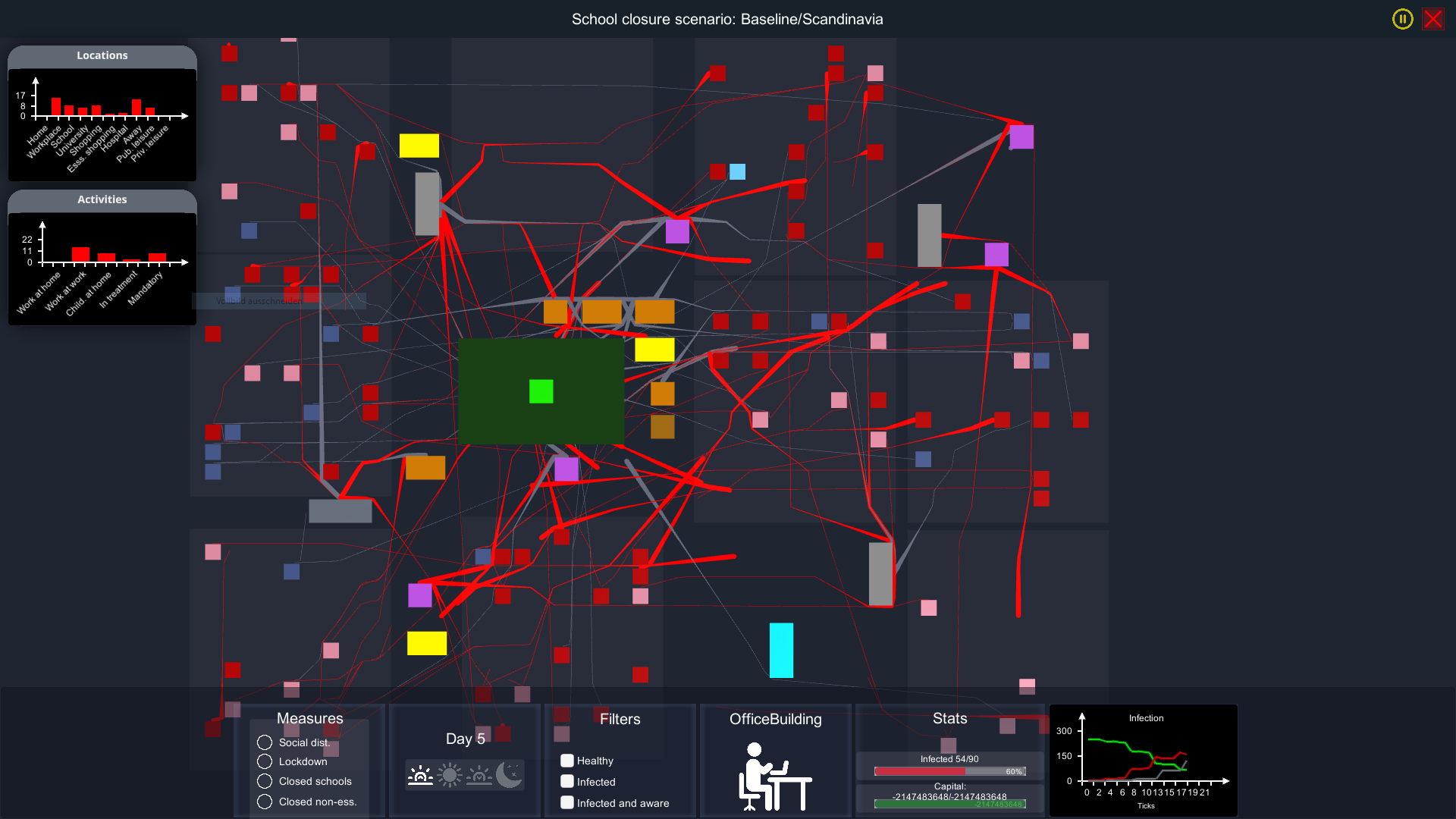
In this context we have developed ASSOCC (Agent-based Social Simulation for the COVID-19 Crisis; see Figure 1) as a many-faceted observatory of scenarios. In ASSOCC, we connect the many involved aspects in a cohesive simulation, for helping stakeholders to raise their general awareness on all critical aspects of the problem and especially the dependencies between them. Of course, one can hardly aim to cover a large variety of aspects and have very complete models on each of them. Thus, we strike a balance between broadness of the model and accuracy on all aspects. This simulation delivers a complementary perspective to state of the art disciplinary models. Where most of other simulations offer sharp yet isolated pieces of the image, our approach is valuable for combining the pieces of the puzzle since a specific modelling focus can limit space for debate (ní Aodha & Edmonds, 2017).

The ASSOCC approach puts the human behaviour central as a linking pin between many disciplines and aspects: psychology (needs, values, beliefs, plans), social sensitivity (norms, social networks, work relationships), infrastructures (transportation, supplies), epidemiology (spreading), economy (transactions, bankruptcy), cultural influences and public measures (closing activities, lock-down, social distancing, testing). The already complex model is extended on a daily basis. This is done in a largely modular fashion such that specific aspects can be switched on and off during the runs. This leads to some limitations and also requires re-calibration of variables, but overall it seems worth the effort when looking at the first results of the scenarios we have simulated.

In this article, we aim to share our approach to simulating the COVID-19 pandemic, outline how the building and use of ASSOCC takes up a number of the challenges that were posed in (Squazzoni et al., 2020), and emphasize the potentials of agent-based simulation as method in mastering pandemics.

Figure 1: A screenshot of the Graphical User Interface of the ASSOCC simulation

Figure 1: A screen shot of the Graphical User Interface of the ASSOCC simulation

Introducing the ASSOCC Model

The goal of the ASSOCC simulation model is to integrate different parts of our daily life that are affected by the pandemic in order to support decision makers when trading off different policies against each other. It facilitates the identification of potential interdependencies that might exist and need to be addressed. This is important as different countries, cultures and populations affect the suitability and consequences of measures thus requiring local conditions to be taken into account. The model allows stakeholders to study individual and social reactions to different policies, to explore different scenarios, and to analyse their potential effects.

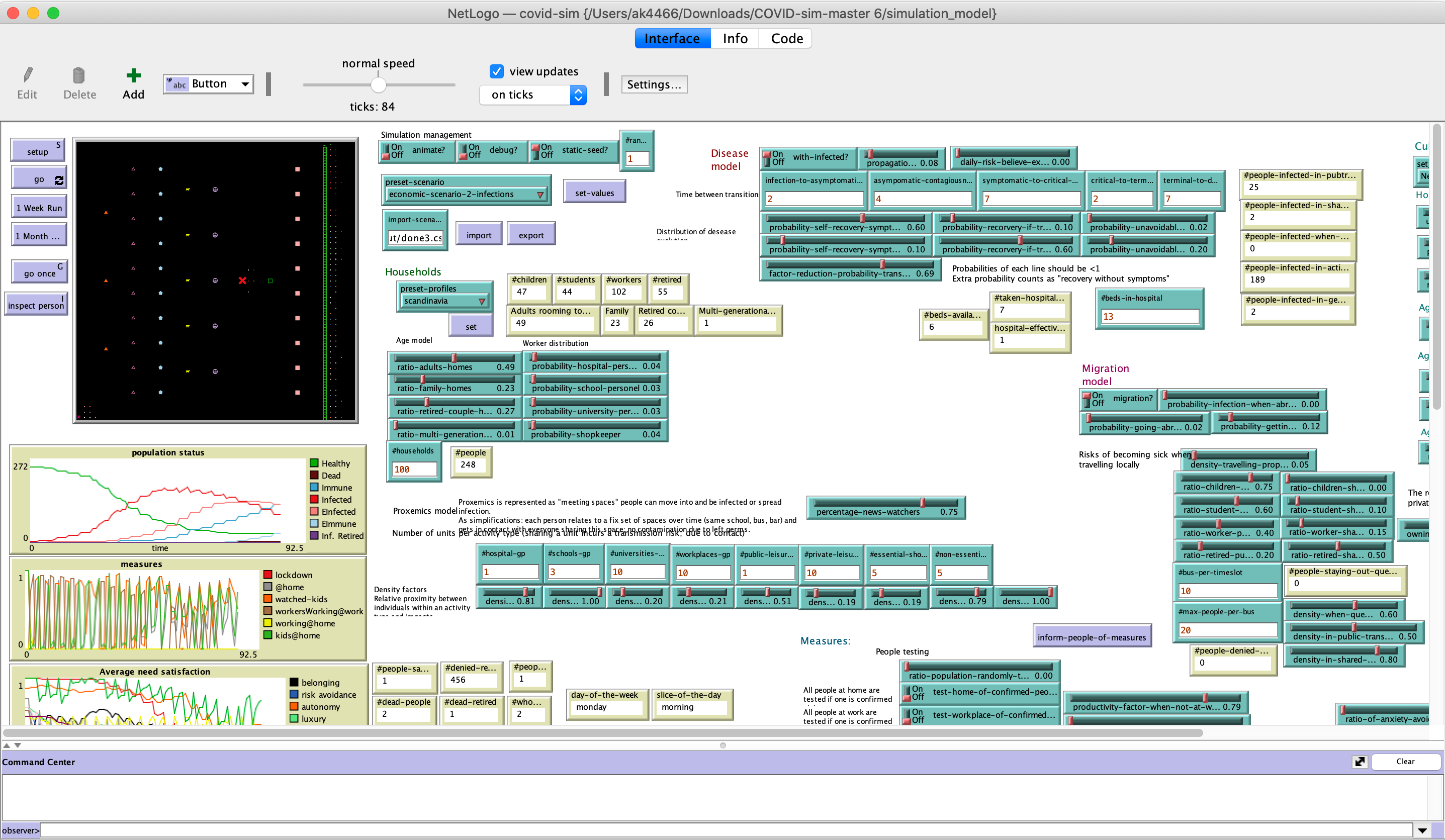
Figure 2: A screenshot of the base simulation model.

Figure 2: A screen shot of the base simulation model.

How it works

The ASSOCC simulation model is based on a synthetic population that consists of a set of artificial individuals (see Figure 1), each with given needs, demographic characteristics and attitude towards regulations and risks. By having all these agents decide over time what they should be doing, we can analyse their reactions to many different policies, such as total lock-down or voluntary isolation. Agents can move, perceive other agents, and decide on their actions based on their individual characteristics and their perception of the environment. The environment constrains the physical actions of the agents but can also impose norms and regulations on their behaviour. Through interaction, agents can take over characteristics from the other agents, such as becoming infected with COVID-19, or receiving information.

Agents

In the ASSOCC model, there are four types of agents: children, students, workers, and retirees. These types represent different age groups with different socio-demographic attributes, common activities, infection risks and behaviours. Each agent has a health status that represents being infected, symptomatic or asymptomatic contagiousness, and a critical state. Moreover, agents have needs and capabilities as well as personal characteristics such as risk aversion and the propensity to follow the law. Needs of the agent include health, wealth and belonging. They are modelled using the water tank model introduced by Dörner et al. (2006). Agent capabilities capture for instance their jobs or family situations. Agents need a minimum wealth value to survive which they receive by working or through subsidies (or by living together with a working agent). In shops and workplaces, agents trade wealth for products and services. Agents pay tax to a central government that then uses this money for subsidies and the maintenance of public services such as hospitals and schools.

Places

During the simulation, agents can move between different places according to their needs and obligations. Places represent homes, shops, hospitals, workplaces, schools, airports and stations. By assigning agents to homes, different households can be represented: single adults, families, retirement homes, and multi-generational households with children, adults and elderly people. The configuration of households is assumed to have an impact on the spreading of COVID-19 and great differences in household configurations exist between countries. Thus, the distribution of these households can be set in the simulation to analyse the situation in different cities 
or countries.

Policies

Policies describe interventions that can be taken by decision makers such as social distancing, infection and immunity testing or closing of schools and workplaces. Policies have complex effects on health, wealth and well-being of all agents. Policies can be extended in many different ways to provide an experimentation environment for decision makers. It is not only the decision of whether or not to implement certain policies but also the point in time when the policy is implemented that influences its success.

Conceptual Design

The ASSOCC model has been conceptualized based on many theories from various scientific disciplines, including psychology (basic motives and needs (McClelland, 1987; Jerome, 2013)), sociology (Schwartz value system (Schwartz, 2012)), culture (Hofstede’s cultural dimensions (Hofstede et al., 2010)), economy (circular flow of income (Murphy, 1993)), and epidemiology (the SEIR model (Cope et al., 2018)). For the disease model, we looked at the following sources: a case study of a corona time lapse (Xu et al., 2020), a cohort study showing the general time lapse of the disease with and without fatality (Zhou et al., 2020) and the incubation period determined by confirmed cases (Lauer et al., 2020). This theory-driven model, determines the reaction of agents to policies and their physical and social context.

A short description of the conceptual architecture of ASSOCC as well as an overview of the agent architecture are available at the project website.

Tools

The simulation is built in Netlogo (see Figure 2 with a visual interface in Unity (see Figure 1. The Netlogo model can be used as a standalone simulation model. For the scenarios, we use the Unity interface for better visualisation of the simulation. The complete source code is available on Github under a Creative Commons Attribution-NonCommercial 4.0 International License (CC BY-NC 4.0). Note that at the time of publication of this article, this is still a beta version of the model, which we are continuously developing. The complete description of the agent-based model using the ODD protocol can as well be found on the ASSOCC website.

Addressing Key Challenges

Having explained the ASSOCC framework, in this section, we explain how our modelling effort addresses the 
challenges raised by Squazzoni et al. (2020).

Like any model, the ASSOCC model cannot be a complete representation of reality and has its own limitations. Yet, we believe that the dimensions of social complexity that we have included provide a promising ground to draw useful insights. As rightfully highlighted by Squazzoni et al. (2020), the quality of a model depends on its purpose, its theoretical assumptions, the level of abstraction, and the quality of data.

The purpose of the ASSOCC model is to illustrate and investigate mechanisms. Through the simulation of scenarios, ASSOCC shows dependencies between human behaviour and the spread of the virus, the economic incentives and the psychological needs of people.

In the next sections we aim to explain how the ASSOCC model addresses the main issues raised in (Squazzoni et al., 2020).

Social Complexity

In order to incorporate pre-existing behavioral attitudes, network effects, social norms and culture that influence people’s response to policy measure, we have built a cross-disciplinary extended team of researchers. We have spent extra time and effort to construct a complex model where social complexity is extensively taken into account. As an example, the Maslow theory for individual needs takes pre-existing behavioral attitudes of individuals into account (Jerome, 2013). By connecting this theory to Schwartz value dimensions (Schwartz, 2012) and connecting these dimensions to the cultural dimensions of Hofstede (Hofstede et al., 2010), we incorporate a whole spectrum of individual biological and social needs all the way to cultural diversity among nations.

Yet, the limitations of ASSOCC are in the richness of each of the societal dimensions. We use some rather simple models, for example, in the economic, culture, social network and transport aspects. We document which choices have been made to indicate which complexities we left out and why they were left out and why we think this does not affect the validity of our results. For example, in the transport dimension we do not distinguish between cars and bikes. We do not need that as we do not have large distances and both cars and bikes can be used as solo transport means. We are aware that there are differences in economic terms and also in values for choosing between the two means of transport, but these aspects are not very relevant for the spread of the virus.

Transparency

Although there is pressure on the community to respond to this crisis and to provide expert judgement, we have not sacrificed the complexity of our model, nor it’s transparency to provide rapid answers. In fact, we have aimed to make our modelling process as transparent as possible. Starting from low level programming code, ASSOCC uses Github repository to make the code publicly available. Besides code documentation, our large scale model makes use of the ODD protocol to make the model transparent at the conceptual level. Additionally, by building the Unity interface layer on the Netlogo model, we aim to connect policy scenarios to the parameter setup of the model, so that policy makers themselves can see how changes to scenarios leads to various outcomes.

By emphasizing that ASSOCC creates simulations of policy scenarios, we step away from giving a particular advice for a “best” policy. Rather we highlight the fundamental questions and priorities that have to be dealt with to choose among various policies. This is done by showing the consequences of the implementation of various scenarios and comparing them. This comparison can for example show how different groups of people are affected economically and health-wise by a policy. The most appropriate policy thus depends on the outcomes that are deemed more desirable.

Data

Given the short time since the outbreak, accurate data on the COVID-19 outbreak suitable for complex agent-based models is not yet available. It is not clear how various cases are defined and how the data is collected. However, in our view, this should not limit our modelling abilities for this much-needed rapid response.

In our view, detailed data is not required to build a useful model. In fact, our model is a ’SimCity’ to study various policy scenarios rather than actual data-driven representation of cities. While we have made sure that our model can show similar patterns to the ones observed in reality for overall validity, small fine-grain data is not included. The data used for the simulation comes from particular epidemiological models, from economic models and from calibration of the model against known, normal situations.

As illustrated in models that were described in (Squazzoni et al., 2020), even models that are calibrated with real-world data fail to capture important aspects such as network effects as these changes are still based on stochastic randomized processes. Therefore, being aware that the current data is not yet available nor reliable, 
we have built our model on strong theoretical basis in order to avoid oversimplification of factors that play important roles in this crisis.

Interface between modelling and policy

As highlighted by Squazzoni et al. (2020), “good pandemic models are not always good policy advice models”. We fully agree with this point, which is central to our modelling efforts. A user-interface has been especially developed in Unity (see Figure 1) to support comprehension of the model by policy makers and to facilitate experimentation. In the Unity interface, one can explore the different parameters of a scenario, see the results of the simulations in graph form and also follow several aspects live through the elements available in the spatial representation of the town. This spatial interface is meant purely for better understanding of the model. We believe that having clarity regarding our modelling goal increases policy makers trust in our insights.

In addition, we have been in close contact with policy makers around the world to, on the one hand, understand their needs and immediate and long-term concerns, and on the other hand, communicate our model’s capabilities in the most concise manner to support their decisions. To date, we have engaged with policy makers in the Netherlands, Italy and Sweden.

Predictive Power

In our interactions with policy makers and other users, we make clear that the ASSOCC platform is not meant for giving detailed predictions, but to support the generation of insights. Such a broad model is best used to indicate dependencies and trends between different aspects of the society. Due to the computing power needed for each agent running the complex reasoning, it is difficult to scale this type of model to more than a few thousand agents, at least in NetLogo. 
The validation of the model can be done through the causal chains that can be followed throughout the model. I.e. certain outcomes can be linked through agent states to certain causes in the environment or the actions of other agents. If these causal chains can be interpreted as plausible stories that can be confirmed by the theories of those respective aspects, it is possible to achieve a certain type of high level validation. So, this is not a validation on data, but validation based on expert opinion.

A second type of validation that can be done on this type of ABM is to make a detailed comparison with established epidemiological models. For instance, we are comparing our simulation with the one used for (Ferretti et al., 2020) in a particular scenario where the effect of using tracking and tracing apps is investigated. By translating the assumptions and parameters very carefully to ASSOCC parameters and comparing the resulting simulations, we can validate the underlying models against more traditional ones and also show possible deviations that might come up and that highlights advantages or lacunas in the ASSOCC model. The results of this comparison will be published jointly by the two groups. Finally, we are calibrating ASSOCC parameters by using statistical data, such as R0, number of deaths, and demographic data as means to improve validity.

Conclusion

In this article, we presented the ASSOCC model as a comprehensive modelling endeavour that aims to contribute to the efforts for managing the COVID-19 crisis. By modelling multiple aspects of the society and interrelating them, we provide insights into the underlying mechanisms in the society that are influenced both by the outbreak as well as policy measures that aim to control it.

Being aware of the challenges, we have aimed to include as much social complexity as possible in the model to avoid biases and oversimplification. At the same time, by being in close contact with policy makers around the world, we have taken the actual needs and considerations into account, while providing a traceable, usable and comprehensible user interface that brings the modelling insights within the reach of policy makers. In our modelling efforts, we have paid extra attention to transparency, providing well-documented and open-source code that can be used by the rest of the simulation community.

All the assumptions, underlying theories and the source code of ASSOCC are available on the project website and on Github. We invite people to use it, give feedback and based on this feedback we continuously improve the model and its parameters. According to the development of the pandemic and the state of discussion, new scenarios will be added as well.

We hope that the ASSOCC model can contribute to handling this crisis in a way that shows the capabilities and usefulness of agent-based modelling.

References

Chang, S. L., Harding, N., Zachreson, C., Cliff, O. M. & Prokopenko, M. (2020). Modelling transmission and control of the covid-19 pandemic in australia. arXiv preprint arXiv:2003.10218 <https://arxiv.org/abs/2003.10218>

Cope, R. C., Ross, J. V., Chilver, M., Stocks, N. P., & Mitchell, L. (2018). Characterising seasonal influenza epidemiology using primary care surveillance data. PLoS computational biology, 14(8), e1006377. doi:10.1371/journal.pcbi.1006377

Dörner, D., Gerdes, J., Mayer, M., & Misra, S. (2006, April). A simulation of cognitive and emotional effects of overcrowding. In Proceedings of the Seventh International Conference on Cognitive Modeling (pp. 92-98). Triest, Italy: Edizioni Goliardiche.

Ferretti, L., Wymant, C., Kendall, M., Zhao, L., Nurtay, A., Abeler-Dörner, L., Parker, M., Bonsall, D. & Fraser, C. (2020). Quantifying sars-cov-2 transmission suggests epidemic control with digital contact tracing. Science,  31 Mar 2020:eabb6936. doi:10.1126/science.abb6936

Hofstede, G., Hofstede, G. J. & Minkov, M. (2010). Cultures and organizations: Software of the mind. revised and expanded 3rd edition. N.-Y.: McGraw-Hill.

Jerome, N. (2013). Application of the Maslow’s hierarchy of need theory; impacts and implications on organizational culture, human resource and employee’s performance. International Journal of Business and Management Invention, 2(3), 39–45.

Lauer, S. A., Grantz, K. H., Bi, Q., Jones, F. K., Zheng, Q., Meredith, H. R., Azman, A. S., Reich, N. G. & Lessler, J. (2020). The incubation period of coronavirus disease 2019 (covid-19) from publicly reported confirmed cases: estimation and application. Annals of internal medicine

McClelland, D. (1987). Human Motivation. Cambridge Univ. Press
Murphy, A. E. (1993). John law and richard cantillon on the circular flow of income. The European Journal of the History of Economic Thought, 1(1), 47–62.

Aodha, L. & Edmonds, B. (2017) Some pitfalls to beware when applying models to issues of policy relevance. In Edmonds, B. & Meyer, R. (eds.) Simulating Social Complexity – a handbook, 2nd edition. Springer, 801-822.

Squazzoni, F., Polhill, J. G., Edmonds, B., Ahrweiler, P., Antosz, P., Scholz, G., Chappin, É., Borit, M., Verhagen, H., Giardini, F. and Gilbert, N. (2020) Computational Models That Matter During a Global Pandemic Outbreak: A Call to Action. Journal of Artificial Societies and Social Simulation, 23(2):10. <http://jasss.soc.surrey.ac.uk/23/2/10.html>. doi: 10.18564/jasss.4298

Xu, Z., Shi, L., Wang, Y., Zhang, J., Huang, L., Zhang, C., Liu, S., Zhao, P., Liu, H., Zhu, L. et al. (2020). Pathological findings of covid-19 associated with acute respiratory distress syndrome. The Lancet respiratory medicine, 8(4), 420–422

Zhou, F., Yu, T., Du, R., Fan, G., Liu, Y., Liu, Z., Xiang, J., Wang, Y., Song, B., Gu, X. et al. (2020). Clinical course and risk factors for mortality of adult inpatients with covid-19 in wuhan, china: a retrospective cohort study. The Lancet, 395(10229), 1054-1062. doi:10.1016/S0140-6736(20)30566-3


Ghorbani, A., Lorig, F., de Bruin, B., Davidsson, P., Dignum, F., Dignum, V., van der Hurk, M., Jensen, M., Kammler, C., Kreulen, K., Ludescher, L. G., Melchior, A., Mellema, R., Păstrăv, C., Vanhée, L. and Verhagen, H. (2020) The ASSOCC Simulation Model: A Response to the Community Call for the COVID-19 Pandemic. Review of Artificial Societies and Social Simulation, 25th April 2020. https://rofasss.org/2020/04/25/the-assocc-simulation-model/


© The authors under the Creative Commons’ Attribution-NoDerivs (CC BY-ND) Licence (v4.0)